
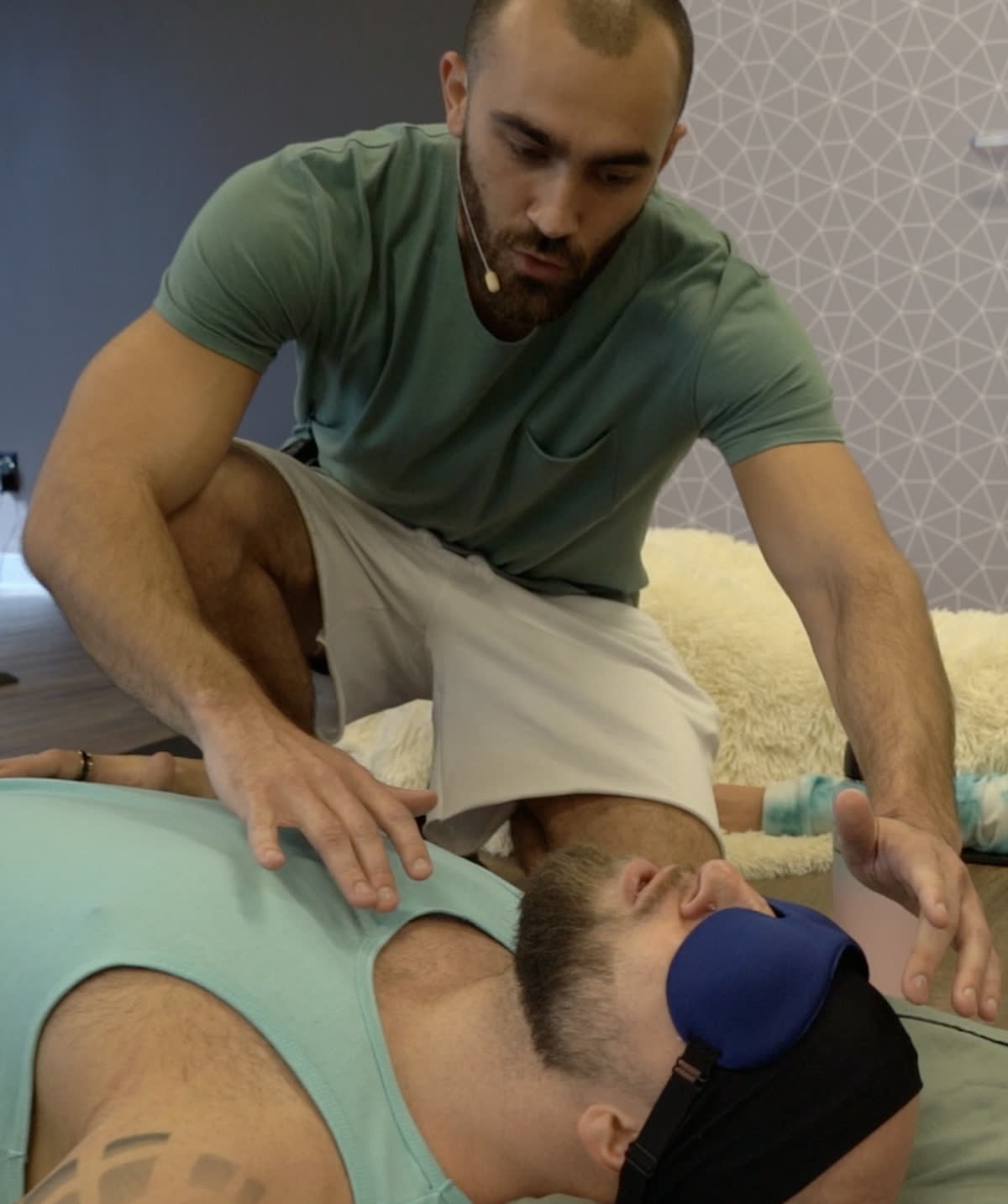
Liquid Breathwork holds weekly Breathwork classes across Phoenix, Scottsdale, Tempe, and Mesa, led by Ryan McBurney (7 Breathwork training programs completed, 4 certifications, guiding since 2018) and co-facilitated by Shelby Von Oepen.
Each session includes 45 to 60 minutes of guided connected breathing with sound healing and Reiki, followed by integration time. Over 500 people have attended their first Breathwork experience through Liquid Breathwork, with a 5.0 rating on Google.
- $44 drop-in per class, $17/month membership (50% off all sessions, 7-day free trial)
- Surrender-based, trauma-informed methodology (no catharsis, no forcing)
- No experience needed, just comfortable clothes and a water bottle
- Multiple East Valley locations with both group classes and private sessions available
So you've heard about Breathwork. Maybe a friend wouldn't shut up about it. Maybe you saw something on Instagram. Maybe you've been doing yoga or meditation for years and want something that goes deeper. Whatever brought you here, you're probably wondering: what actually happens in a Breathwork session?
We've guided over 500 people through their first Breathwork experience. Most of them walked in with zero idea what to expect. This guide is everything we wish someone had told us before our first session.
What Breathwork Actually Is (and What It's Not)
Let's clear something up first. When we say Breathwork, we don't mean taking three deep breaths before a meeting. We're talking about a guided, intentional breathing practice that shifts your nervous system state in real time. You lie down, you breathe in a specific pattern, and your body starts doing things you didn't expect.
There are a lot of styles out there. Some are intense (screaming, catharsis, loud music, someone pressing on your chest). That's not what we do. Liquid Breathwork is surrender-based. We create the conditions for your body to release what it's holding, without forcing anything. Think of it as giving your nervous system permission to let go.
If you've tried meditation and struggled to quiet your mind, Breathwork often clicks faster. The breathing pattern gives you something active to focus on. You're not sitting there wondering if you're doing it right. You're breathing, and the breath does the work. We wrote a full comparison in our Breathwork vs Meditation guide if you want to go deeper on the differences.
Before Your Session: How to Prepare
There's no homework. No prerequisites. No experience required. But a few practical things will make your first session more comfortable.
What to Eat (and When)
Eat a light meal at least 2 hours before your session. You'll be lying down and breathing deeply for 45 to 60 minutes, and a full stomach makes that uncomfortable. Think a banana and some nuts, not a burrito. If you're coming straight from work and haven't eaten, a small snack is fine. Just avoid anything heavy.
What to Wear
Comfortable, loose-fitting layers. You'll be lying down the entire time, so think yoga clothes, sweats, or whatever you'd wear to take a nap in. Layers matter because your body temperature can shift during the session (some people get warm, others get cold). Skip anything restrictive around your waist or chest since you want your breath to move freely.
What to Bring
Just a water bottle. Mats and blankets are provided at most of our venues. You're welcome to bring your own mat or blanket if that makes you more comfortable, but it's not necessary.
Your Mindset
This is the most important one. Come with curiosity, not expectations. Don't walk in thinking you need to have a life-changing experience or you've failed. Some people have profound emotional releases their first time. Others feel relaxed and a little tingly. Both are completely valid. The best thing you can do is let go of any agenda and just see what happens.
Hydration
Drink water throughout the day. Not gallons (you don't want to need the bathroom mid-session), but stay consistently hydrated. The breathwork process moves a lot of energy through your body, and being well-hydrated helps everything flow more smoothly.
During Your Session: What Actually Happens
Here's the honest, step-by-step walkthrough of a typical Liquid Breathwork session.
You arrive and settle in. You'll find a spot in the room, lie down on a yoga mat, and get comfortable with a blanket. We usually dim the lights. The vibe is calm and intentional, not sterile or clinical. Think cozy, not corporate.
We set the space. Before the breathing starts, we'll walk you through what to expect, explain the breathing pattern, and answer any questions. If it's your first time, we'll make sure you feel oriented. There's no pressure to perform. No one is watching you or judging your technique.
The breathing begins. The core pattern is connected breathing through the mouth. That means continuous inhales and exhales with no pause between them. We guide you through it verbally and with music. The soundtrack is a big part of the experience (curated playlists that build, peak, and then soften during integration). It's not background noise. The music helps your body move through the process.
Active breathing lasts 45 to 60 minutes. This is the main portion of the session. We guide you through the breathing pattern while Shelby (co-facilitator and Reiki practitioner) moves through the room offering hands-on support, sound healing, and energy work. You're not alone in the process.
Integration time. After the active breathing, we bring you into a rest period. The music softens. You return to your natural breath. This is where a lot of the deeper processing happens. Some people drift into a deeply relaxed state. Others feel wide awake and clear. This integration period usually lasts 10 to 15 minutes, and it's one of the most important parts of the session.
We close together. We bring the room back gently. People sit up when they're ready. We might share briefly as a group, or you might just sit with your own experience. Total session time is about 75 to 90 minutes including setup and integration.
What You Might Feel (Physically and Emotionally)
This is the part everyone wants to know about. And the honest answer is: it varies. A lot. But here are the most common things first-timers report.
Physical Sensations
- Tingling in your hands, feet, face, or all over. This is the most common sensation and it's completely normal. It's related to changes in your blood chemistry from the breathing pattern.
- Temperature changes. Waves of warmth or cold moving through your body. Some people feel their hands get hot while their feet get cold (or the opposite).
- Muscle tightness or tetany. Your hands might curl or your jaw might tighten. This can feel weird the first time but it's harmless and temporary. It usually eases as you relax into the breath.
- Vibration or buzzing. A humming sensation in your chest, belly, or limbs. People often describe it as feeling like energy is moving through them.
- Deep relaxation. Some people feel like they're melting into the floor. Total body heaviness in the best possible way.
Emotional Responses
- Tears. Crying during Breathwork is completely normal and nothing to be embarrassed about. You're not sad (necessarily). Your body is releasing stored tension and emotion. Some people cry from relief. Some cry and don't even know why. Both are fine.
- Laughter. Less common but it happens. Joy, lightness, and spontaneous laughter are all valid responses.
- A sense of letting go. Hard to describe, but many people report feeling like they put something down that they'd been carrying for a long time.
- Nothing dramatic. And that's also completely fine. Not every session is a fireworks show. Sometimes the shift is subtle and you notice it more in the days after.
According to the National Center for Complementary and Integrative Health, controlled breathing techniques can support relaxation, reduce anxiety, and promote overall well-being. What we see in practice is that the body-based experience of Breathwork often reaches places that talk therapy and meditation don't.
After Your Session: Integration and the Days That Follow
Right After
Most people feel lighter and calmer walking out than they did walking in. Some describe it as feeling "reset." Others feel deeply relaxed (like after a great massage but without anyone touching them). Some feel emotional and quiet. All of it is normal.
Give yourself a few minutes before jumping in the car or checking your phone. Drink water. Let the experience settle. This isn't something you want to rush away from.
The "Breathwork Hangover"
Some people (especially after their first session) feel tired, emotional, or a little "off" the next day. We call this the Breathwork hangover. It's not a bad thing. Your nervous system just did something significant, and it's still processing. Think of it like being sore after your first workout in months. Your body is adjusting.
If this happens, be gentle with yourself. Drink extra water. Get to bed early. Skip the intense workout. Give your system space to integrate what moved during the session.
Integration Tips
- Journal. Even a few sentences about what you felt or noticed. You'll forget the details faster than you think.
- Stay hydrated. Water, water, water. The breathing process can be surprisingly dehydrating.
- Go easy on substances. Alcohol and caffeine can interfere with the integration process. Not a rule, just a suggestion for the 24 hours after.
- Move gently. A walk, some stretching, or light yoga. Nothing intense. Let your body keep processing at its own pace.
- Don't over-analyze. The intellectual mind wants to make sense of everything right away. Let the experience land in your body first. The understanding often comes later.
Common First-Timer Fears (All Normal)
"What if I do it wrong?" You won't. The breathing pattern is simple: continuous inhale and exhale through the mouth. We guide you through it the whole time. If you lose the rhythm, we're right there to bring you back. There's no grade.
"What if I cry in front of strangers?" People cry in Breathwork all the time. Nobody is watching you (everyone's eyes are closed, lying on their own mat). And honestly, the people in that room understand. They've probably been there too.
"What if nothing happens?" Totally possible, and totally fine. Some people need a session or two before their body trusts the process enough to let go. Even if you don't have a dramatic experience, the nervous system benefits are happening whether you feel them consciously or not.
"Is it safe?" Yes. Our approach is surrender-based and trauma-informed. We have guided hundreds of sessions with training across several modalities, and Shelby, our co-facilitator, also has a background as a registered nurse. We also keep class sizes manageable so we can give real attention to everyone in the room. That said, if you have a history of cardiovascular issues, epilepsy, or are pregnant, let us know beforehand so we can make accommodations.
How to Book Your First Class in Phoenix
If you've read this far, you're ready. Stop researching and just come to a class. You can read about Breathwork all day, but you won't understand what it does until you feel it in your own body.
Here's how to get started:
- Check the schedule. See our Phoenix class schedule for upcoming sessions across Phoenix, Scottsdale, Tempe, and Mesa.
- Show up. Classes are $44 drop-in. No membership required for your first class. Just show up with comfortable clothes and a water bottle.
- Make it a practice. If your first session clicks (and for most people, it does), book your first class as a regular thing. The membership is $17/month with a 7-day free trial and gets you 50% off every session.
No prerequisites. No experience needed. No woo-woo gatekeeping. Just you, your breath, a yoga mat, and 8 years of facilitation experience guiding you through it.
Frequently Asked Questions About Your First Breathwork Class
What should I expect at my first Breathwork class?
You'll lie down on a yoga mat with a blanket while a certified facilitator guides you through a connected breathing pattern set to music. Sessions typically include 45 to 60 minutes of active breathing followed by integration time. Most first-timers experience physical sensations like tingling or temperature changes, deep relaxation, and sometimes emotional releases. No prior experience is needed.
How much does a Breathwork class cost in Phoenix?
Our Breathwork classes in Phoenix are $44 per session (both group classes and workshops). The membership is $17/month and includes 50% off all classes, access to guided audio Breathwork sessions, a mini course, and a 7-day free trial. Private one-on-one sessions are also available.
What should I wear and bring to a Breathwork session?
Wear comfortable, loose-fitting layers (think yoga clothes or sweats). Bring a water bottle. Mats and blankets are provided at most venues. Eat a light meal at least 2 hours before so you're not breathing on a full stomach.
Is it normal to cry during Breathwork?
Completely normal. Breathwork can release stored emotions you weren't even aware of. Some people cry, some laugh, some feel nothing dramatic. There's no wrong response. Our surrender-based, trauma-informed approach creates a safe space for whatever comes up, and we're trained to support you through it.
How will I feel after my first Breathwork session?
Most people feel lighter, calmer, and more clear-headed. Some feel energized, others feel deeply relaxed or sleepy. It's also normal to feel a bit emotional or tired the next day (sometimes called the "Breathwork hangover"). This is your nervous system processing the experience. Drink plenty of water and give yourself permission to rest.
Want to Bring Breathwork to Your Phoenix Community?
Many of our facilitators started as class attendees who wanted to share what they found. Our Facilitator Training is based in Phoenix and prepares you to lead your own sessions across the Valley.
Ready for Your First Breathwork Experience?
No experience needed. No expectations required. Just show up, lie down, breathe, and see what happens. $44 drop-in, and most people know within one session whether this practice is for them.