
I spent years trying to meditate, including YouTube videos at 2 a.m. when I couldn't sleep. Thirty seconds after I closed my eyes, my brain was making grocery lists and replaying arguments from 2014.
Breathwork gave that busy brain something to count and follow. I now facilitate Breathwork for a living and still meditate most mornings.
What Meditation Is
Meditation is attention training. You pick an anchor (your breath, a mantra, a visualization, sensations in your body) and come back to it each time your mind wanders. Coming back is the practice.
- Mindfulness meditation: observing thoughts and sensations without judgment.
- Concentration meditation: focusing on one point, like a candle flame or counted breaths.
- Transcendental Meditation (TM): a specific mantra given by a teacher, repeated silently.
- Loving-kindness meditation: directing compassion toward yourself and others.
- Body scan meditation: moving your attention through each part of your body.
Each one asks you to stay with what's happening without changing it. Regular practice has been linked to lower anxiety and depression, better focus and working memory, lower blood pressure, steadier emotions, and structural changes in the brain.
What Breathwork Is
Breathwork is intentional breathing in set patterns and rhythms, usually guided and lasting 20 to 60 minutes.
- Holotropic Breathwork: developed by Stanislav Grof, uses sustained fast breathing to access altered states of consciousness.
- Circular breathing (conscious connected breathwork): continuous inhale-exhale cycles with no pause between breaths. This is the foundation of what we do at Liquid Breathwork.
- Wim Hof Method: combines specific breathing rounds with cold exposure and meditation.
- Box breathing: equal-length inhales, holds, exhales, and holds. Used by Navy SEALs and first responders for stress.
- Pranayama: the yogic tradition of breath control, with dozens of techniques.
The Key Differences Between Breathwork and Meditation
Speed of results
Meditation usually takes weeks before you handle stress differently. Breathwork often shifts how you feel in one session.
Physical vs mental entry point
Meditation starts in the mind and the body follows. Breathwork starts in the body. Your breathing pattern changes your blood chemistry, which shifts your nervous system, which quiets your mind. If you live in your head, that route is often easier.
Emotional processing
Meditation helps you notice emotions without reacting to them. Breathwork can move them through your body. People sometimes cry, laugh, or shake during a session, though plenty of sessions are gentle.
When to Choose Meditation vs Breathwork
Meditation is a better fit if you:
- Already like sitting still
- Want a practice you can do alone, anywhere
Breathwork is a better fit if you:
- Have trouble sitting still or quieting your mind
- Hold stress in your body (tight jaw, shallow chest breathing)
- Want someone guiding you while you learn
If You Can't Meditate, Try Breathwork
I hear this at almost every first class. Sitting meditation asks you to watch racing thoughts with little feedback, and many beginners quit. The breathing pattern gives the mind a physical task instead, so the quiet shows up without effort.
I've watched people who couldn't sit through five minutes of meditation breathe with total focus for 45 minutes, then say, "That's the first time my brain has been quiet in years."
How Breathwork and Meditation Work Together
You can do both. If my mind is spinning when I sit down to meditate, I do five to ten minutes of rhythmic breathing first, and the stillness comes more easily. Some people alternate: Breathwork three days a week, meditation three days, one day off.
Breathwork Classes at Liquid Breathwork
At Liquid Breathwork, Shelby and I lead classes in Phoenix and online through the membership. Sessions run 60 to 90 minutes of circular breathing to music, with a facilitator guiding you. Many of our participants also meditate to integrate what comes up. No experience needed.
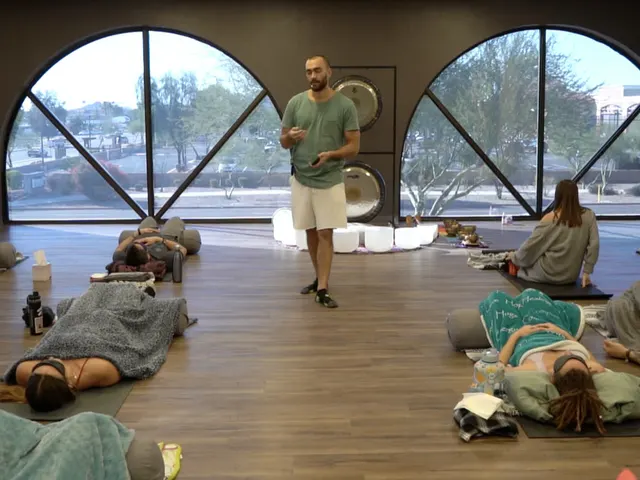
Feel our style first
Get a free recording of one of our live Breathwork classes.
Get My Free RecordingFrequently Asked Questions
Is breathwork better than meditation?
Neither is better. Breathwork uses active breathing patterns to shift your state quickly. Meditation trains stillness and attention over time. Pick the one you'll actually show up for.
Can breathwork replace meditation?
It can, but you don't have to choose. Breathwork releases tension, which often makes meditation easier afterward.
Why can't I meditate but I can do breathwork?
Breathwork gives a racing mind an active task: following a breathing pattern. The rhythm regulates your nervous system directly, so the quiet comes from the physical practice instead of forcing thoughts to stop.
What's the difference between breathwork and deep breathing?
Deep breathing is one simple technique: slowing your breath. Breathwork uses specific, sustained patterns over 20 to 60 minutes, such as circular breathing, breath holds, and changing rhythms, to shift your nervous system and emotional state.
Should I try breathwork or meditation first as a beginner?
Start with Breathwork if sitting still makes you restless. Start with meditation if you already enjoy quiet.
Try a Breathwork Class
The membership is free for 7 days, or pick a live class from the schedule. Want to lead sessions yourself? See Facilitator Training.