
Somatic Breathwork is one of those terms that's been gaining traction in the wellness world, and for good reason. It's a mind-body connection practice that uses intentional breathing to release stored tension, support emotional healing, and regulate your nervous system. But most of what you'll find online is either overly clinical or drowning in hype language. So here's what it actually is, explained by someone who's spent 284 hours across three certifications and nine years guiding people through this work.
We're not going to overcomplicate this. If you're curious about somatic Breathwork, wondering if it's different from other types of Breathwork, or trying to figure out whether it's right for you, this is the article you need.
What Is Somatic Breathwork?
Somatic means "of the body." So somatic Breathwork is, at its simplest, a body-centered breathing practice. Instead of approaching Breathwork as a mental exercise or a meditation technique, somatic Breathwork focuses on what's happening in your physical body: the sensations, the tension patterns, the places where you're holding stress without even knowing it.
The core idea is that your body stores experience. Not just in your brain (as memories and thoughts) but in your tissues, your muscles, your fascia, your nervous system. If you've ever felt your shoulders creep up to your ears during a stressful week, or noticed a pit in your stomach during conflict, you already understand this intuitively. Your body keeps the score, as the saying goes.
Somatic Breathwork uses intentional breathing patterns to access those stored experiences through the body. It's a bottom-up approach to healing, meaning it works through the body first rather than the mind. You're not talking through your problems. You're not analyzing what happened. You're doing conscious breathing in a specific way that allows your nervous system to shift, your body to soften, and whatever's been stuck to start moving.
This is what makes it different from just "taking a deep breath." It's a structured wellness practice, typically guided by a trained facilitator, that uses sustained breathing exercises over 20 to 60 minutes to create real, measurable changes in your physiology and emotional state. Where top-down approaches like talk therapy work through cognition, somatic Breathwork works through body awareness and deep breathing to create shifts you can feel.
How Somatic Breathwork Differs from Other Types
There are a lot of Breathwork modalities out there, and they're not all doing the same thing. Here's how somatic Breathwork compares to some of the more well-known styles.
Somatic Breathwork vs Holotropic Breathwork
Holotropic Breathwork was developed by Stanislav Grof and uses sustained, rapid breathing to push people into non-ordinary states of consciousness. It can be intense. People sometimes have vivid visions, strong emotional releases, and experiences that feel psychedelic in nature. The facilitator's role is largely to hold space while the breather goes deep.
Somatic Breathwork takes a different approach. The emphasis is on nervous system regulation and emotional regulation, not peak experiences. Rather than pushing through intensity to reach a breakthrough, somatic methods work with your body's natural rhythm and capacity. The goal is to open up at a pace your system can actually integrate. It's gentler, more grounded, and (in our experience) more sustainable as a regular holistic healing practice.
Somatic Breathwork vs Box Breathing
Box breathing (equal counts for inhale, hold, exhale, hold) is a tactical tool. It's great for acute stress management, and there's a reason Navy SEALs use it. But it's more of a regulation technique than a somatic practice. You're managing symptoms in the moment.
Somatic Breathwork goes deeper. Instead of just calming your nervous system down temporarily, it creates the conditions for your body to release what's been stored. Box breathing and other basic relaxation techniques are like putting out a small fire. Somatic Breathwork is like addressing the faulty wiring that keeps starting fires in the first place. It builds long-term stress resilience, not just momentary stress relief.
Somatic Breathwork vs Wim Hof
The Wim Hof Method combines specific breathing rounds with cold exposure. It's activating by design. The breathing pattern floods your system with oxygen, creates a temporary alkaline state, and triggers an adrenaline response. It's energizing and has real immune benefits, but it works by ramping your system up, not by helping it release and settle.
Somatic Breathwork is surrender-based. We're not trying to power through anything. We're creating safety in the body so it can let go on its own terms. No screaming, no wild cathartic releases, no hyperventilation theater. Just mindful breathing, rhythm, and the body's own intelligence doing what it knows how to do when you give it space.
The Science Behind Somatic Breathwork
This isn't just a feeling. There's real physiology behind why somatic breathing exercises work the way they do.
The vagus nerve
Your vagus nerve is the longest cranial nerve in your body. It runs from your brainstem down through your neck, chest, and abdomen, connecting your brain to your heart, lungs, gut, and other major organs. It's the main communication highway of your parasympathetic nervous system (the "rest and digest" side).
Slow, rhythmic breathing (especially with extended exhales) directly stimulates the vagus nerve and improves vagal tone. This activates your parasympathetic response (your body's rest and digest mode): heart rate slows, blood pressure drops, digestion improves, and your sympathetic nervous system (fight-or-flight) quiets down. This isn't theoretical. You can measure it through heart rate variability (HRV), which is one of the most reliable markers of nervous system health.
Polyvagal theory
Stephen Porges' polyvagal theory gives us a framework for understanding why somatic Breathwork is so effective for people dealing with stress, anxiety, and trauma. The theory describes three states your nervous system cycles through: ventral vagal (safe, social, connected), sympathetic (fight or flight), and dorsal vagal (shutdown, freeze, collapse).
Most people living with chronic stress are stuck in sympathetic activation (always on alert) or dorsal vagal (numb, disconnected, checked out). Somatic breathing exercises help guide your nervous system back toward ventral vagal (the safe, regulated state) by working directly through the body. This is self-regulation through the breath. You're not trying to think yourself calm. You're breathing yourself into a relaxation response where calm is the natural result. And thanks to neuroplasticity, your nervous system can learn to find this state more easily over time.
Trauma release through the body
Here's where it gets really interesting. Research in somatic experiencing (developed by Peter Levine) shows that trauma isn't just a psychological event. It gets stored in the body as incomplete survival responses. Your muscles tighten, your breathing gets shallow, your nervous system stays on high alert long after the actual threat is gone.
Somatic Breathwork creates the conditions for those incomplete responses to complete themselves. Through sustained, intentional breathing, the body begins to discharge stored tension. You might feel trembling, heat, tingling, emotional waves, or deep relaxation. These aren't side effects. They're signs that your body is doing exactly what it needs to do.
Benefits of Somatic Breathwork
We could write a whole separate article on the benefits of Breathwork (and we have). But here are the specific benefits of somatic Breathwork as a holistic healing practice, based on what practitioners and participants consistently report.
Stress reduction and anxiety management
This is the big one, and it's the most well-supported by research. Somatic breathing exercises directly downregulate the stress response by activating the parasympathetic nervous system. Most people feel a noticeable shift in their anxiety levels within a single session. With consistent practice, your nervous system's baseline starts to change. You become less reactive, more resilient, and better at returning to calm after stressful events. It's one of the most effective stress relief and anxiety management tools available.
Trauma processing
For people carrying unresolved trauma (and that's more people than you'd think), somatic Breathwork offers a way to process that doesn't require you to relive or narrate the experience. The body does the work. You don't have to understand or explain what's surfacing. You just have to breathe and let your body do what it knows how to do.
This is not a replacement for therapy. But it's a powerful complement to it, and many trauma-informed therapists are now incorporating somatic breathing exercises into their clinical practice for emotional healing and trauma release.
Nervous system regulation
Think of your nervous system like a thermostat. For a lot of people, that thermostat is miscalibrated. It's either stuck on high (chronic anxiety, hypervigilance, insomnia) or stuck on low (fatigue, numbness, depression symptoms). Somatic Breathwork helps recalibrate the system so it can respond appropriately to what's actually happening, rather than reacting based on old patterns. This emotional regulation carries into your daily routine, not just on the mat.
Better sleep
When your nervous system is regulated, sleep improves. It's that straightforward. Many of our participants report falling asleep faster and sleeping more deeply after incorporating somatic Breathwork into their routine. The body can only rest when it feels safe, and somatic breathing exercises teach your body that it's safe to let go.
Emotional release
Sometimes you're carrying something and you don't even know it until you start breathing. Grief, anger, joy, relief. Somatic Breathwork creates space for these emotions to surface and move through you without judgment or analysis. You don't have to figure out where it came from. You just feel it, let it move, and let it go.
What Happens in a Somatic Breathwork Session
If you've never done this before, here's what to expect (at least in how we hold space at Liquid Breathwork).
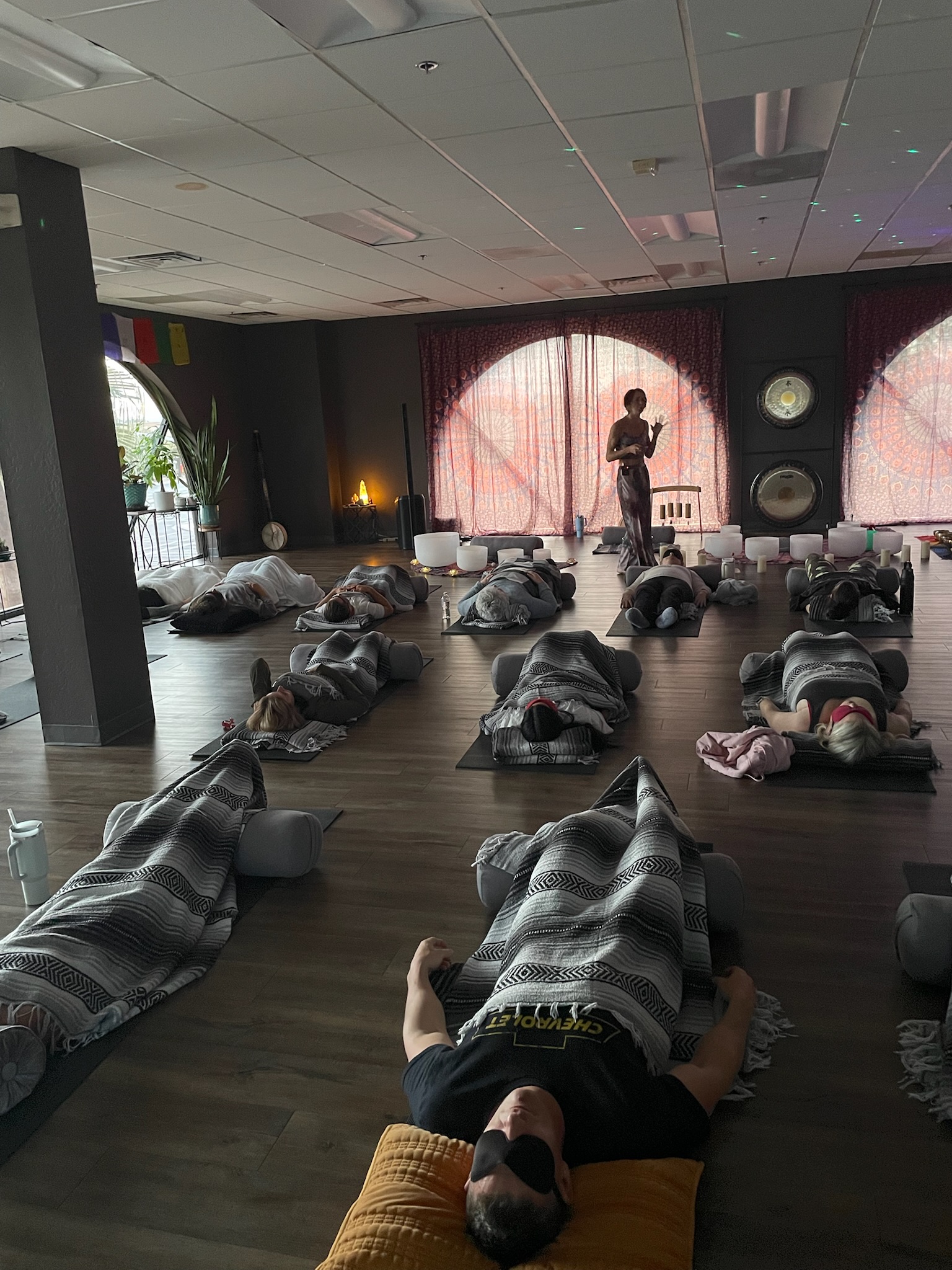
You'll lie down comfortably (usually on a mat or a bed if you're joining online). The facilitator will guide you into the breathing pattern, which is typically a rhythmic, connected breath (no pauses between inhale and exhale). Music plays throughout the session to support the experience.
For the first few minutes, you're just getting into the rhythm. Your mind might resist. You might feel silly or self-conscious. That's completely normal. Just keep breathing.
Around 10 to 15 minutes in, things start to shift. The body begins to soften. You might notice tingling in your hands or face, warmth spreading through your chest, or a heaviness in your limbs. Emotional waves may come and go. Some people cry. Some people laugh. Some people just feel deeply, profoundly relaxed.
Our approach is surrender-based. We're not pushing you into anything. We learned this directly from a master with over 50 years of Breathwork experience during a month-long immersive retreat. The principle is simple: trust the breath, trust the body. Your system knows what it needs. The facilitator's job is to create a safe container and guide the rhythm. Your body does the rest.
Sessions typically run 60 to 90 minutes, including an integration period at the end where you rest in stillness and let everything settle. That integration time matters. It's not a throwaway. It's where the real assimilation happens.
Is Somatic Breathwork Right for You?
Somatic Breathwork tends to resonate strongly with certain people. You might be a great fit if you:
- Live in your head. If you over-think everything and struggle to get out of analysis mode, a body-based practice can be a revelation. Your body has a different kind of intelligence, and somatic Breathwork helps you access it.
- Carry anxiety or chronic stress. If your nervous system feels like it's always running hot, somatic breathing exercises (including diaphragmatic breathing and other deep breathing techniques) give it a direct pathway to calm down.
- Have experienced trauma. Whether it's a single event or years of accumulated stress, somatic Breathwork offers a way to process that doesn't require you to talk about it.
- Are an athlete or physical performer. Better nervous system regulation means better recovery, better focus under pressure, and improved body awareness.
- Work in healthcare or high-stress professions. Nurses, first responders, therapists (anyone who absorbs other people's stress for a living) tend to benefit enormously from a practice that helps them discharge what they've taken on.
- Have tried meditation and it didn't stick. If sitting still and observing your thoughts felt impossible, somatic Breathwork gives you an active, physical entry point that often produces immediate results. It builds self-awareness through the body rather than through mental effort.
That said, if you have a cardiovascular condition, epilepsy, are pregnant, or are dealing with severe, untreated PTSD, talk to your doctor first and make sure you're working with a qualified facilitator who screens for contraindications.
Somatic Breathwork Certification
If you're not just interested in practicing somatic Breathwork but in teaching it, training matters. A lot.
The Breathwork space is largely unregulated, which means anyone can technically call themselves a facilitator after a weekend workshop. We think that's a problem. Holding space for people as they move through deep somatic experiences requires real training in anatomy, physiology, contraindications, trauma-informed facilitation, and (most importantly) significant hours of supervised practice.
Our Liquid Breathwork Certification is built on 284 hours of training across three modalities (SOMA Breath, Somatiq, and Rebirthing Breathwork). It's co-taught by Ryan McBurney and Shelby Von Oepen (RN, BSN), which means you're getting both the experiential depth and the clinical rigor. The program is approved for NCBTMB continuing education credits, so massage therapists and bodyworkers can earn CEs while they train.
If you're serious about facilitating this work, check out the full certification details here.
Frequently Asked Questions
What is somatic Breathwork?
Somatic Breathwork is a body-centered breathing practice (a mind-body therapy) that uses intentional breathing patterns to regulate the nervous system, release stored tension, and process emotions held in the body. Unlike purely cognitive or top-down approaches, it's a bottom-up approach that works through physical sensation and body awareness first. You change your breathing, which shifts your physiology, which allows your body to let go of what it's been holding. It draws on principles from polyvagal theory and somatic experiencing.
Is somatic Breathwork safe?
For most people, yes. Somatic Breathwork is generally gentler than more intense styles like Holotropic Breathwork. It focuses on nervous system regulation rather than pushing into extreme states. That said, people with cardiovascular conditions, epilepsy, severe PTSD, or who are pregnant should consult their doctor first and work with a qualified facilitator. A well-trained practitioner will screen for contraindications before every session.
How is somatic Breathwork different from Holotropic Breathwork?
Holotropic Breathwork uses sustained, rapid breathing to induce non-ordinary states of consciousness. It can be intense and cathartic. Somatic Breathwork takes a gentler approach, focusing on nervous system regulation and allowing the body to release at its own pace. Rather than pushing through intensity, somatic methods work with the body's natural rhythm. The emphasis is on safety, surrender, and gradual opening rather than peak experiences.
Can somatic Breathwork help with anxiety?
Yes. Somatic Breathwork directly activates the parasympathetic nervous system through vagus nerve stimulation, which is the body's built-in mechanism for calming down. Extended exhales and slow, rhythmic breathing patterns shift your nervous system out of fight-or-flight and into a regulated state. It's one of the most effective relaxation techniques for anxiety management and stress reduction. Many people notice a significant shift after even one session, and consistent practice can help retrain your nervous system's baseline response to stress through neuroplasticity.
Do I need a certification to teach somatic Breathwork?
There's no single governing body that regulates Breathwork certification. However, completing a comprehensive training program is essential for holding safe space and understanding the physiology behind the practice. Look for programs that include anatomy, contraindications, trauma-informed facilitation, and significant supervised practice hours. Liquid Breathwork offers a certification program with 284 hours of training across multiple modalities and NCBTMB continuing education credits.
Start Here
Reading about somatic Breathwork is useful. Experiencing it is something else entirely. The shift from understanding it intellectually to feeling it in your body is the moment most people go from curious to committed.
We hold live Breathwork classes every week (both in-person and online). No experience necessary. No special equipment. Just you, your breath, and a willingness to let your body lead for an hour. Whether you're looking for stress reduction, emotional healing, anxiety management, or a deeper mind-body connection practice, somatic Breathwork is one of the most accessible and effective wellness practices you can try.
Ready to Experience Somatic Breathwork?
Join our community and start your 7-day free trial today.