
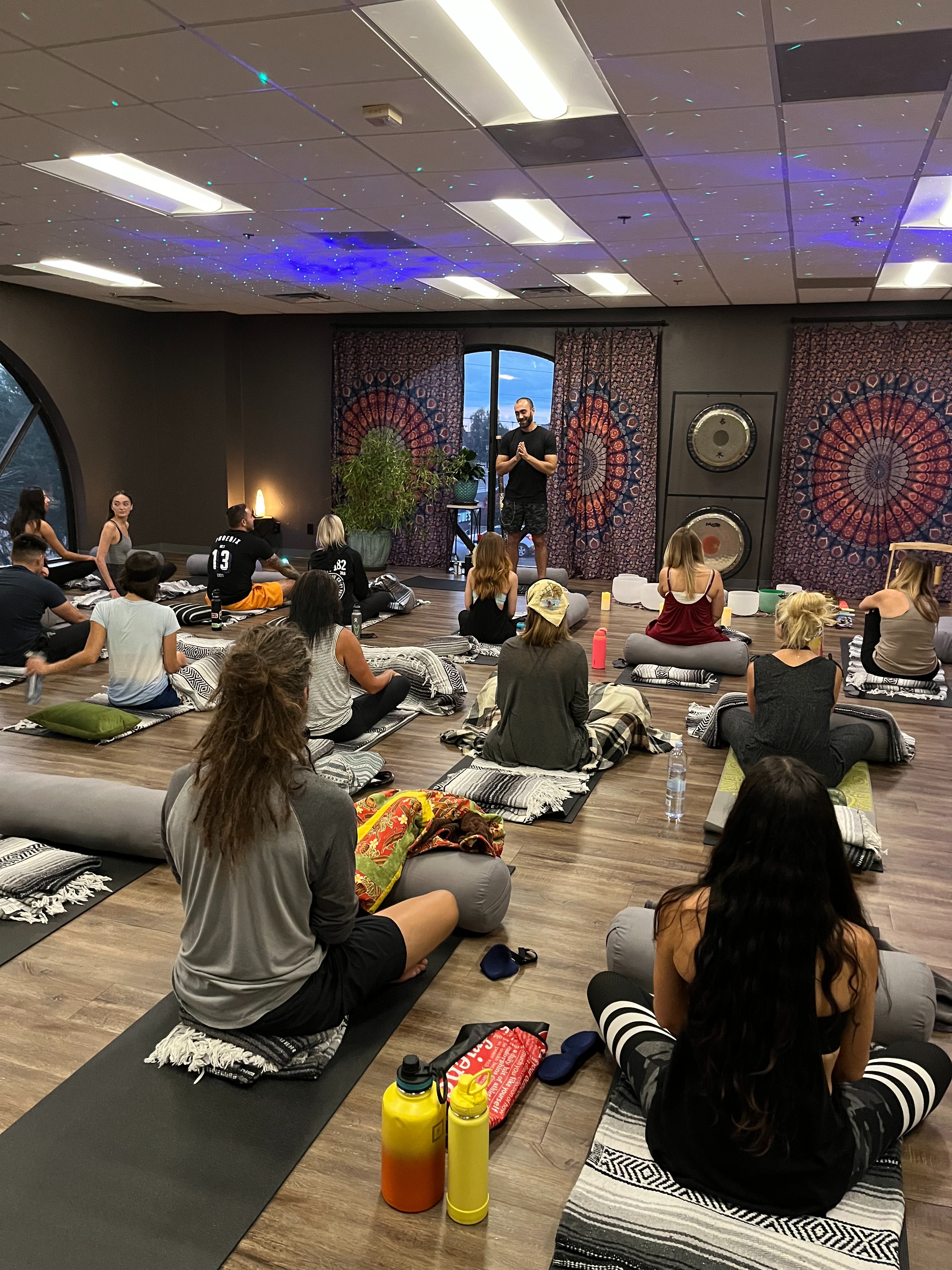
A sports Breathwork certification trains strength coaches, athletic trainers, and performance professionals to use structured breathing to raise an athlete's ceiling and shorten the bridge between effort and recovery.
Done well, it sits on top of an existing CSCS, ATC, NASM, or sport coaching credential and gives you protocols you can run on a sideline, in a weight room, or before a fight. Done poorly, it is a weekend cash grab with no programming, no contraindications, and nothing that survives contact with an actual athlete. This guide covers what the curriculum should include, how breathwork shows up in NFL, endurance, and combat sports, and how the Liquid Breathwork certification compares to SOMA Breath for performance work.
- Who it is for: strength coaches, sports performance trainers, athletic trainers, sport psychologists, and team-side wellness staff
- What it teaches: respiratory physiology, CO2 tolerance, activation, in-game recovery, sleep, contraindications
- Where it shows up: NFL recovery rooms, endurance camps, MMA fight weeks, tactical training
- How to pick one: small cohort, real mentorship, programming, and business support over name recognition
Why Athletes and Coaches Suddenly Care About Breathwork
Ten years ago, telling an NFL strength coach you were going to teach their athletes "Breathwork" would get you escorted off the practice field. Today, you can walk into the recovery room of almost any pro franchise and find a HRV monitor, a CO2 tolerance test, and a printout of nasal-breathing intervals taped to the wall.
A few things converged. Patrick McKeown's nasal breathing work moved out of asthma clinics into endurance training. Wim Hof made breath holds mainstream. Stanford published the physiological sigh study and handed coaches a 90-second tool to reset arousal between plays. The whole sport science world started treating sleep, HRV, and parasympathetic recovery as the real currency of long-season durability. That convergence created a real job, and a real need for someone trained to fill it.
How Breathwork Actually Improves Athletic Performance
Strip away the marketing and there are four mechanisms doing the work. Every protocol you will ever teach pulls on at least one of them.
1. CO2 Tolerance and the Anaerobic Threshold
Most athletes are not oxygen-limited. They are carbon-dioxide-intolerant. When CO2 builds up faster than they can tolerate, they breathe harder than the workload requires and feel "gassed" long before their actual capacity. Nasal breathing under load and CO2 tolerance training shift that threshold. The result is an athlete who can hold a higher output at the same perceived exertion. Combat coaches see it in the third round, when their fighter still has a face that looks like round one.
2. Heart Rate Variability and Recovery
HRV is the best biometric we have for parasympathetic recovery, and Breathwork is one of the few interventions that consistently moves it. Five minutes of paced nasal breathing at roughly six breaths per minute raises HRV in real time and improves the trailing seven-day average when practiced daily. For coaches, that is the difference between an athlete who recovers overnight and one who shows up to Tuesday's session still in the red.
3. Arousal Regulation
Between rounds, between sets, between plays, athletes need to drop sympathetic tone fast. The double-inhale physiological sigh does it in under 90 seconds. Box breathing does it slightly slower but with more focus. This is the closest thing to a "performance cheat code" you can give an athlete, and it is the easiest part of the curriculum to coach.
4. Sleep and the Real Place Performance Is Built
Strength is built in sleep, not in the weight room. Athletes who breathe through their mouths at night fragment sleep, reduce growth hormone release, and wake unrefreshed. Teaching mouth taping, nasal breathing before bed, and longer parasympathetic Breathwork sessions in the evening is one of the highest-leverage interventions in athletic recovery, and it is almost free.
What a Sports Breathwork Certification Should Cover
If a program does not teach all of the below, you are buying a brochure, not a certification. Use this list when you evaluate any sports Breathwork training.
- Respiratory anatomy and the diaphragm. Function, dysfunction, and how to assess a basic breathing pattern.
- CO2 and O2 tolerance. BOLT, MBT, controlled pause, plus how to interpret results.
- Nasal versus mouth breathing under load. When each is appropriate and how to transition long-time mouth breathers.
- Pre-competition activation. Wim Hof style hyperventilation, tactical breathing, and warm-up sequences that prime output without burning it.
- In-game and inter-set recovery. Physiological sighs, box breathing, and slow exhale protocols in 30 to 90 seconds.
- Post-session parasympathetic downshift. Coherent breathing and extended exhales that move HRV in 5 to 10 minutes.
- Sleep and circadian work. Evening nasal-only protocols and mouth taping.
- Contraindications and risk. Concussion, uncontrolled hypertension, cardiovascular disease, pregnancy, panic disorder, asthma, epilepsy.
- Programming and integration. Slotting Breathwork into a strength block, fight camp, or competition taper without compromising the primary work.
- Athlete communication and delivery. Language that lands, plus pricing, agreements, and outcome tracking for the business side.
Where Breathwork Is Already Inside the Sport
NFL and Pro Football
Breathwork inside the NFL is no longer fringe. Multiple franchises have brought respiratory coaches into strength staff over the past four years. The visible signal is in player recovery routines, sideline rituals (watch quarterbacks during a TV timeout), and the rise of nasal-only conditioning sessions in OTAs. The job in pro football is to keep a 245-pound linebacker available for 17 weeks. Slow nasal breathing for recovery, physiological sighs between series, and structured pre-game activation are the unglamorous tools doing that job.
Endurance Sports
Endurance is where the science is most mature. Patrick McKeown's Oxygen Advantage protocols are now standard in elite cycling and triathlon camps. Athletes train with nasal-only intervals to push the anaerobic threshold and improve running economy. World-class marathoners and Ironman athletes routinely run lactate-threshold sessions through the nose only. The certification you choose should teach you how to assess BOLT, prescribe nasal-only intervals, and progress them over a 6 to 12 week block.
Combat Sports
Combat sport is the highest-leverage application of Breathwork in athletics, and the easiest to demonstrate. Fighters who learn to drop sympathetic tone in the 60 seconds between rounds come out for round two with a lower resting heart rate and a clearer head. Wrestlers, BJJ competitors, and boxers benefit from the same core protocols. If you want a case study to point at when you pitch a team, this is the easiest one to film and sell.
Tactical Athletes
Military operators, firefighters, and law enforcement use the same toolset for stress inoculation under threat. Tactical breathing has been embedded in police and military doctrine for over a decade, and Sports Breathwork certified facilitators are increasingly hired into tactical performance programs.
Sports Breathwork Certification: Liquid Breathwork vs SOMA Breath
SOMA Breath is the program most coaches encounter first because of its marketing reach. It is a real option. It is also not built specifically for sports performance professionals, and that gap shows up the moment you try to use it on a team. Here is an honest side-by-side for the use case in this article.
| Feature | Liquid Breathwork | SOMA Breath |
|---|---|---|
| Primary methodology | Multi-modality (nasal, CO2 tolerance, physiological sighs, parasympathetic) | Single proprietary rhythmic technique |
| Sports performance focus | Activation, recovery, sleep, contraindications taught explicitly | General wellness focus, sports application is implied not taught |
| Programming for athletes | Integration with strength blocks, fight camps, season tapers | Not covered |
| Cohort size and mentorship | Small cohorts, direct feedback from lead facilitator and an RN | Large online cohorts, limited individual feedback |
| Accreditation | NCBTMB approved continuing education | Own certification |
| Business and delivery training | Built into the curriculum (pricing, contracts, team pitches) | Not included |
| Time to certify | Multi-week with practicum hours | Can be completed in a few weeks |
| Best for | Coaches and trainers who want to bill teams or athletes | Wellness practitioners wanting a single branded technique |
If you are a strength coach, athletic trainer, or performance professional and you want a program that actually fits your existing book of business, Liquid Breathwork is the better fit. SOMA Breath has its place. It is just not the place you are working. (For a wider comparison, our 11 best Breathwork certifications guide covers every major program in the industry.)
Who Should Pursue a Sports Breathwork Certification
This credential is built for a specific kind of professional. If you see yourself in two or more of these descriptions, the investment is an easy yes.
- Strength and conditioning coaches (CSCS) who want a high-leverage recovery and activation tool that does not burn training time.
- Athletic trainers (ATC) who manage recovery and want a structured way to coach respiration in rehab, return-to-play, and concussion protocols.
- Sports performance trainers in private practice who want a differentiator that justifies a higher session rate.
- Combat sport coaches looking for a measurable edge in fight camp.
- Endurance coaches ready to systematize nasal breathing and CO2 tolerance work.
- Sport psychologists and tactical trainers who want a body-side tool to anchor mental and stress-inoculation work.
If you fall outside those categories, the best Breathwork certifications guide walks through every major program. You can also try a Liquid Breathwork class first to feel the work from the inside.
How to Choose the Right Sports Breathwork Certification
1. Look at the Curriculum, Not the Marketing
The topic list earlier in this article is the bar. If a program does not teach contraindications, programming, or assessment, walk away. Slick branding and a celebrity instructor cannot replace a curriculum.
2. Ask Who Teaches Safety
Aggressive breath protocols (hyperventilation, breath holds, intermittent hypoxia) have real medical contraindications. Faculty should include a licensed medical professional. The Liquid Breathwork program is co-taught with a registered nurse for that reason.
3. Demand Small Cohorts
You cannot learn to coach a respiratory protocol from a recorded video. You need a live cohort small enough that the lead instructor can watch you facilitate and tell you what to fix. If a program enrolls 100+ per intake, the mentorship is a fiction.
4. Verify the Business Side
Clinical knowledge does not pay rent. If you plan to sell this work to a team or private athletes, you need training in pricing, agreements, and how to pitch a head coach. Programs that include it materially shorten the time to your first contract.
The Liquid Breathwork Sports Track
Our Breathwork certification includes a sports performance application track. Coaches learn the full multi-modality toolkit (nasal breathing, CO2 tolerance, activation, in-game recovery, parasympathetic downshift, sleep) and how to integrate it into strength and conditioning, fight camp, and competition periodization. Cohorts are small. Medical oversight is anchored by a registered nurse. The business module shows you how to pitch a team or open a private performance practice.
If you want to feel the work before you commit, try a single class. We run public Liquid Breathwork classes in Arizona that include the same core protocols you will be teaching.
Frequently Asked Questions About Sports Breathwork Certification
What is a sports breathwork certification?
A sports Breathwork certification trains strength coaches, athletic trainers, and performance professionals to use structured breathing to improve athletic output. Curriculum covers respiratory physiology, CO2 tolerance, nasal breathing protocols, activation, in-game recovery, sleep, and how to integrate Breathwork into existing strength and rehab programs.
How does breathwork improve athletic performance?
Breathwork raises CO2 tolerance, increases diaphragm strength, improves HRV, and gives athletes a tool to downshift between high-output efforts. Nasal breathing under load delays the anaerobic threshold. Physiological sighs cut sympathetic arousal in under 90 seconds. Longer sessions support deeper sleep, which is where most performance is actually built.
Do strength coaches need a separate certification to teach breathwork?
Legally, no. A CSCS, ATC, or NASM credential does not prohibit teaching breathing techniques. Practically, yes. Athletes and parents trust certified specialists, insurance carriers ask for proof of training, and protocols used in elite sport (breath holds, hyperventilation drills, intermittent hypoxia) carry real contraindications a weekend workshop will not cover.
What does a sports breathwork curriculum cover?
Respiratory anatomy and the diaphragm, CO2 and O2 tolerance, nasal versus mouth breathing under load, pre-competition activation, in-game recovery, parasympathetic downshift, sleep, contraindications (concussion, asthma, cardiovascular), and how to assess and program for a given athlete or team.
Which sports benefit most from breathwork training?
Combat sports (MMA, BJJ, boxing, wrestling) for round-to-round recovery. Endurance sports (running, cycling, triathlon, rowing) for nasal breathing and CO2 tolerance. Power and field sports (NFL, NBA, soccer, lacrosse) for short-form protocols between plays and sleep recovery. Tactical athletes use the same tools for stress inoculation under threat.
How is sports breathwork different from regular breathwork certification?
Regular Breathwork certifications often emphasize emotional release or ceremony in long-form sessions. Sports Breathwork emphasizes measurable performance outcomes, short protocols that fit a training session or game day, integration with strength work, and language that lands with athletes and coaches.
What is the best sports breathwork certification?
There is no single best program. SOMA Breath is affordable but teaches one proprietary method and is light on programming for serious athletes. Liquid Breathwork covers the full performance stack with small-cohort mentorship and business training, which matters if you plan to sell sessions to teams or private athletes.
Final Thoughts
The athletes who win the next decade will be the ones with the best recovery, not the hardest training. Breathwork is one of the cheapest and most underused tools in that stack, and the coaches who learn to coach it properly will be the ones teams call first. Pick a program with real curriculum depth, medical oversight, a cohort small enough to get mentored, and a business module that prepares you to sell the work. The science is settled. The application is wide open.
Ready to certify with Liquid Breathwork?
Small cohorts. Medical oversight. Sports performance track built in. Real business training so you can actually charge for the work.