
Years before I guided a Breathwork class myself, I sat in the parking lot for ten minutes before my first one, keys in my hand, talking myself out of it. I'd read that people cry and shake, I didn't know anyone inside, and there was always next week.
I went in anyway. Nobody looked twice when I grabbed a mat in the back corner. The facilitator talked us through the breath, the room went quiet except for everyone breathing together, and around minute twenty my shoulders dropped an inch they'd been holding for months.
I didn't cry. I just felt like I could rest. Here's what I wish I'd known in that parking lot.
Your first Breathwork class will likely be a 60-90 minute group session where you lie on a yoga mat and follow guided breathing. Wear comfortable clothes, bring water, and arrive 10 minutes early. No yoga or meditation experience required.
What happens in a Breathwork class
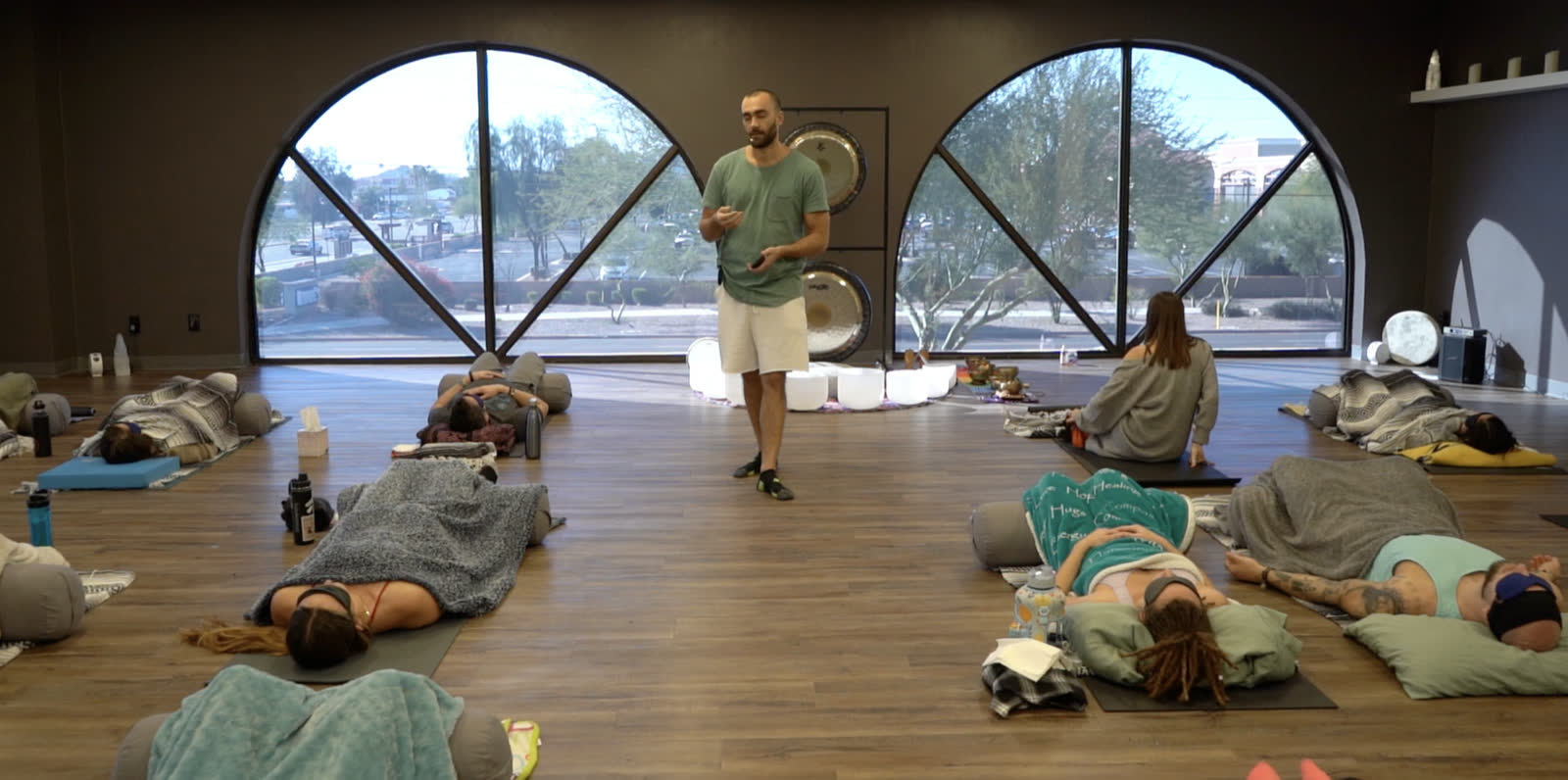
A Breathwork class is a guided session: you lie on a mat and breathe in a set pattern while a facilitator talks you through it. No poses. A typical Breathwork session runs like this:
The first 10-15 minutes are for settling in while the facilitator explains the technique. Mention any health conditions or injuries then. At Liquid Breathwork we also do a short group check-in.
The active breathing portion runs 25-45 minutes. The facilitator guides a breathing pattern, usually to music: circular breathing (continuous inhale and exhale, no pause), a two-part breath, or something slower. You set your own pace.
Integration takes another 10-20 minutes. You return to a normal breath and rest, sometimes with singing bowls.
What to bring to your first Breathwork class
- Yoga mat (many classes provide one, so ask)
- Blanket, since you cool down during the rest
- Pillow for under your head or knees
- Water bottle
- Eye mask if you have one (optional)
What to wear to a Breathwork class
Wear what you'd wear to nap on a Sunday afternoon: sweatpants, joggers, leggings, a soft t-shirt. Nothing tight around your ribs or waist. After 30 minutes of belly breaths, a tight waistband is all you'll think about. Shoes come off, and a hoodie helps once you cool down.
What to expect physically during your first session
Breathing faster or deeper than usual changes your blood chemistry. Your CO2 levels shift, and you feel it. None of the sensations below are dangerous.
- Tingling in your hands, feet, face, or lips
- A buzzing or vibrating feeling through your body
- Tightness or cramping in your hands (called tetany, it passes when you slow the breath)
- Feeling very warm or very cold
- Lightheadedness or a floaty sensation
- Pressure in your chest or throat
A trained Breathwork facilitator explains these before you start, and you can slow down or pause anytime.
The emotional side of Breathwork (yes, people cry)
People cry, laugh, or make sounds they didn't plan on. Plenty feel nothing the first time, and that's fine.
Breathwork activates your parasympathetic nervous system, and a lot of people carry stress and grief in the jaw and shoulders. When those let go, feelings can come up with them.
Everyone's eyes are closed, and nobody makes you share. What first-timers tell us most after class: "I don't know what happened, but I feel lighter."
Styles of Breathwork, and which ones suit beginners
Best for beginners:
- Box breathing (4 counts in, 4 hold, 4 out, 4 hold): calm and structured, good for stress and better sleep
- Coherence breathing (equal inhale and exhale, usually 5-6 seconds each): slow and easy to follow
- Guided relaxation Breathwork: slower breathing, often with sound healing, Reiki, or meditation
More intense, but still fine for a first class:
- Circular or conscious connected breathing: no pauses between breaths, so the tingling and emotions come on stronger
- Somatic Breathwork: breath combined with movement and emotional processing
- Holotropic Breathwork: developed by Stanislav Grof, uses accelerated breathing in longer sessions (usually 2-3 hours)
At Liquid Breathwork classes, we use a surrender-based approach that combines circular breathing with sound healing and Reiki. We run group and private sessions, and beginners are welcome at both.
How to prepare for your first Breathwork class
- Eat a light meal 1-2 hours before. A banana or toast is enough.
- Skip caffeine if you can. It revs up the nervous system the breathing is trying to settle.
- Drink water through the day.
- Set an intention if you like. "I'm open to whatever happens" is plenty.
Some people leave energized, others sleepy or emotional. Keep the hour after class free.
How to find a Breathwork class near you
Our free Breathwork Near Me tool pulls Breathwork classes and workshops near you from Eventbrite, Meetup, and other listings in 130+ cities across all 50 states.
In Arizona, we run in-person classes in Scottsdale, Phoenix, Tempe, Prescott, and Tucson.
If nothing is close, or you'd rather start at home, our online Breathwork membership has live-streamed sessions and on-demand classes (7-day free trial, $17/month after). You can also look for sound healing near you.