
Therapists can use Breathwork as a clinical adjunct for trauma, anxiety, and depression by integrating somatic breathing techniques that directly regulate the nervous system, something talk therapy alone often cannot reach.
Research in polyvagal theory shows that a regulated therapist improves client outcomes through co-regulation. Breathwork helps clinicians discharge compassion fatigue, prevent burnout, and maintain the emotional capacity their work demands. Therapist-specific Breathwork groups provide a confidential space where mental health professionals can receive care instead of always giving it.
- Breathwork activates the vagus nerve and shifts the nervous system out of chronic sympathetic activation
- Therapist-only groups offer shared professional context and built-in confidentiality
- Simple breath regulation techniques can be integrated into clinical sessions as grounding tools
- Breathwork certification programs offer CEU credits for licensed professionals
Why Therapists Need Their Own Breathwork Space
Therapists spend their days holding space for other people's pain. They sit with grief, trauma, anxiety, and anger for hours at a time, absorbing emotional weight that most people never see. And at the end of the day, they're expected to just shake it off and go home.
That's not how the nervous system works.
Compassion fatigue is real. The emotional residue of clinical work accumulates in the body whether you notice it or not. Tight shoulders, shallow breathing, disrupted sleep, a growing sense of numbness toward the work you once loved. These are signs that your system is carrying more than it can process on its own.
Here's the irony: healers rarely get healing themselves. Therapists are trained to help others regulate, but the profession offers very few spaces where someone holds that container for them. Supervision addresses clinical skills. Personal therapy helps (when you actually go). But neither one gives your body a chance to physically discharge what it's been holding.
That's exactly where Breathwork comes in.
What Makes a Therapist-Specific Breathwork Group Different
You could attend any Breathwork class. But there's something profoundly different about being in a room (or on a call) where every single person understands the weight of clinical work without needing it explained.
In a therapist-specific group, confidentiality isn't something you have to request. It's assumed. Everyone in the room operates under the same professional ethics. That shared understanding creates a level of safety that's hard to replicate in a mixed group.
There's no awkward explaining. No one asks what kind of stress you're dealing with or why you seem "fine" on the outside. Everyone gets it because they live it too. The shared professional context means you can drop in faster, go deeper, and actually receive support instead of performing wellness.
A Container Built for People Who Build Containers
Therapists are trained to create safe environments for others. But most have never experienced what it feels like to fully surrender into someone else's container. A Breathwork group designed specifically for mental health professionals flips the script. You get to stop holding everything together and let your own nervous system do what it needs to do.
No analyzing. No intellectualizing. Just breathing and letting go.
How Breathwork Complements Your Therapy Practice
Breathwork isn't a replacement for your own therapy, supervision, or self-care routines. It's the missing piece that most of those things can't touch: direct, somatic nervous system regulation.
Regulate Your Own Nervous System First
You already know the science. A dysregulated therapist cannot effectively co-regulate with a dysregulated client. When your own nervous system is running on fumes (stuck in low-grade sympathetic activation from back-to-back sessions), your capacity for presence, empathy, and attunement drops.
Regular Breathwork practice resets that baseline. Controlled breathing patterns activate the vagus nerve, shift you out of fight-or-flight, and restore the parasympathetic tone that deep clinical work demands. It's not theoretical. You feel the shift in your body within a single session.
Prevent Countertransference Burnout
Countertransference isn't just a clinical concept to manage intellectually. It lives in your body. The tension you carry after a difficult session, the dreams about clients, the emotional reactivity that creeps into your personal relationships. These are somatic signals that your system is overloaded.
Breathwork gives those signals somewhere to go. The deep, rhythmic breathing patterns create space for the body to process and release what talking alone can't reach. Many therapists report feeling "lighter" after a single session, as if a weight they didn't realize they were carrying has been set down.
Become a Better Practitioner
This isn't about self-care as an obligation. It's about professional effectiveness. When you're regulated, your clients feel it. Your presence is different. Your attunement is sharper. You catch the subtle shifts in session that you might miss when you're running on empty.
Think of Breathwork as maintenance for your most important clinical tool: yourself.
What a Breathwork Session Looks Like
If you've never experienced Breathwork (or only know the intense, cathartic styles), here's what to expect with a surrender-based approach.
Guided Surrender-Based Breathing
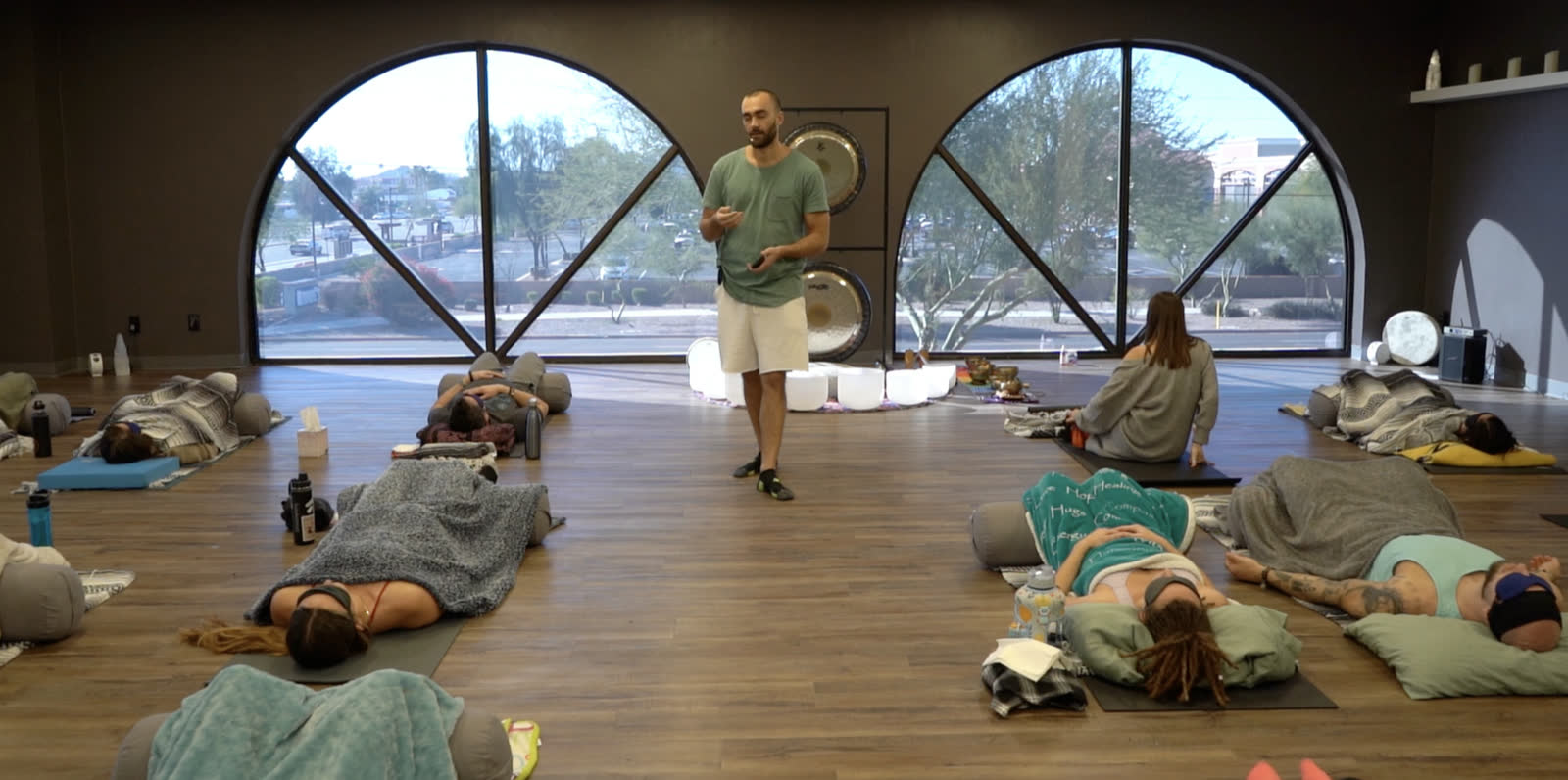
You lie down, close your eyes, and follow a guided breathing pattern. The technique is simple: a continuous, connected breath that gradually deepens over the course of the session. There's no hyperventilating, no forced emotional reactions, and no pressure to "perform" a breakthrough.
The emphasis is on surrender. Letting the breath do the work rather than trying to make something happen. For therapists (who spend all day actively holding and directing energy), this shift into receptivity is often the most powerful part.
Somatic Release
As the breath deepens, the body starts to respond. You might feel tingling, temperature changes, emotional waves, or physical sensations like tightness releasing in your chest or jaw. Some people cry. Some laugh. Some just feel profoundly still.
None of it is forced. The body knows what it needs to release when it finally feels safe enough to do so. As a therapist, you understand this principle intellectually. Breathwork lets you experience it firsthand.
Group Processing
After the breathing portion, there's time for integration and sharing. In a therapist group, this processing is naturally richer because everyone in the room has the language and framework to articulate their experience. It's not group therapy. It's a community of professionals supporting each other's well-being.
How Your Breathwork Practice Improves Client Outcomes
This is the part that matters most to clinicians: does it actually help your clients when you do Breathwork yourself?
The short answer is yes.
When the Therapist Is Regulated, Clients Feel It
Polyvagal theory tells us that humans detect safety and threat through neuroception, the unconscious scanning of other people's nervous systems. Your clients are reading your regulation state whether they know it or not. When you're grounded and present, their nervous system relaxes in response. When you're depleted, they sense that too (even if they can't name it).
A consistent Breathwork practice keeps your window of tolerance wide. You stay present through difficult material. You hold space without absorbing. You model the regulated state that your clients are learning to access.
Better Presence, Better Attunement, Better Results
Therapists who maintain their own somatic practice consistently report improved clinical outcomes. They notice more in session. They respond rather than react. They hold boundaries with less effort because their system isn't fighting to stay afloat.
Your clients didn't hire a burned-out version of you. They need the version that has enough capacity to truly be with them. Breathwork is one of the most efficient ways to protect that capacity.
How to Integrate Breathwork into Your Practice
Beyond your own well-being, Breathwork offers practical tools you can bring directly into clinical work.
Using Breath Techniques with Clients
Simple breath regulation techniques (like extended exhale breathing or box breathing) are excellent grounding tools for clients experiencing anxiety, panic, or trauma responses. They're evidence-based, require no equipment, and clients can use them independently between sessions.
Many therapists who experience Breathwork themselves begin incorporating these tools naturally. You understand the techniques from the inside out, which makes teaching them to clients more authentic and effective.
CEU Opportunities and the Certification Path
For therapists interested in going deeper, Breathwork certification programs offer continuing education credits that count toward licensure renewal. This means you can invest in your own well-being and professional development simultaneously.
The Liquid Breathwork training program is designed for people who want to facilitate Breathwork with skill and integrity. For therapists, this training adds a somatic modality to your existing toolkit, one that complements CBT, EMDR, somatic experiencing, and other evidence-based approaches.
Frequently Asked Questions
Why do therapists need their own Breathwork group?
Therapists carry unique emotional weight from holding space for clients all day. A therapist-specific Breathwork group provides a container where everyone understands the demands of clinical work, confidentiality is a given, and no one needs to explain why they're burned out. It's a space designed specifically for healers to receive care instead of always giving it.
How does Breathwork help prevent therapist burnout?
Breathwork directly regulates the nervous system through controlled breathing patterns that activate the parasympathetic response. For therapists dealing with compassion fatigue and countertransference, regular Breathwork practice helps discharge accumulated stress, restore emotional capacity, and maintain the regulated presence that clients depend on.
Can therapists use Breathwork techniques with their own clients?
Yes. Many therapists integrate simple breath regulation techniques into their clinical practice as grounding tools for clients experiencing anxiety, trauma responses, or emotional dysregulation. Breathwork certification is a practical addition to any therapeutic toolkit.
A Space Just for Healers
Join our exclusive Breathwork group for therapists and mental health professionals.