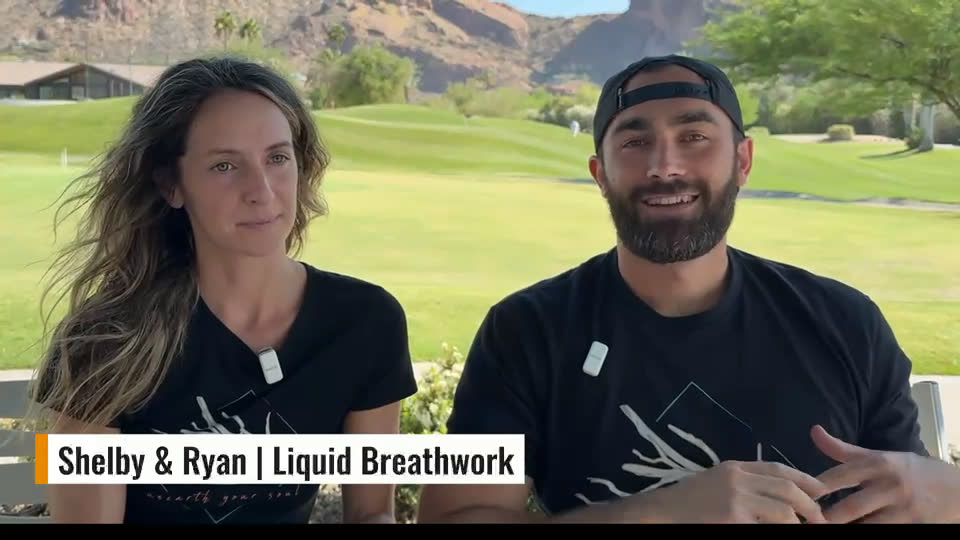
We have been running Breathwork sessions since 2018. Hundreds of group classes, private sessions, facilitator training intensives, corporate events, retreat weekends. In that time, we have watched the full range of what comes up in a Breathwork room: the tingling and the crying and the laughter, the person who floated out blissed-out, and the person who needed five minutes of grounding at the end to land fully. Ryan holds 284 hours of training across three breathwork certifications and has certified 28 facilitators. Shelby brings a registered nurse's understanding of the clinical side, which is good context to have in the room even though Breathwork sessions do not typically require it.
We are writing this because "is breathwork safe" and "breathwork side effects" are questions we field constantly, and most of the content out there does one of two things: it either lists frightening physiological terms without context, or it waves the question away with "just listen to your body." Neither is actually helpful if you are trying to decide whether to show up to your first session, or whether to recommend Breathwork to someone you care about.
The honest answer is that Breathwork is safe for most people, the things people experience during a session are physiologically normal and not harmful, and the one real consideration for regular practitioners is something you can address with simple daily habits. There are also genuine contraindications for certain health conditions, and we take those seriously. This article covers all of it, plainly.
Breathwork side effects are almost entirely session-specific and temporary: tingling, lightheadedness, muscle cramping, and emotional release are normal physiological responses to CO2 changes during conscious connected breathing. They are not dangerous for healthy adults and resolve within minutes. The one real consideration for frequent intense practitioners is a mild tendency toward lower CO2 tolerance between sessions, which simple daily breathing habits offset. Genuine contraindications exist for certain health conditions, and any responsible facilitator will ask about them before you start.
- Tingling, hand cramping, and lightheadedness are expected and not harmful in healthy participants
- Emotional waves (crying, laughter, grief, relief) are a normal feature of the practice, not a warning sign
- The one lasting consideration is mild CO2 tolerance drift in frequent intense practitioners, easily addressed by nasal breathing, box breathing, and slow exhale work
- Real contraindications exist for cardiovascular conditions, epilepsy, pregnancy, and active psychosis
- Surrender-based Breathwork builds a gentler, more regulated experience into the method itself
Key Takeaways
- Most breathwork side effects are session-local: caused by temporary CO2 changes, they resolve the moment breathing returns to normal.
- The physiology is understood and benign for healthy adults: respiratory alkalosis, tetany, cerebral vasoconstriction, and sympathetic activation are all predictable and reversible.
- Contraindications are real and worth respecting: cardiovascular conditions, epilepsy, pregnancy, and active psychosis are absolute. Disclose everything to your facilitator.
- The surrender-based approach matters: Breathwork that guides people toward regulation rather than catharsis produces a different physiological experience, and fewer alarming moments.
- Frequent intense practitioners should support CO2 tolerance: nasal breathing during workouts, box breathing, and slow exhale practices keep your baseline in a healthy range.
What People Fear (and Why the Fear Is Usually Bigger Than the Reality)
When someone searches "breathwork dangers" or "is breathwork dangerous," they have usually heard a story. Someone fainted. Someone sobbed uncontrollably for forty minutes. Someone came out of a session feeling strange for days. The breathwork world has its share of intense experiences, and some of those stories are real.
What the stories rarely include is context: which technique was being used, how intensely, in what setting, with what level of facilitator experience, and whether the participant had disclosed relevant health history beforehand. Breathwork is a broad category. A slow diaphragmatic session guiding you toward parasympathetic relaxation produces a fundamentally different physiological event than a high-intensity circular session that deliberately drives CO2 low for extended periods. Treating them as equivalent is like treating a gentle yoga class and a competitive triathlon as the same activity because both involve physical movement.
The breathwork risks that generate alarming stories are almost always the result of one or more of these factors: technique intensity pushed past appropriate levels, a participant with an undisclosed contraindicated condition, a facilitator who lacked the training to recognize what was happening, or someone practicing alone with no preparation. Remove those factors and the risk profile changes substantially.
In a well-facilitated session with appropriate health history gathered beforehand, the actual breathwork side effects you encounter are manageable, expected, and in most cases a feature of the practice rather than a problem with it.
What Actually Happens in Your Body, and Why It Is Normal
Understanding the physiology makes the experience far less alarming in the moment. Here is what is happening and why your body does it.
Respiratory Alkalosis: The Root of Most Session Sensations
When you breathe faster or more deeply than your metabolic needs require, you exhale carbon dioxide (CO2) faster than you produce it. CO2 is not simply a waste product; it is a primary regulator of blood pH. As CO2 drops, blood pH rises above its normal range (roughly 7.35 to 7.45), creating a temporary state called respiratory alkalosis.
This shift in blood chemistry changes the electrical charges across cell membranes, making neurons and muscle cells more excitable. That heightened excitability is responsible for most of the physical sensations in a connected breathing session: the tingling, the pressure in the hands and face, the sense that your body is buzzing or vibrating. It is a temporary, well-understood physiological state. It does not indicate anything is going wrong.
Tetany and Carpopedal Spasm
The most startling physical breathwork side effect for first-timers is tetany: muscle fibers firing on their own, most often in the hands, face, or feet, though it can show up in different parts of the body. The sensation is somewhat comparable to cramping, and it can feel kind of like that at first, but it is actually pretty different: the muscle fibers are firing and tensing up rather than seizing, and hands or feet can feel temporarily locked.
In a setting like ours, where we are consciously hyperventilating and mixing in breath holds for short, intentional windows rather than extended periods, this is safe and completely normal. It resolves within minutes of slowing your breathing. It is not a sign of injury. First-timers who know to expect it move through it easily, and first-timers who have never heard of it sometimes panic, which intensifies the sensation. This is exactly why we walk participants through what to expect before every session. There should be no surprises.
Lightheadedness and Visual Changes
CO2 is a potent vasodilator in the brain's blood supply. As CO2 drops during intense Breathwork, cerebral blood vessels constrict (vasoconstriction), temporarily reducing blood flow to the brain. The result is lightheadedness, a sense of spaciness, and sometimes visual phenomena: colors, geometric patterns, or a brightening at the edges of closed eyes.
These are physiologically normal consequences of altered cerebral blood flow and are not dangerous for healthy adults lying on a mat. They are also, for many people, part of what makes the session interesting: the perceptual shift that opens space for emotional and somatic processing.
Syncope (fainting) is a rarer extension of the same mechanism: CO2 drops far enough that cerebral perfusion decreases to the point of brief loss of consciousness. This is why all intense Breathwork should be done lying down on a mat, never seated in a chair or standing. A participant who faints while lying down returns to consciousness quickly as breathing normalizes. The risk is only from falling, which is why the mat position is non-negotiable.
Sympathetic Nervous System Activation
Active connected breathing techniques engage the sympathetic nervous system as part of their mechanism: heart rate rises, blood pressure increases temporarily, adrenaline releases. This is intentional. Many Breathwork modalities use sympathetic activation to surface stress patterns held in the body and bring them into awareness where they can be processed and released.
For healthy adults, this temporary sympathetic activation passes naturally. It is also why cardiovascular conditions appear on every responsible breathwork contraindication list. A heart that cannot safely manage a temporary increase in demand should not be in a high-intensity Breathwork session. That is a simple physiological fact, not a judgment.
Emotional Release
Breathwork produces emotional release: spontaneous crying, laughter, grief, waves of love or relief, anger that surfaces and dissolves. Across hundreds of group sessions, this is the most common thing people experience, and it is what brings most people back.
The physiological basis is real. Altered breathing patterns change brainwave activity, shift the balance between sympathetic and parasympathetic branches of the nervous system, and create conditions where emotional material held somatically as tension begins to move. We explore this fully in our trauma-informed Breathwork guide. The point here: emotional release during a session is not a side effect. It is the practice working. It is usually a sign that something held for a long time is finally getting some movement.
Normal vs. Concerning: A Practical Reference
After a first session, people often want some version of "was that okay?" Here is a practical guide to what falls in the normal column and what genuinely warrants attention.
| What Happens | Why It Happens | Normal or Concerning? | What to Do |
|---|---|---|---|
| Tingling in hands, feet, or face | Respiratory alkalosis altering nerve excitability | Normal | Breathe more gently; tell your facilitator if it becomes uncomfortable |
| Hands, face, or feet tensing up (tetany: muscle fibers firing) | Temporary CO2 shift from intentional fast breathing; feels a bit like cramping but is different | Normal; resolves quickly | Slow your breathing; let your facilitator know so they can support you |
| Lightheadedness or dizziness | Cerebral vasoconstriction from CO2 drop | Normal while lying down | Slow your breathing; if it persists, stop the pattern and breathe naturally |
| Seeing colors or lights behind closed eyes | Visual cortex stimulation from altered blood flow and alkalosis | Normal | No action needed; relax and stay with the experience |
| Emotional release (crying, shaking, laughter) | Somatic release; nervous system processing | Normal and often the point | Let it move; your facilitator is trained to hold this |
| Temporary fatigue after the session | Nervous system processing; CO2 rebalancing | Normal | Rest, hydrate, eat lightly; give yourself integration time |
| Brief fainting that resolves immediately | Temporary reduction in cerebral blood flow | Uncommon; not dangerous if lying down; warrants a follow-up conversation | Tell your facilitator; review your health history before the next session |
| Chest pain during or after | Not a normal breathwork mechanism | Concerning; stop immediately | Stop the session; seek medical evaluation before any further Breathwork |
| Dissociation that does not resolve by the end of the session | May indicate trauma activation beyond the session's container | Concerning if prolonged | Tell your facilitator; grounding protocols; consider trauma-specific support |
| Prolonged hyperventilation you cannot slow down | Panic response or technique issue | Concerning if unresponsive to verbal cues | Facilitator should intervene; breathe into cupped hands; stop the technique |
The One Real Consideration for Regular Practitioners
When people ask whether Breathwork has lasting side effects, our honest answer is: for most people, no. The tingling, the lightheadedness, the emotional release, the temporary fatigue: all session-specific, all over when the session ends. They are not building up in your system between sessions.
There is one exception worth knowing if you practice high-intensity hyperventilatory Breathwork frequently.
CO2 Tolerance and the Overbreathing Tendency
CO2 tolerance is a measure of how comfortable your nervous system is with elevated carbon dioxide levels. People with higher CO2 tolerance tend to breathe more calmly, with lower baseline respiratory rates, and they experience fewer of the intense physical breathwork side effects during sessions because they can sustain a broader physiological range before hitting the alkalosis threshold.
Frequent practice of high-intensity circular Breathwork, the kind that deliberately drives CO2 low for extended periods, can gradually nudge your resting CO2 tolerance lower over time. Your nervous system adapts to the pattern of regularly flushing CO2, and you may find yourself breathing slightly faster or more shallowly between sessions without noticing. This is the overbreathing tendency.
We want to be clear about the scale of this: it is not alarming, it is not harmful in a significant way, and it does not happen at all for casual practitioners who breathe consciously a few times a week. It is a consideration for people doing daily high-intensity sessions over months or years. And the practices that offset it are simple, beneficial in their own right, and worth building into any regular Breathwork practice:
- Nasal breathing during workouts: Nasal breathing maintains CO2 at higher levels during physical exertion and trains the nervous system to be comfortable with elevated CO2. It also supports nitric oxide production and overall breathing efficiency. Switching from mouth breathing to nasal breathing during walks, easy runs, or yoga is the single highest-leverage daily habit for CO2 tolerance.
- Box breathing (4-4-4-4): Four counts in, four-count hold, four out, four-count hold. The structured breath hold and slow exhale keep CO2 in a healthy range and train the nervous system toward a calmer baseline. Five minutes in the morning consistently makes a measurable difference over weeks.
- Slow exhale practices: Any breathing pattern that emphasizes a slow, extended exhale activates the parasympathetic nervous system and supports CO2 balance. Inhaling for four counts and exhaling for six to eight is a gentle, effective daily reset that requires nothing except ten minutes and a quiet seat.
These practices work with deeper Breathwork sessions rather than against them. In our experience, practitioners who build nasal breathing and slow-exhale work into their between-session routine tend to have richer, more integrated experiences when they do practice more intensively, because their baseline CO2 tolerance gives them a broader physiological range to work within.
Why Surrender-Based Breathwork Is Built Differently
Many Breathwork styles are explicitly designed to push people as deep and as hard as possible. The intensity is the goal. The cathartic release, the shaking, the screaming, the prolonged altered states: these are treated as markers of depth and progress. We have deep respect for facilitators who run high-catharsis rooms with genuine skill. Those lineages have produced real healing for a lot of people, and we have trained in some of them.
But it is not our approach, and the difference has safety implications worth understanding.
Liquid Breathwork is built around a surrender-based model. Rather than pushing intensity to generate catharsis, we guide participants toward releasing the resistance to what is already present. The breath is the vehicle; the goal is not to overwhelm the nervous system but to create a supported state where the nervous system can let go of what it has been holding. The emotional releases that happen in our sessions are real and often significant, but they tend to happen through softening rather than force.
From a physiological standpoint, this means we are not deliberately driving CO2 as low as possible for as long as possible. We are working with the breath in a way that creates access to altered states and emotional material without requiring the extreme end of the respiratory alkalosis spectrum. The tingling and the spaciousness are present. The extreme tetany and prolonged dissociation are far less common in our rooms than in modalities that chase intensity as a destination.
We did not design this approach out of caution or timidity. We designed it because we genuinely believe the deepest transformation happens when the nervous system feels safe enough to open, not when it is overwhelmed. Safety is not a constraint on the work. It is built into the method itself.
For people drawn to deeper cathartic approaches, holotropic Breathwork, rebirthing, and some somatic modalities are worth investigating. We have done these trainings ourselves and respect what they offer. They are simply not what we teach, and we want to be honest about that distinction when people are choosing a Breathwork experience or a facilitator training program.
Breathwork Contraindications: The Honest Pre-Screen
Regardless of approach or intensity, certain health conditions interact with altered breathing patterns in ways that require modification or avoidance. Any facilitator worth working with will ask about these before your session. Any facilitator who does not ask at all is worth reconsidering.
In our facilitator training program, we spend real time on contraindication knowledge because this is where well-meaning but undertrained facilitators cause harm. It is not the glamorous part of the curriculum. It is foundational to doing this work responsibly.
Absolute Contraindications for Intense Breathwork
These conditions represent situations where intense circular Breathwork poses significant risk without direct medical supervision:
- Cardiovascular conditions: Recent heart attack (within 6 months), cardiac arrhythmia, high blood pressure not controlled by medication, heart failure, or history of stroke. Sympathetic activation and transient blood pressure changes during active Breathwork create cardiac demand these conditions cannot safely absorb.
- Epilepsy or seizure disorders: Hyperventilation is a known clinical method for provoking seizure activity in EEG testing. Deliberate hyperventilatory Breathwork carries meaningful seizure risk in susceptible individuals.
- Current pregnancy: Reduced CO2 during hyperventilatory Breathwork can transiently affect fetal circulation. Gentle breathing practices are generally fine in pregnancy with OB guidance, but anyone pregnant should skip the breath holds entirely, err on the side of caution, and slow the exhale down rather than pushing intensity. Intense circular Breathwork is not recommended.
- Active psychosis: Altered states induced by Breathwork can be destabilizing for people with psychotic disorders, including those who have recently discontinued antipsychotic medications.
- Untreated bipolar disorder in a manic phase: The altered state potential of intense Breathwork can trigger or intensify mania. Participants with a bipolar diagnosis should consult their psychiatrist before any intense Breathwork practice and should be in a stable, euthymic state before attending.
- Glaucoma or retinal detachment: Intense Breathwork can cause transient increases in intraocular pressure, which is contraindicated for conditions sensitive to those changes.
- Recent major surgery: Within 3 months, especially abdominal, thoracic, or eye surgery. Intense breath patterns can disrupt healing.
- Severe uncontrolled asthma or COPD: For people whose baseline respiratory function is already compromised, controlled hyperventilation can trigger bronchospasm or respiratory distress.
- Known aneurysm (brain or aortic): Transient blood pressure increases during active Breathwork are a risk factor for aneurysm rupture.
Relative Contraindications: Proceed with Care and Disclosure
These conditions do not rule out Breathwork entirely but require disclosure and a facilitator who can work at an appropriate pace:
- Well-controlled anxiety disorders where you are already working with a therapist or psychiatrist
- Panic disorder (gentle techniques may be appropriate; high-intensity circular Breathwork is a significant starting-point risk)
- Stable, well-managed bipolar disorder in a euthymic state
- Controlled asthma with an inhaler available at the session
- Trauma history without current active symptoms (our trauma-informed Breathwork guide covers how we approach this)
- Raynaud's syndrome or peripheral vascular conditions (tingling and spasm may be more pronounced)
- Medications for blood pressure or heart rate regulation (discuss with your prescribing physician before a session)
Who Should Not Do Intense Breathwork, and Who Should Start Gentle
This section is specifically about intense circular connected breathing: the kind that deliberately drives CO2 low through sustained, active breathing. It does not apply to slow diaphragmatic breathing, box breathing, or relaxation-focused breathing techniques.
Who Should Not Do Intense Breathwork
- Anyone with a cardiovascular condition listed in the contraindications section above
- Anyone with epilepsy or a seizure disorder without explicit physician clearance and direct medical supervision at the session
- Anyone currently pregnant
- Anyone experiencing active psychosis or a current manic episode
- Anyone with untreated or unstable bipolar disorder
- Anyone with glaucoma or a history of retinal detachment
- Anyone within 3 months of major surgery
- Anyone with severe, poorly controlled asthma or COPD
- Anyone with a known aneurysm
- Anyone who is heavily intoxicated or in active substance withdrawal
Who Should Start with Gentle Breathwork Instead
Being on this list is not a reason to avoid Breathwork. It is a reason to start at the right pace with a facilitator who knows your history:
- People managing anxiety or panic disorder who are already working with a therapist
- People with a trauma history who have not yet done body-based trauma processing work (slow Breathwork within a trauma-informed approach is an excellent starting point)
- People taking psychiatric medications who want to understand how those medications interact with altered-state experiences
- Complete beginners with no prior Breathwork experience (attending your first breathwork class in a group setting with an experienced facilitator beats starting at home alone every time)
- Older adults (65+) who have not had a recent cardiovascular checkup
- People with a history of dissociation who do not yet have reliable grounding skills
Our community classes in the Phoenix metro area are specifically designed to be a supported first experience. The surrender-based approach and small group format mean you are never thrown in at the deep end.
Breathwork and Anxiety: A Clearer Picture
Breathwork is among the most effective tools available for anxiety relief, particularly techniques that emphasize slow exhalation and parasympathetic activation. The relationship with high-intensity Breathwork is more nuanced and worth explaining clearly.
Slow-paced, parasympathetic-activating Breathwork is genuinely helpful for anxiety. The research on slow-paced breathing for heart rate variability, and on extended exhales for vagal tone, is solid. We use these techniques regularly with participants navigating anxiety and stress.
High-intensity circular Breathwork requires more care when anxiety is present. The physiological sensations of respiratory alkalosis (tingling, racing heart, lightheadedness) overlap with panic attack sensations, which means someone with panic disorder who does not know what to expect can misread a normal session response as a danger signal and spiral. Context transforms the experience. A participant who understands that tingling is a CO2 effect moves through it without escalating. Preparation is the difference.
We go into this in detail in our Breathwork for anxiety guide. The short version: Breathwork and anxiety are not incompatible. High-intensity Breathwork without preparation and facilitator context is the combination to be careful with. Slow, intentional practice in a supported setting is almost always beneficial.
Is Breathwork Dangerous? Our Honest Answer
For healthy adults, in a well-facilitated session, with a facilitator who has asked about your health history: no. The breathwork side effects people experience are physiologically understood, temporary, and benign. We have facilitated hundreds of sessions across nine years and have never had a participant require emergency medical attention.
Breathwork carries real breathwork risks for people with contraindicated conditions who practice without disclosing them. It can also produce intense psychological experiences that are genuinely challenging without the right container. These are not arguments against Breathwork. They are arguments for choosing a facilitator who knows what they are doing and creates conditions for a genuinely safe session.
The breathwork dangers that generate alarming stories are almost always a function of the wrong technique for the participant, an undisclosed health condition, or a facilitator without the training to recognize what was happening and adjust. None of those factors is inherent to Breathwork itself. All of them are addressable through proper training and responsible practice. Is breathwork safe? Yes, in the right conditions. Is breathwork dangerous? It can be, when those conditions are absent.
Questions to Ask a Facilitator Before Your First Session
If you are evaluating a Breathwork class or facilitator, these questions will tell you quickly whether they are operating at a professional standard:
- "Do you ask about health conditions before each session?" The answer should be yes, before every session. Health changes over time. A facilitator who gathers intake once at the beginning and never again is not fully tracking what is true for their participants.
- "What are your contraindications for this technique?" A trained facilitator should be able to name cardiovascular conditions, epilepsy, pregnancy, and psychiatric history without hesitation. Vague answers here are a signal worth noting.
- "What happens if someone has an intense reaction during the session?" They should describe a grounding protocol: verbal cues to slow breathing, ability to stop the session for that participant, and a post-session check-in. "People just need to trust the process" is not a plan.
- "What training do you hold, and how many hours?" Specific program names, hours completed, and whether they have ongoing mentorship or continuing education. Experience across a wide variety of participant types matters more than a single credential.
- "Do you have experience with [your specific situation]?" If you have anxiety, trauma history, cardiovascular concerns, or anything in the relative contraindication range, ask directly. A good facilitator will confirm their experience or refer you to someone better suited.
- "What does the session look like from start to finish?" You should get a clear picture of intake, the breath technique, music and pacing, and what happens in the integration period afterward. Vagueness here can signal lack of structure.
- "Will I be lying down during the active breathing portion?" For connected or circular Breathwork, always yes.
What to Expect: The Session Arc
For anyone preparing for a first session, here is what the physiological journey typically looks like so none of it catches you off guard.
Minutes 1 to 5: You begin circular breathing, continuous connected breathing with no pause between inhale and exhale. Within the first few minutes, tingling may begin in the fingers and lips. Your facilitator will have mentioned this before you start. It is expected and normal.
Minutes 5 to 15: The tingling may intensify. Some people notice their hands beginning to cramp or feel heavy. Vision may shift: colors or patterns at the edges of closed eyes, a floating feeling. Emotionally, a door opens. Some people feel waves of sadness, love, grief, or relief without obvious cause.
Minutes 15 to 30: For many people this is the most active portion. Physical sensations peak and then begin to settle as CO2 finds a new equilibrium. Emotional material may surface. A trained facilitator is present and observing throughout, available without intruding.
After the breathing pattern: You return to natural breathing. Physical sensations clear within minutes. The integration period (usually 10 to 20 minutes of quiet rest) is when the nervous system metabolizes what it just processed. This period matters and should not be skipped.
Knowing this arc makes the physical sensations much easier to move through rather than resist. We go deeper into preparation in our guide to what to expect at your first Breathwork class.
Frequently Asked Questions
What are the most common side effects of breathwork?
The most common breathwork side effects are tingling or numbness in the hands, feet, or face (caused by a temporary drop in CO2 known as respiratory alkalosis), lightheadedness, muscle fibers firing and tensing up (tetany), most often in the hands, face, or feet, emotional waves such as crying or spontaneous laughter, and temporary fatigue afterward. These are physiologically normal responses to altered breathing and resolve quickly once you return to a natural breath. For most healthy adults, they are not harmful and do not require medical attention.
Is breathwork safe?
Breathwork is safe for most healthy adults, particularly when practiced with a facilitator who asks about your health history before a session. The sensations most people experience (tingling, lightheadedness, emotional release) are well-understood physiological responses to changes in CO2 and nervous system activation. Breathwork carries real contraindications for specific populations, including people with cardiovascular conditions, epilepsy, pregnancy, and active psychotic disorders. For everyone else, a well-facilitated session in a supportive environment is both safe and beneficial.
Who should not do breathwork?
People who should avoid intense Breathwork include those with cardiovascular conditions (recent heart attack, arrhythmia, uncontrolled hypertension), a history of seizures or epilepsy, current pregnancy, active psychosis or untreated mania, glaucoma or retinal detachment, recent surgery, and severe uncontrolled asthma or COPD. These are not arbitrary cautions: they reflect specific physiological interactions between intense breathing patterns and those conditions. Always tell your facilitator about your health history before a session.
Does breathwork have lasting side effects?
For most people, no. The tingling, lightheadedness, and emotional release experienced during a session are temporary and resolve within minutes. The one real consideration for regular practitioners of high-intensity hyperventilatory styles is a gradual drift toward lower CO2 tolerance and a tendency to overbreathe between sessions. This is fairly mild and is offset (and often improved) by incorporating nasal breathing during workouts, slow exhale practices, and box breathing into your daily routine.
What are breathwork contraindications?
Breathwork contraindications are health conditions that make intense circular breathing techniques unsafe without modification or medical clearance. Absolute contraindications include cardiovascular disease (arrhythmia, recent MI, uncontrolled hypertension), seizure disorders, pregnancy, active psychosis, and conditions sensitive to intraocular pressure changes like glaucoma. Relative contraindications, where gentler practices may still be appropriate, include stable anxiety disorders, well-managed asthma, controlled bipolar disorder, and trauma history without current active symptoms. Any reputable facilitator will ask about these before your first session.
What is the difference between breathwork side effects and breathwork dangers?
Breathwork side effects are the normal, predictable physiological responses that happen during a session and resolve once breathing returns to baseline: tingling, lightheadedness, muscle cramping, emotional release. Breathwork dangers refer to situations that warrant stopping a session or seeking medical attention: chest pain, prolonged dissociation that does not resolve, cardiac symptoms, or seizure activity. A trained facilitator knows how to distinguish between the two in real time. Most sessions never approach the danger category.
Related Learning
- Trauma-Informed Breathwork: What It Means and Why It Matters: how we hold space for emotional material without retraumatizing
- What to Expect at Your First Breathwork Class: a practical guide for first-timers on what happens and how to prepare
- Breathwork for Anxiety: Techniques, Evidence, and What Works: the nuanced guide to Breathwork and anxiety, including which formats help and which to approach carefully
- Liquid Breathwork Classes in the Phoenix Area: attend a community session before committing to anything more intensive
- Liquid Breathwork Facilitator Training: our 3-day intensive and 12-week mentorship program for people who want to facilitate safely and confidently
Ready to Experience Breathwork in a Safe, Supported Setting?
Our community classes in the Phoenix metro area are the best place to start. Small groups, experienced facilitation, and a surrender-based approach that works with your nervous system rather than overwhelming it.
If you are considering facilitating Breathwork yourself, our training program is where you learn to hold this work responsibly for others.