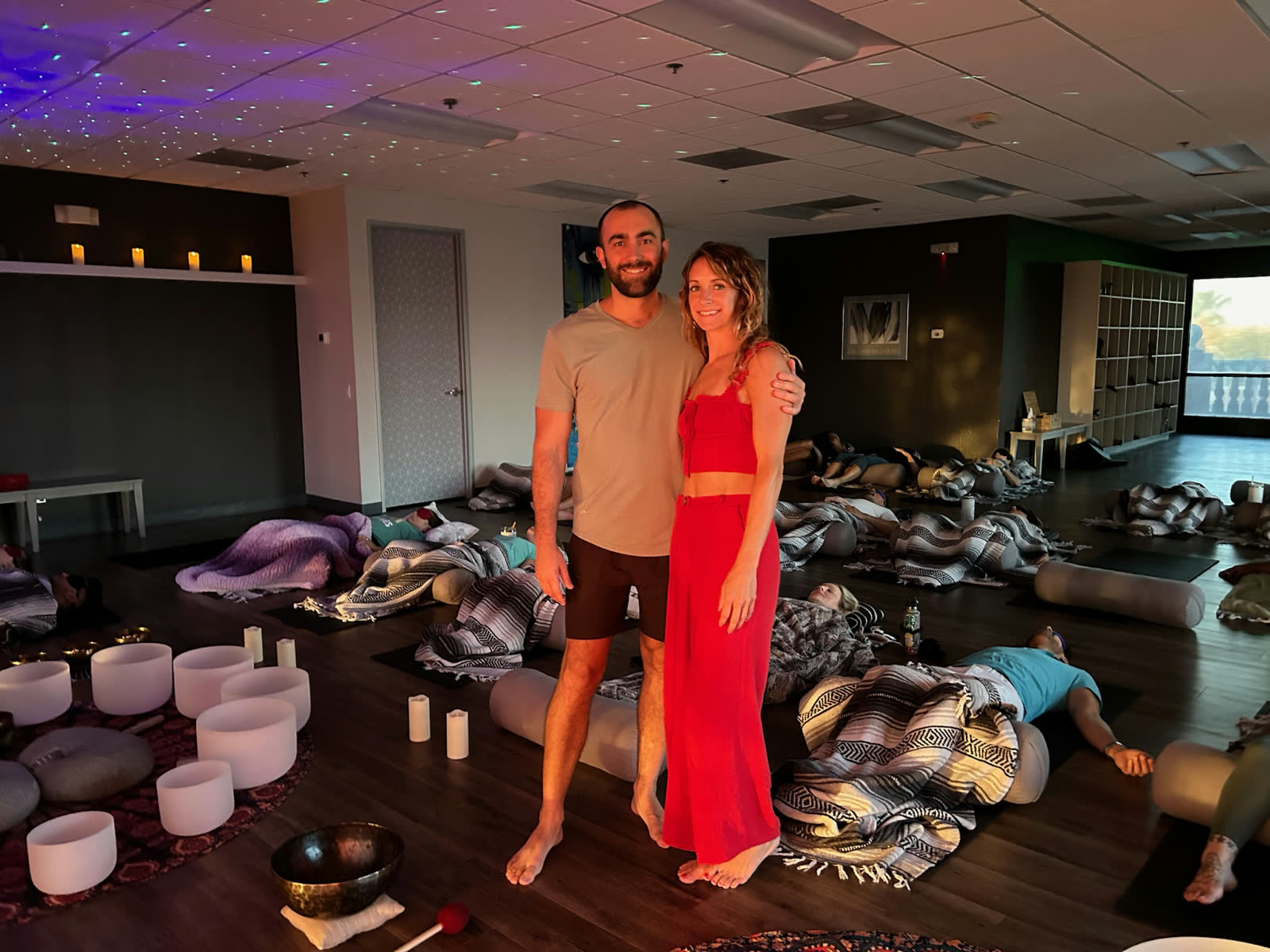
Quick Summary
Somatic Breathwork training teaches you how to guide Breathwork sessions through the body, nervous system, emotional release, and integration rather than only teaching breathing mechanics.
A strong program should include live practice, safety screening, trauma-informed facilitation, contraindications, scope of practice, anatomy, nervous system education, supervised sessions, business basics, and integration support.
Liquid Breathwork training includes 24 hours of in-person training plus online modules, max 6 students per cohort, 54 students enrolled, and instruction from Ryan McBurney and Shelby Von Oepen, RN, BSN.
Somatic Breathwork training is for people who want to guide Breathwork through the body, not just teach breathing exercises.
That difference matters.
A breathing exercise might help someone calm down before bed. Somatic Breathwork can bring up emotion, memory, shaking, grief, relief, tingling, tears, resistance, and deep nervous system shifts.
If you want to facilitate that kind of work, you need more than a script.
You need training in physiology, safety, nervous system awareness, emotional regulation, trauma-informed support, integration, and clean scope of practice.
At Liquid Breathwork, we teach this through a surrender-based method. We do not train people to force catharsis, push clients into screaming, or chase dramatic releases for social media clips.
We train facilitators to hold a steady container where the body can lead.
Our Liquid Breathwork training includes 24 hours of in-person training plus online modules, and a max of 6 students per cohort.
Ryan McBurney teaches the facilitation side as the founder of Liquid Breathwork. Shelby Von Oepen, RN, BSN teaches clinical science, drawing from 14 years in nursing.
We have 54 students enrolled so far, and the current price is $1,497.
What Is Somatic Breathwork Training?
Somatic Breathwork training teaches you how to guide Breathwork as a body-centered process.
"Somatic" means body-based. In practice, that means you are paying attention to sensation, emotion, posture, nervous system state, breath rhythm, tension, and the way someone's body responds during a session.
This is different from teaching a simple breathing technique like box breathing, 4-7-8 breathing, diaphragmatic breathing, or coherent breathing.
Those tools are useful. We use them too.
But somatic Breathwork often works with deeper states.
Common techniques in the broader field include conscious connected breathing, circular breathing, holotropic-style breathing, rebirthing breathwork, transformational Breathwork, pranayama, nasal breathing, breath retention, and down-regulating recovery practices.
A good breathwork practitioner training should help you understand when each style is appropriate.
Not every client needs intensity. Not every room needs loud music. Not every emotional release needs intervention.
Sometimes the safest facilitation is quiet presence.
Somatic Breathwork Training vs Breathwork Facilitator Training
Somatic Breathwork training and breathwork facilitator training overlap, but they are not always the same thing.
Breathwork facilitator training is the broader category. It can include performance breathing, stress relief, meditation support, corporate wellness, coaching tools, or group class facilitation.
Somatic Breathwork training focuses more specifically on body-based awareness, emotional processing, nervous system regulation, and integration.
Here is the simple breakdown:
| Training Type | Main Focus | Common Audience | Best For |
|---|---|---|---|
| Somatic Breathwork training | Body-based emotional and nervous system work | Coaches, healers, therapists, facilitators | Deep inner work and integration |
| Breathwork facilitator training | Guiding individuals or groups through Breathwork | Wellness practitioners, career changers | Classes, workshops, private sessions |
| Breathwork teacher training | Teaching breath techniques and session structure | Yoga teachers, meditation teachers | Group education and practice |
| Breathwork practitioner training | Applying Breathwork in a professional practice | Massage therapists, counselors, coaches | Client support and modality integration |
| Online breathwork course | Flexible remote learning | Busy students, global learners | Theory, practice, and lower-cost access |
| In-person Breathwork training | Live facilitation and supervised practice | Students who want real feedback | Embodied facilitation skill |
The words matter less than the depth.
A beautiful website does not mean the training prepares you to handle a client who starts shaking, crying, dissociating, panicking, or going numb.
That is where the real training begins.
Who Somatic Breathwork Training Is Best For
Somatic Breathwork training is a strong fit for people already working with the body, breath, mind, or emotional healing.
That includes:
- Yoga teachers who want more than asana and pranayama
- Massage therapists who want to support emotional release safely
- Meditation teachers who want a more embodied tool
- Sound healing practitioners who want to add guided Breathwork
- Counselors and therapists who want a referral-friendly somatic modality (inside their scope)
- Wellness coaches who want a deeper nervous system tool
- Nurses and healthcare workers moving into holistic health
- Retreat leaders and facilitators
- People who have experienced Breathwork personally and feel called to guide it
It is not just for people who want a new career.
Many students use Breathwork to deepen the work they already do.
A massage therapist might use nervous system language to better understand client tension. A yoga teacher might add Breathwork workshops. A sound healing practitioner might open a session with connected breathing. A coach might use short breath practices before emotional integration work.
The key is scope.
Breathwork can be powerful, but it is not therapy unless you are licensed to provide therapy. A strong breathwork teacher training should make that boundary clear.
What a Good Somatic Breathwork Training Should Include
A real somatic Breathwork training should cover more than how to cue inhale and exhale.
Look for these pieces.
1. Nervous System Education
Students should understand sympathetic activation, parasympathetic recovery, vagal tone, fight-flight-freeze, window of tolerance, and emotional regulation.
You do not need to become a doctor.
But you do need enough nervous system awareness to know when someone is opening, when someone is overwhelmed, and when the safest move is to slow down.
2. Breath Physiology
Breathwork changes carbon dioxide, oxygen balance, pH, heart rate, and sensory perception.
Some techniques can create tingling, tetany, lightheadedness, temperature changes, emotional release, and altered states.
Training should explain why those things happen.
That includes respiratory alkalosis, CO2 tolerance, breath holds, hyperventilation effects, and recovery breathing.
3. Contraindications and Safety
This is non-negotiable.
Breathwork is not for everyone in every format.
A good breathwork practitioner training should teach screening for:
- Pregnancy
- Uncontrolled high blood pressure
- Cardiovascular conditions
- Epilepsy or seizure history
- Recent surgery
- Severe asthma or respiratory conditions
- Glaucoma or retinal detachment risk
- History of psychosis or severe psychiatric instability
- Recent traumatic brain injury
- Medications or conditions that may affect safety
This is one reason we have Shelby Von Oepen, RN, BSN teach clinical science inside Liquid Breathwork training.
She brings 14 years of nursing experience to the room, which helps students understand safety from a grounded medical lens.
4. Trauma-Informed Facilitation
Trauma-informed Breathwork does not mean you are treating trauma.
It means you understand consent, pacing, choice, nervous system overwhelm, dissociation, and the importance of not forcing an outcome.
A trauma-informed breathwork facilitator knows how to offer options.
Eyes open or closed. Stronger breath or softer breath. Stay with sensation or return to the room. Continue or pause. Share or stay private.
Choice is part of safety.
5. Live Practice and Feedback
You cannot learn facilitation only from videos.
An online breathwork course can teach theory, structure, and technique. But if you want to guide real people, you need live practice and feedback.
This is why Liquid Breathwork training includes 24 in-person hours.
Students practice holding space, reading the room, using music, cueing safely, closing sessions, and supporting integration.
With a max of 6 students per cohort, there is nowhere to hide (in a good way).
Everyone gets seen. Everyone gets feedback.
6. Integration Support
The Breathwork session is not the whole experience.
What happens after matters.
Integration can include journaling, hydration, rest, grounding, conversation, body awareness, meditation, gentle yoga, time in nature, or referral to a licensed professional when needed.
Breathwork facilitator training should teach students how to close the loop.
A big release without integration can leave people raw. A steady landing helps the body make meaning from the experience.
The Liquid Breathwork Method: Surrender-Based, Not Forced Catharsis
The Liquid Breathwork method is surrender-based.
That means we do not teach students to perform intensity.
We are not trying to make every session loud, dramatic, or emotionally explosive.
Some Breathwork spaces lean heavily into catharsis. That can look like screaming, pushing, aggressive coaching, or trying to break through resistance.
We respect that some people are drawn to intense work, but that is not our lane.
Our breathwork facilitator training teaches students to create a strong container, then let the body lead.
Sometimes surrender looks like tears. Sometimes it looks like stillness. Sometimes it looks like anger moving. Sometimes it looks like someone finally feeling safe enough to soften.
The facilitator's job is not to manufacture a peak experience.
The job is to hold space with skill, humility, and nervous system awareness.
That is why we teach technique, but we also teach presence.
Online vs In-Person Somatic Breathwork Training
Online Breathwork training can be useful, especially for anatomy, theory, ethics, business basics, and recorded practice.
But in-person training gives you something different.
You feel the room. You notice breath changes. You learn how bodies move through resistance. You practice nervous system co-regulation. You get immediate feedback on your tone, pacing, cueing, and presence.
Here is how we think about it:
| Format | Strengths | Limitations | Best Use |
|---|---|---|---|
| Online training | Flexible, accessible, repeatable | Less embodied feedback | Theory and foundations |
| In-person training | Real-time practice and nervous system learning | Requires travel and scheduling | Facilitation skill |
| Hybrid training | Best of both formats | Depends on quality | Serious facilitator preparation |
| Weekend workshop | Fast immersion | Usually not enough depth alone | Personal growth or intro training |
| Long-form mentorship | Deep feedback and integration | Bigger commitment | Professional facilitation |
Liquid Breathwork training uses a grounded hybrid-style structure with 24 hours of in-person training plus online modules.
That gives students the depth of longer study with the embodied practice needed to actually guide sessions.
What You Can Do After Somatic Breathwork Training
After somatic Breathwork training, your options depend on your background, scope, and confidence.
Common paths include:
- Hosting Breathwork circles
- Adding Breathwork to yoga classes
- Offering private Breathwork sessions
- Pairing Breathwork with sound healing
- Leading retreat sessions
- Supporting massage therapy clients with breath education
- Using short practices in wellness coaching
- Bringing Breathwork into corporate wellness
- Creating meditation and nervous system workshops
- Supporting therapy clients only if you are licensed and staying inside your scope
Some people want to become full-time facilitators.
Others just want to add Breathwork as a powerful layer to work they already do.
Both paths are valid.
We have seen students come from yoga, massage therapy, meditation, counseling-adjacent wellness, coaching, nursing, and corporate backgrounds.
The common thread is not the job title.
It is the ability to stay grounded while someone else has an experience.
How Much Does Somatic Breathwork Training Cost?
Somatic Breathwork training can range from a few hundred dollars for a basic online breathwork course to several thousand dollars for a long-form facilitator training.
Price usually depends on:
- Total training hours
- Live vs recorded format
- In-person hours
- Instructor experience
- Group size
- Supervised practice
- Continuing education approval
- Business support
- Post-training mentorship
Liquid Breathwork training is currently $1,497.
That includes 24 hours of in-person training plus online modules, and a max of 6 students per cohort.
We keep cohorts small because facilitation is not just information.
It is transmission, practice, correction, and embodiment.
You can read the full details on the Liquid Breathwork training page.
Questions to Ask Before Choosing a Breathwork Facilitator Training
Before you choose a somatic Breathwork training, ask better questions than "How fast can I finish?"
Ask:
- How many total training hours are included?
- Are there live practice sessions?
- Are there in-person hours?
- Who teaches anatomy, physiology, and contraindications?
- Is trauma-informed facilitation included?
- Does the training explain scope of practice?
- How many students are in each cohort?
- Will I receive direct feedback?
- Is there integration training?
- Does the method match how I want to hold space?
Also ask yourself what kind of facilitator you want to become.
Do you want to lead intense cathartic journeys? Gentle nervous system practices? Yoga-adjacent Breathwork? Sound healing sessions? Coaching experiences? Retreat work? Clinical-adjacent support within a licensed profession?
There is no single right answer.
But there is a right fit.
Is Somatic Breathwork Training Worth It?
Somatic Breathwork training is worth it if you want to facilitate real sessions, not just collect information.
If you only want personal practice, start with classes, workshops, meditation, yoga, or a short online breathwork course.
If you want to guide other people through Breathwork, especially deeper emotional or body-based work, invest in proper training.
The risk is not that you "do it wrong" in a cosmetic way.
The risk is that someone trusts you with their nervous system and you are not prepared.
That is why we care so much about safety, clinical science, small cohorts, and surrender-based facilitation.
The breath is simple.
Holding space is not.
Start With Liquid Breathwork Training
If you are looking for somatic Breathwork training that is grounded, intimate, and built for real facilitation, start with Liquid Breathwork training.
You will train with Ryan McBurney, founder and facilitator of Liquid Breathwork, and Shelby Von Oepen, RN, BSN, who teaches clinical science with 14 years of nursing experience.
The training includes:
- 24 hours of in-person training plus online modules
- 24 in-person hours
- 54 students enrolled
- $1,497 pricing
- Max 6 students per cohort
- Surrender-based Liquid Breathwork method
- Safety, contraindications, facilitation, integration, and business foundations
This is a good fit if you want to bring Breathwork into yoga, massage therapy, meditation, sound healing, counseling-adjacent work, wellness coaching, retreats, or your own personal growth path.
It is not a good fit if you want a quick badge with no practice.
We train people to facilitate.
That takes reps, humility, and a nervous system that can stay steady in the room.
Frequently Asked Questions
What is somatic Breathwork training?
Somatic Breathwork training teaches you how to guide body-based Breathwork sessions with attention to the nervous system, emotional release, sensation, safety, and integration. It goes beyond simple breathing exercises by training facilitators to read the room, support different responses, and hold a grounded container.
How long should Breathwork facilitator training be?
Breathwork facilitator training should be long enough to include theory, practice, safety, supervision, and integration. Liquid Breathwork training includes 24 hours of in-person training plus online modules and a max of 6 students per cohort so students get direct feedback.
Can I take somatic Breathwork training online?
Yes, you can take parts of somatic Breathwork training online, especially theory, anatomy, ethics, and business foundations. If you want to facilitate live sessions, in-person practice is highly valuable because you need embodied feedback, room awareness, and supervised facilitation reps.
Is somatic Breathwork safe?
Somatic Breathwork can be safe when it is facilitated with proper screening, contraindication awareness, pacing, and consent. It may not be appropriate for people with certain cardiovascular, respiratory, neurological, psychiatric, or pregnancy-related conditions, so training should include safety protocols.
Who should take Breathwork practitioner training?
Breathwork practitioner training is a strong fit for yoga teachers, massage therapists, meditation guides, sound healing practitioners, counselors, wellness coaches, nurses, retreat leaders, and grounded career changers. It is best for people who want to support others through breath, body awareness, nervous system regulation, and integration.
How much does Liquid Breathwork training cost?
Liquid Breathwork training currently costs $1,497. It includes 24 hours of in-person training plus online modules, clinical science instruction from Shelby Von Oepen, RN, BSN, and facilitation training from Ryan McBurney.
Ready to Start Your Somatic Breathwork Training?
Our Facilitator Training gives you 24 hours of in-person training plus online modules, clinical science from a registered nurse, and mentorship in cohorts capped at 6 students. Surrender-based. $1,497.
Experience Somatic Breathwork First
Join our community and start your 7-day free trial today.