Quick Summary
Breathwork teacher training prepares you to safely guide individuals or groups through structured breathing practices for nervous system regulation, emotional processing, stress relief, and personal growth. A strong training should include anatomy, contraindications, facilitation practice, ethics, integration support, live supervision, and a clear scope of practice.
Liquid Breathwork offers a Breathwork training with 24 in-person hours plus an online curriculum, and a max of 6 students per cohort. Training formats start at $1,497 (online cohort) and are taught by Ryan McBurney and Shelby Von Oepen, RN, BSN.
Ready to train? Our live Breathwork teacher training certification runs online or in person, with payment plans on every format.
Breathwork teacher training is for people who want to guide others through breathing practices safely, clearly, and ethically.
That sounds simple, but good Breathwork facilitation is not just "put on music and tell people to breathe." You are working with the nervous system, emotional release, altered states, group dynamics, trauma history, and the body's stress response.
We built Liquid Breathwork training around that reality. Ryan McBurney brings 8 years of Breathwork experience as a founder and facilitator, and Shelby Von Oepen, RN, BSN brings 14 years of nursing experience to teach clinical science in a way real people can understand.
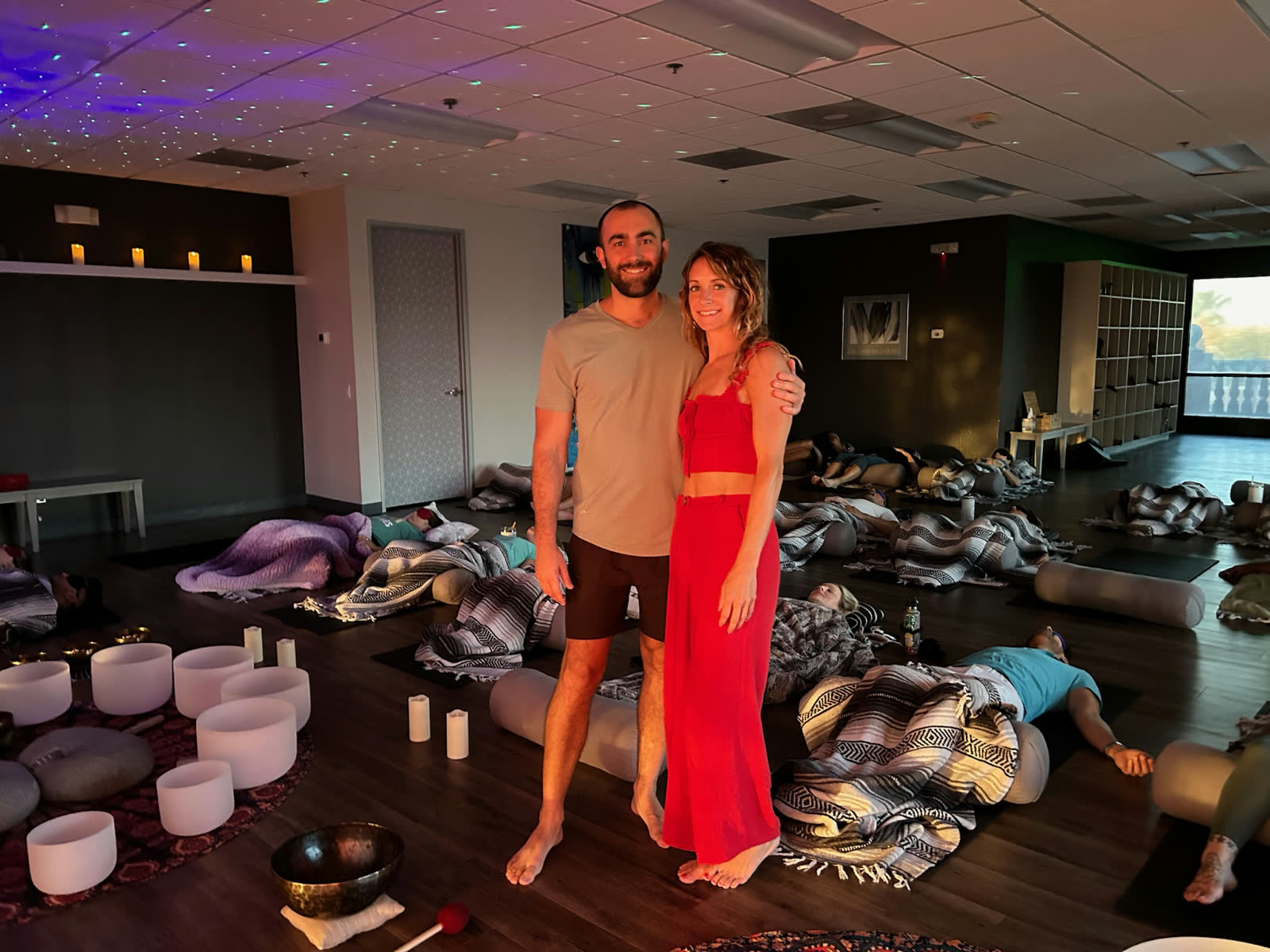
Our training is 24 hours of in-person training plus online modules, and caps each cohort at 6 students. That small cohort size matters because Breathwork teacher training needs real practice, real feedback, and real supervision.
If you are comparing Breathwork facilitator training options, this guide will help you know what to look for before you enroll.
Key Takeaways
- Breathwork teacher training should include anatomy, safety, contraindications, ethics, practice teaching, integration, and live feedback.
- A strong Breathwork facilitator needs more than personal experience. You need scope of practice, nervous system awareness, and facilitation reps.
- Liquid Breathwork training is 24 hours of in-person training plus online modules, starting at $1,497.
- Our method is surrender-based, not cathartic, screaming-based, or force-heavy.
- Breathwork teacher training can support yoga teachers, massage therapists, meditation teachers, sound healing practitioners, counselors, wellness coaches, and people building a new healing arts practice.
What Is Breathwork Teacher Training?
Breathwork teacher training is a structured education path that teaches you how to guide Breathwork sessions for individuals or groups.
A good Breathwork course should cover the science of breathing, emotional safety, facilitation structure, music, language, trauma awareness, client screening, aftercare, and what to do when someone has a strong experience.
Some trainings focus on performance, energy, or coaching. Others focus on somatic Breathwork training, nervous system regulation, spiritual work, or emotional release.
At Liquid Breathwork, we teach a surrender-based method. That means we are not trying to force a breakthrough, create chaos, or push people into catharsis. We help people create enough safety to let the body do what it already knows how to do.
Breathwork Teacher Training vs Breathwork Facilitator Training
Breathwork teacher training and Breathwork facilitator training are often used to describe the same thing.
If leading the room is the part you want, our Breathwork facilitator training page walks through what that path covers.
The difference is usually the style of work.
"Teacher" can imply education, technique, and instruction. "Facilitator" usually points to holding space, guiding an experience, and supporting integration.
In real practice, you need both.
You need to teach enough for the person to understand what they are doing. You also need to facilitate well enough that you are not over-talking, over-directing, or making the session about you.
That is why our Liquid Breathwork training includes both structure and surrender. Students learn the mechanics of Breathwork, then practice leading real sessions with feedback.
Who Breathwork Teacher Training Is For
Breathwork teacher training is a fit if you want to guide people through deep inner work with more confidence and structure.
It is especially useful for:
- Yoga teachers who want to add Breathwork beyond basic pranayama
- Massage therapists who want nervous system tools for clients
- Sound healing practitioners who want to deepen journeys
- Meditation teachers who want a more body-based modality
- Counselors and therapists who want a referral-aware somatic tool (inside scope)
- Wellness coaches who want practical tools for stress and emotional regulation
- Retreat leaders who want safer group facilitation skills
- People changing careers into the healing arts
You do not need to already be a wellness professional to start Breathwork teacher training.
But you do need humility. You need to be willing to practice, receive feedback, learn safety, and respect your scope.
What Should a Breathwork Course Include?
A Breathwork course should teach more than technique. At minimum, look for these pieces:
1. Breath Physiology
You should understand how breathing affects carbon dioxide, oxygen balance, heart rate, the vagus nerve, and the autonomic nervous system.
Breathwork can influence sympathetic activation (fight or flight), parasympathetic recovery (rest and digest), and emotional regulation. If your training skips the body, that is a problem.
2. Contraindications and Screening
Not every Breathwork practice is right for every person.
A solid Breathwork instructor training should teach you how to screen for conditions like pregnancy, uncontrolled high blood pressure, epilepsy, recent surgery, severe cardiovascular issues, active psychosis, and certain respiratory conditions.
This is not about fear. It is about responsibility.
3. Facilitation Practice
You cannot become a strong Breathwork facilitator by only watching videos.
You need to guide sessions, be observed, get feedback, adjust your language, and learn how your presence affects the room.
This is one reason we keep Liquid Breathwork cohorts to a max of 6 students. You get seen.
4. Ethics and Scope of Practice
Breathwork is powerful, but it is not a replacement for medical care, therapy, psychiatric support, or emergency care.
A good Breathwork teacher training should teach you what you can do, what you cannot do, when to refer out, and how to avoid pretending to be qualified for something you are not.
5. Integration Support
The session does not end when the music stops.
People may need grounding, journaling, quiet, hydration, reflection, or referral to a licensed professional. Integration support helps people make meaning without being told what their experience "means."
6. Business Basics
If you want to offer Breathwork sessions professionally, you need basic business structure.
That includes pricing, client communication, consent forms, scheduling, group size, partnerships, insurance questions, and how to talk about your work clearly.
Liquid Breathwork Teacher Training: What Makes It Different
Liquid Breathwork training is built for people who want depth without chaos.
Our method is surrender-based. We do not teach students to push people into screaming, shaking, or forced catharsis.
Those things can happen naturally sometimes, but they are not the goal.
The goal is to create a safe enough container for the breath, body, and nervous system to move what is ready to move.
Our training includes:
- 24 in-person hours
- $1,997 for the Phoenix September intensive (September 25-27)
- $1,497 for online cohort (starts October 6, 2026)
- $1,697 early bird for the Phoenix October intensive (October 23-25)
- $1,697 early bird for the Phoenix November intensive (November 6-8, 2026)
- Max 6 students per cohort
- 54 students enrolled
- 8 years of Breathwork experience from Ryan
- Clinical science taught by Shelby Von Oepen, RN, BSN
- Surrender-based facilitation
- Trauma-informed language and boundaries
- Practice teaching and feedback
Ryan teaches the facilitation, method, space-holding, and practical application. Shelby teaches the clinical science with 14 years of nursing experience behind her.
That blend matters. You need the mystery and the mechanics. You need to understand the body without reducing the entire experience to biology.
Breathwork Teacher Training Compared to Other Wellness Trainings
Breathwork teacher training often overlaps with yoga, meditation, massage therapy, sound healing, counseling, and wellness coaching. But it is not the same as any of them.
| Training Path | Primary Focus | Body Involvement | Emotional Release |
|---|---|---|---|
| Breathwork teacher training | Guided breathing, nervous system work, emotional processing | High | Medium to high |
| Yoga teacher training | Posture, breath, philosophy, sequencing | High | Low to medium |
| Meditation teacher training | Awareness, attention, stillness | Low to medium | Low to medium |
| Massage therapy | Manual bodywork and tissue support | High | Medium |
| Sound healing training | Frequency, music, vibration, relaxation | Medium | Low to medium |
| Wellness coaching | Goals, habits, accountability | Low | Low to medium |
Many students come to Breathwork teacher training after yoga, massage therapy, meditation, or sound healing because they want a modality that works directly with the breath and body. Others come from counseling or coaching and want to understand somatic tools without stepping outside their scope.
What Breathwork Techniques Should You Learn?
A well-rounded Breathwork training should expose you to multiple breathing styles, even if it teaches one core method. You do not need to master every technique. But you should understand the differences.
Common Breathwork styles and related techniques include:
- Conscious connected breathing
- Circular breathing
- Diaphragmatic breathing
- Box breathing
- 4-7-8 breathing
- Coherent breathing
- Holotropic-style breathing
- Somatic Breathwork
- Pranayama techniques
- Breath retention practices
- Down-regulation breathing
- Nasal breathing
- Mouth breathing journeys
Some techniques are calming. Some are activating. Some are better for daily regulation, while others are better held in a guided session with screening and support.
Liquid Breathwork focuses on surrender-based journey work, but we still teach the nervous system context behind different breathing patterns. A good Breathwork facilitator should know when not to use an intense technique. That is part of the job.
Safety and Contraindications in Breathwork Teacher Training
Safety is not optional in Breathwork teacher training.
Breathing practices can change blood chemistry, emotional state, muscle tension, body temperature, and perception. Most people tolerate Breathwork well, but intense practices are not appropriate for everyone.
Students should learn to screen for:
- Pregnancy
- Epilepsy or seizure history
- Uncontrolled high blood pressure
- Serious heart conditions
- Recent surgery or major injury
- Severe asthma or respiratory instability
- History of aneurysm
- Glaucoma or retinal issues
- Active psychosis or mania
- Severe PTSD without proper therapeutic support
- Current substance instability
- Any medical condition where intense breathing may be unsafe
This does not mean someone can never practice Breathwork. It means the facilitator needs to choose the right practice, stay within scope, and refer out when needed.
Shelby's clinical science section helps students understand these topics without fear-mongering. Ryan's facilitation sections help students apply that knowledge in real rooms with real people.
How Long Does Breathwork Teacher Training Take?
Breathwork teacher training can range from a weekend workshop to several hundred hours.
Short trainings can be useful for personal practice or continuing education, but they usually are not enough for confident facilitation. If you want to guide groups, support emotional release, or build a professional offering, you need more depth.
Liquid Breathwork training includes 24 hours of in-person training plus online modules. That includes the personal practice, education, facilitation training, integration, in-person experience, and applied learning needed to actually hold space.
We also include 24 in-person hours because Breathwork is not just information. You need to feel the room, read bodies, practice timing, and learn how to stay grounded when someone is having a big experience.
Online learning is helpful. In-person practice is different. Both matter.
How Much Does Breathwork Teacher Training Cost?
Breathwork teacher training pricing varies a lot. You may see short courses for a few hundred dollars and longer professional trainings for several thousand. Price usually depends on training length, instructor access, live practice, cohort size, supervision, and business support.
Liquid Breathwork training starts at $1,497 for the online cohort (starts October 2026). The Phoenix intensives are $1,997 (September 2026), $1,697 early bird (October 2026), and $1,697 early bird (November 2026). Payment plans are available through Affirm, Afterpay, and Klarna.
If you are comparing options, do not only ask, "What does it cost?" Ask:
- How many hours are included?
- Is there live practice?
- Is there in-person time?
- Who teaches the science?
- Who gives feedback?
- How big is the cohort?
- What happens after the training?
- Does the method match the way I want to guide people?
The cheapest Breathwork course is not always the best value. The most expensive one is not automatically the best either. Look at the container.
Can You Teach Breathwork After Training?
You can begin teaching Breathwork after training if your program prepares you properly and you stay inside your scope of practice.
That means you understand the method, know who it is and is not for, use consent and screening, practice ethical language, and avoid making medical or therapeutic claims you are not licensed to make.
Breathwork teacher training does not make someone a therapist, doctor, nurse, or mental health clinician. It can prepare you to guide Breathwork sessions as a facilitator, teacher, coach, wellness practitioner, or complementary provider.
For example:
- A yoga teacher might add Breathwork to workshops or retreats.
- A massage therapist might use gentle breathing before or after bodywork.
- A sound healer might combine Breathwork with sound journeys.
- A wellness coach might use simple breath practices for regulation.
- A counselor might refer clients to a trained Breathwork facilitator or use appropriate breath practices within their licensed scope.
The key is honesty. Do the work. Name your role clearly. Refer when needed.
Who Should Not Start Breathwork Teacher Training Yet?
Breathwork teacher training is powerful, but timing matters. You may want to wait if:
- You are currently in a major personal crisis
- You want to "fix" people
- You are uncomfortable with boundaries
- You are looking for a fast identity change
- You do not want feedback
- You are unwilling to practice consistently
- You want to diagnose or treat mental health conditions without a license
- You are drawn to intensity more than safety
That does not mean you are wrong for being interested. It just means your first step may be personal practice, therapy, mentorship, or attending more Breathwork sessions before learning to facilitate.
Good facilitators are not perfect people. They are people with enough self-awareness to not make the room about themselves.
Questions to Ask Before Choosing Breathwork Teacher Training
Before you enroll, ask better questions than "Is it online?" or "How fast can I finish?" Ask these:
- Who are the instructors, and what is their real experience?
- Does the training teach contraindications and safety?
- Is there live practice or only recorded content?
- How many students are in each cohort?
- Does the training include in-person hours?
- What style of Breathwork does it teach?
- Is the method forceful, cathartic, gentle, somatic, spiritual, clinical, or blended?
- Does it include integration and aftercare?
- Does it teach scope of practice?
- Does it include business support?
- Is there feedback on actual facilitation?
- Does the training match the type of people you want to serve?
These questions will tell you a lot. If the answers are vague, slow down.
Where Liquid Breathwork Fits
Liquid Breathwork teacher training is for people who want a grounded, intimate, high-touch path.
It is not built like a giant online course where you disappear into a portal and hope you are doing it right.
We keep cohorts small (max 6 students). We teach the science. We practice the facilitation. We talk about the business. We cover safety. We build the confidence through repetition, not hype.
Our students include people from yoga, massage therapy, meditation, sound healing, counseling, wellness coaching, and people who simply know they are ready to serve in this work.
If you want a Breathwork facilitator training that blends structure, surrender, science, and real-world practice, start here: Liquid Breathwork training.
You can also explore our full breakdown of what a breathwork coach does or read our guide on how to become a breathwork facilitator for more context on the career path.
Frequently Asked Questions
What is Breathwork teacher training?
Breathwork teacher training is education that prepares you to guide people through structured breathing practices. A good training includes breathing science, contraindications, facilitation skills, ethics, integration, and supervised practice.
How long does Breathwork teacher training take?
Breathwork teacher training can take anywhere from a weekend to several hundred hours. Liquid Breathwork training includes 24 hours of in-person training plus online modules and a small cohort capped at 6 students.
What is the difference between a Breathwork teacher and a Breathwork facilitator?
A Breathwork teacher often focuses on instruction, while a Breathwork facilitator focuses on guiding and holding space. In practice, strong facilitators need both teaching skills and space-holding skills.
Can yoga teachers or massage therapists add Breathwork to their work?
Yes, yoga teachers, massage therapists, meditation teachers, sound healing practitioners, counselors, and wellness coaches often add Breathwork to their work. The key is proper training, clear scope of practice, client screening, and ethical facilitation.
Is Liquid Breathwork training online or in person?
Liquid Breathwork training includes both structured training and 24 in-person hours. The in-person component helps students practice facilitation, receive feedback, and learn how to hold space in real time.
How much does Liquid Breathwork training cost?
Liquid Breathwork training starts at $1,497 for the online cohort (starts October 2026). The Phoenix intensives are $1,997 (September 2026), $1,697 early bird (October 2026), and $1,697 early bird (November 2026). All formats include 24 hours of in-person training plus online modules.
Ready to Start Your Breathwork Teacher Training?
Our Facilitator Training gives you 24 hours of in-person training plus online modules, clinical science from a registered nurse, and mentorship in cohorts capped at 6 students. Surrender-based. Starting at $1,497.
Want to Experience Breathwork Before Training?
Join our community and start your 7-day free trial today.