
Quick Answer
Starting a breathwork business means choosing a niche, setting prices (typically $125 to $200 for private sessions), getting your first clients through your existing network, and building one marketing channel consistently. Most new facilitators earn $15,000 to $35,000 in their first year and scale from there. The business side matters as much as the facilitation skills.
Most breathwork certification programs do not teach you how to run a business. They teach you how to facilitate. Those are different skills, and the gap between them is where most talented new facilitators get stuck.
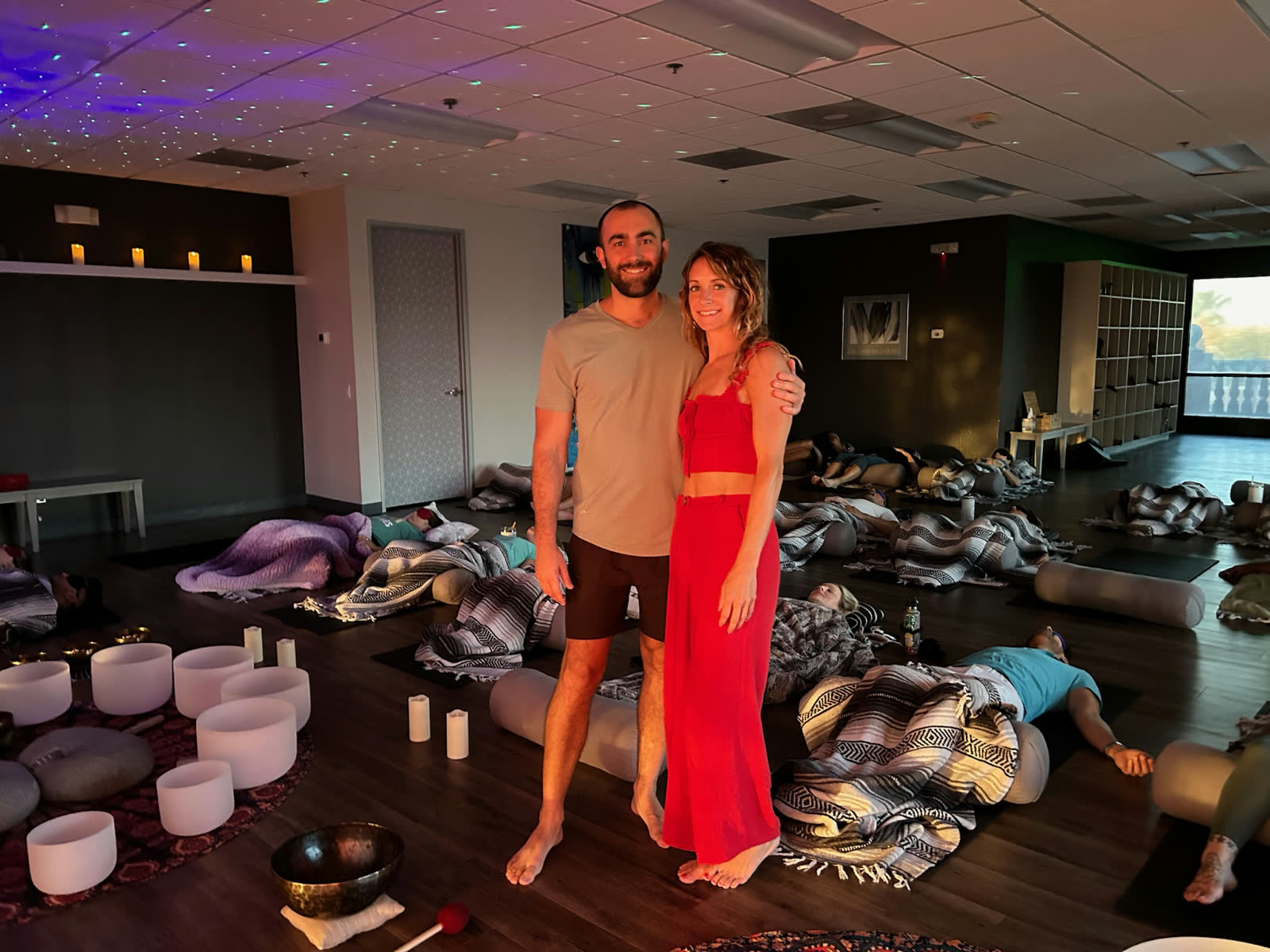
I built Liquid Breathwork from a personal practice to a full-time business over 8 years. I now run a certification program specifically because I watched too many graduates from other programs struggle to get their first paying client. The facilitation was excellent. The business foundation was not there.
This guide covers what the business side actually looks like: how to price your services, how to find clients who will pay those prices, what the income timeline realistically looks like, and what decisions matter most in the first year.
Table of Contents
- Step 1: Choose a Niche Before You Market Anything
- Step 2: Set Your Prices (Stop Undercharging)
- Step 3: Get Your First Clients
- Step 4: What the Income Timeline Looks Like
- Step 5: Business Structure and Legal Basics
- Step 6: Building Your First Marketing Channel
- Step 7: How to Scale Beyond One-to-One Sessions
- Frequently Asked Questions
Step 1: Choose a Niche Before You Market Anything
The most common mistake new breathwork facilitators make is trying to serve everyone. The second most common is waiting until they have 500 Instagram followers to start booking clients.
You do not need an audience. You need a niche.
A niche is not a limitation. It is a signal. When someone who is dealing with grief reads "breathwork for grief" instead of "breathwork for everyone," they feel seen. That is the difference between a vague inquiry and a booking.
Some niche directions that work well for new facilitators:
- Breathwork for stress and burnout: Targets professionals, executives, and anyone in a high-demand career. Corporate clients fall into this bucket and pay significantly more than individual clients.
- Breathwork for athletic performance: Athletes, CrossFitters, cyclists, and endurance athletes are increasingly using breathwork for recovery and focus. See our guide on breathwork for athletes for more on this population.
- Breathwork for women in transition: Perimenopause, divorce, grief, postpartum recovery. This niche builds strong word-of-mouth referral networks because the community is tight.
- Breathwork for therapists and coaches: Mental health professionals who want to add a somatic tool to their practice. Higher average session value and low price resistance because they understand the work. See our breathwork coach hub if this path interests you.
- Breathwork for anxiety and nervous system regulation: The most searched niche. More competition, but also the largest audience. Our post on breathwork for anxiety shows what people are actually searching for in this space.
- Corporate wellness: Team events, leadership offsites, retreat facilitation for companies. Highest per-event income with the steepest initial sales cycle. Our corporate breathwork guide covers how to break into this market.
You can serve multiple groups. But lead with one. Your website, social content, and pitches will be sharper, and you will book faster.
Step 2: Set Your Prices (Stop Undercharging)
Undercharging is the most predictable mistake new facilitators make. It signals low confidence and, ironically, often attracts clients who do not value the work. Here are the typical ranges by service type:
| Service Type | Market Range | Where to Start |
|---|---|---|
| Private 1:1 session (60-90 min) | $100 to $250 | $125 to $150 |
| Group class (60-90 min) | $25 to $75 per person | $35 to $50 per person |
| Corporate event (90-180 min) | $500 to $1,500+ | $500 for small teams |
| Day retreat (6-8 hours) | $150 to $400 per person | $175 per person |
| Weekend or multi-day retreat | $500 to $2,500+ per person | $600 to $800 per person |
These numbers account for session time only. Behind every 90-minute private session is intake paperwork, preparation, post-session integration notes, follow-up communication, and the years of training that make the session safe and effective. Price accordingly.
One useful frame: if you were a yoga teacher, what would a private session cost? Breathwork sessions generally require more preparation, more safety awareness, and deeper facilitation skill than a private yoga class. Your price should reflect that.
If you are genuinely uncertain, set a price you would feel comfortable defending to a skeptical client. Then raise it the first time you book solid and have a waitlist. Many new facilitators discover that demand actually increases when they raise prices, because the work carries more perceived value.
Step 3: Get Your First Clients
The fastest path to your first paying clients is the people who already know you. Not strangers on Instagram. Not Google ads. The people in your life who have seen you go through training, who know you take this seriously, and who trust you.
Here is a sequence that works:
- Offer 5 to 10 complimentary or deeply discounted sessions to people in your life. Not "free" framed as "I need practice." Frame it as an early access gift. These become your first testimonials and your first referrals.
- Follow up genuinely. Ask what they experienced. Ask if they know anyone who might benefit. Do not make it a pitch. Make it a real conversation about the work.
- Tell everyone what you do. Not with a sales pitch. With honest language: "I facilitate breathwork sessions. I help people release stress patterns their body has been holding." Practice saying this in one sentence.
- Partner with one complementary practitioner. A therapist, a yoga studio, a massage therapist, a personal trainer. Offer to co-lead something or guest teach once. Their existing clients become aware of you.
Most facilitators who book consistently in their first year do not have large followings. They have consistent referrals from two or three trusted sources. That is the foundation. Scale comes after.
Where to Find Corporate Clients
Corporate clients require a different approach. They do not find you through Instagram. They find you through LinkedIn, professional referrals, HR contacts, and direct outreach.
Start with companies where you have an existing contact. One internal champion who says "I know a breathwork facilitator" is worth more than a hundred cold emails. After your first corporate event, ask for a testimonial and referral immediately while the experience is fresh.
Once you have a few corporate events under your belt, your sales conversation gets much easier. "I worked with the sales team at [Company X] and here is what they said" closes more deals than any credential.
Step 4: What the Income Timeline Looks Like
Here is an honest breakdown of what most new facilitators earn, based on what we have seen across the students who have come through our program:
| Year | Typical Income Range | What Drives It |
|---|---|---|
| Year 1 | $8,000 to $35,000 | Network referrals, first group classes, studio partnerships |
| Year 2 | $25,000 to $60,000 | Recurring clients, corporate events, first retreats |
| Year 3+ | $50,000 to $120,000+ | Stable client base, retreats, digital products, teacher training |
These numbers assume you are actively marketing, building partnerships, and showing up consistently. The facilitators who hit the lower end of these ranges are usually the ones waiting to feel "ready" before they start booking. The ones who hit the higher end start selling before they feel ready and adjust as they go.
A realistic year-one snapshot: two private sessions per week at $150 ($15,600 annually), one weekly group class with eight participants at $40 ($16,640 annually), and two corporate events at $750 each ($1,500). That is approximately $33,000 before you add anything else. Not a bad foundation for a first year, and most of that comes from referrals, not marketing.
Step 5: Business Structure and Legal Basics
You do not need to have everything figured out before you start booking. But you do need to get two things in place early:
1. An LLC (or equivalent in your country). In the US, an LLC separates your personal assets from your business liabilities. When you are working with people's nervous systems and bodies, this matters. Setup costs $50 to $500 depending on your state. Some states have annual fees. Worth every dollar.
2. Liability insurance. A general liability policy specific to breathwork runs about $300 to $600 per year. Many studios and venues require this before they will let you rent space. Your clients may not ask for it, but it protects you and it signals that you take your practice seriously. Two carriers that cover breathwork specifically: K&K Insurance and Philadelphia Insurance Companies. Your certification program may also have a group policy available to graduates.
Beyond that: a simple intake form for new clients (health history, contraindications, informed consent), a clear cancellation policy, and a way to accept payment (Square, Stripe, or PayPal all work fine at the start). You do not need a fancy website or booking system in year one. You need intake, consent, and payment. Everything else can evolve.
Step 6: Building Your First Marketing Channel
Pick one channel and go deep on it before you add a second. The mistake most new facilitators make is spreading thin across Instagram, Facebook, TikTok, a newsletter, a podcast, and a website simultaneously, and doing all of them poorly because there is not enough time to do any of them well.
Here is how to choose your first channel:
- If your niche is local: Google Business Profile (formerly Google My Business) and a simple website. Local SEO is underutilized by breathwork practitioners and can bring you consistent inquiries without ongoing content work.
- If your niche is professional or corporate: LinkedIn. One weekly post about what breathwork does for stress, performance, or focus. Direct outreach to HR contacts in your network. No other platform has the same ROI for corporate work.
- If your niche is wellness-adjacent consumers: Instagram Reels or TikTok. Short videos explaining breathwork concepts, showing what a session feels like, or answering common questions. The content that performs best is specific and honest, not aesthetic.
- If you write well: A simple blog on your website targeting specific keywords like "breathwork for anxiety" or "breathwork for athletes." This takes longer to build but compounds over time in a way social does not.
The single best marketing move most new facilitators overlook: email. A simple monthly newsletter to people who have experienced your work, with no pitch, just a useful piece of content, keeps you top of mind when they or someone they know is ready to book.
Step 7: How to Scale Beyond One-to-One Sessions
Private sessions trade time for money. There is a ceiling. The facilitators who build sustainable, growing practices eventually move beyond 1:1 work into formats that serve more people per hour:
- Group classes and workshops. 8 to 20 people at $35 to $75 each. More efficient than private sessions once you have an audience to fill them.
- Retreats. A two-day retreat with 10 participants at $400 each generates $4,000 in a weekend. Two or three of those per year dramatically changes your income without adding weekly sessions.
- Corporate packages. Instead of a one-time event, sell a 6-session wellness series to a corporate team. The upfront sale is larger, the client retention is higher, and the relationship creates referrals across the organization.
- Online programs. A recorded or live online course for a specific outcome (better sleep, stress relief in 30 days, nervous system reset). These require upfront content creation but can generate income from a broader geographic audience.
- Teacher training. The highest-leverage, highest-income offering. Once you have several years of facilitation experience and a track record, teaching others to do what you do is a natural evolution. Our certification program is the version we offer at Liquid Breathwork.
Most facilitators hit a plateau around $40,000 to $50,000 doing only private sessions. The ones who break through add one group offering or one retreat per quarter. That addition usually doubles or triples income without proportionally increasing hours.
The Mindset Reality Nobody Tells You About
Running a breathwork business means running a business. That sounds obvious, but a lot of people enter this path because they love the facilitation and discover they have strong resistance to the sales and marketing side.
That resistance is real and it is common. Many facilitators feel that charging money for spiritual or healing work is somehow at odds with the work itself. It is not. You cannot serve clients if you cannot sustain your practice. A breathwork business that loses money is a breathwork business that closes. Charging well for excellent work is an act of stewardship, not greed.
The facilitators who make it through the first year are the ones who treat the business with the same seriousness they bring to the facilitation. They track their income and expenses. They follow up with leads. They ask for referrals. They raise their prices when demand justifies it. They invest in their own development. These are not optional add-ons. They are the practice.
Build the Business Foundation Before You Need It
Our Liquid Breathwork certification includes business and marketing training built into the program, not tacked on at the end. Phoenix intensives (September 25-27, October 23-25, and November 6-8, 2026), the Scottsdale intensive (February 5-7, 2027), or the online cohort (starts October 6, 2026). Small cohorts, direct mentorship from Ryan and Shelby.
Frequently Asked Questions
How much should I charge for breathwork sessions?
Private breathwork sessions typically range from $100 to $250 per session. Group classes run $25 to $75 per person. Corporate events are usually $500 to $1,500+. Retreats generate $300 to $2,000+ per participant. New facilitators often underprice. Start at $125 for private sessions and adjust based on demand.
How do I get my first breathwork clients?
The fastest path to first clients is people who already know you. Offer a free or discounted introductory session to 5 to 10 people in your network. Ask them to share honestly about the experience. A few of those become paying clients; a few refer others. From there, partner with yoga studios, therapists, and wellness practitioners who serve your target audience.
How much can a breathwork facilitator earn per year?
Income varies widely. A facilitator running 2 private sessions per week at $150 earns around $15,600 per year from that alone. Add a weekly group class (10 people at $40) and that rises to $36,400. Add a quarterly retreat (15 people at $500) and you approach $45,000. Full-time facilitators with corporate accounts, retreats, and a regular class schedule commonly earn $60,000 to $100,000+.
Do I need an LLC to run a breathwork business?
Not required, but recommended. An LLC separates your personal assets from your business liabilities, which matters when you are working with clients' bodies and nervous systems. Setting one up is usually $50 to $500 depending on your state. Pair it with a general liability policy specific to breathwork (typically $300 to $600 per year).
What niche should I choose as a breathwork facilitator?
The facilitators who build the fastest are the ones who get specific. Breathwork for corporate teams, breathwork for athletes, breathwork for women in transition, breathwork for therapists looking to expand modalities, breathwork for grief. A niche does not limit you. It makes it much easier for the right people to find you and trust you before you say a word.
How do I market a breathwork business?
Start by showing up in person. Partner with yoga studios, wellness centers, and therapists. Offer guest sessions. Build word of mouth before you build a following. Then add one content channel: a simple website, a newsletter, or short social videos of you explaining concepts. Pick one and go deep on it before adding a second.
Related Reading
- What Is a Breathwork Facilitator: the role, what it requires, and how training prepares you to hold a safe, effective container
- How to Become a Breathwork Facilitator: the step-by-step path from personal practice to certified facilitator
- Best Breathwork Certification Programs (2026): side-by-side comparison of the top training programs
- Breathwork Practitioner Training Guide: what to look for in a training program before you enroll