Holistic Wellness in Scottsdale Beyond the Spa
Scottsdale wellness used to mean resort spas. Today the wellness tools in Scottsdale, AZ run from Breathwork and sound baths to cold plunge and float tanks. This is our short list, starting with what we teach.
1. Breathwork (Our Pick)
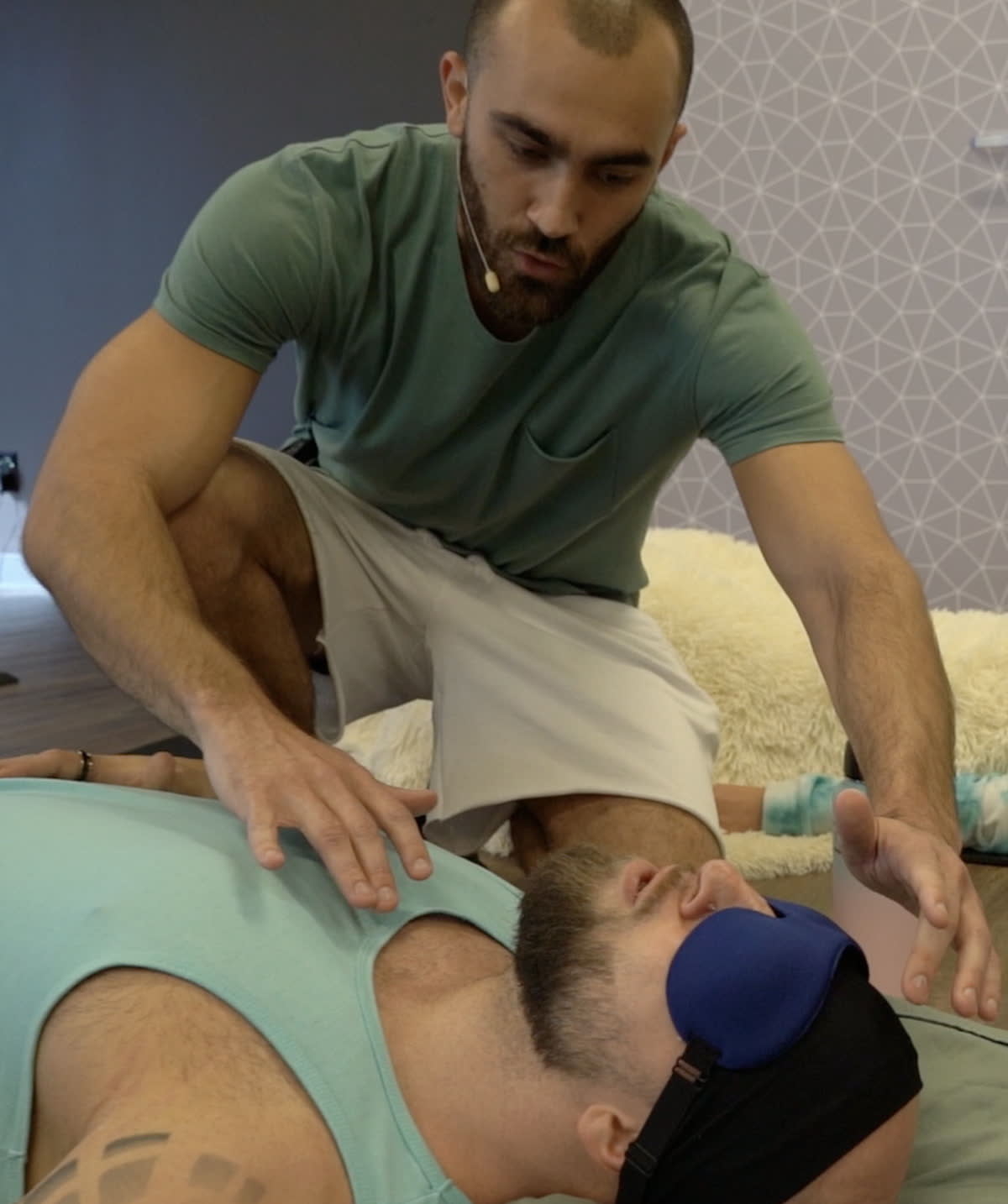
Breathwork uses intentional breathing patterns to shift how you feel. In our classes you lie down, close your eyes, and follow a guided pattern while music plays.
Tingling in the hands and feet is common. Some people cry or laugh. Others feel like they took a long nap.
It helps most with chronic stress, anxiety, and emotional weight you can't shake, and it gives high performers a way to downshift. If your mind races during meditation, the breathing pattern gives it something to hold onto.
Breathwork Classes and Workshops in Scottsdale
We run group classes and private sessions in the Scottsdale area. Private sessions are built around what you're working through. The schedule is on our Breathwork classes in Scottsdale page, and first-timers are welcome.
2. Sound Healing and Sound Baths
In a sound bath you lie still while crystal singing bowls, gongs, and other instruments play around you, sometimes with bowls placed on your body. Sound can shift your brainwave state from beta (alert, thinking) to theta and delta (deep relaxation, near-sleep).
Sessions run 45 to 75 minutes on a mat or reclining chair, and most people drift in and out of sleep.
It's a gentle start if you're new to holistic wellness or struggle to turn off. Several Scottsdale practitioners hold regular sound baths, some outdoors.
3. Cold Plunge and Ice Baths
Cold exposure stimulates the vagus nerve (which regulates your stress response). In one study of young men, an hour of head-out immersion in 57°F water raised blood levels of norepinephrine and dopamine.
Water is usually 38 to 45 degrees Fahrenheit, and beginners start with 1 to 3 minutes. The first 30 seconds are the hardest. After that your breathing settles. Many Scottsdale wellness studios pair cold plunge with infrared sauna for contrast therapy.
Athletes use it for recovery. It also suits people with chronic inflammation, anyone who wants to build mental toughness, and people who use the dopamine lift for mood.
4. Float Tanks (Sensory Deprivation)
You float in a dark, quiet tank (or pod) of body-temperature water saturated with Epsom salt. With outside input gone, your muscles let go and your mind either goes quiet or gets unusually creative.
Sessions run 60 to 90 minutes, and your mind may stay busy for the first 10 to 15. Most places let you keep a dim light on or play ambient sound.
People use floats for chronic pain, athletic recovery, or a creative reset.
5. Infrared Sauna
Infrared saunas heat your body directly with infrared light instead of heating the air around you. You sweat at 120 to 150 degrees instead of the 180 to 200 of a traditional sauna, so it's easier to tolerate.
You sit in a small cabin (some fit two to four people) for 30 to 45 minutes and start sweating within 10. Reported benefits include better circulation, less muscle and joint pain, better skin health, and support for the body's natural detox processes. Many Scottsdale wellness studios sell it on its own or paired with cold plunge or massage.
Good for chronic pain, workout recovery, or if a regular sauna is too much.
6. Yoga
Scottsdale has restorative, heated power, and kundalini classes within a few miles of each other. Restorative means props and long, supported holds. Vinyasa and power flow are full-body workouts, and hot yoga adds heat for deeper stretches. If you're new, take a beginner class; most Scottsdale studios will help you modify poses. It helps most with mobility and a steady movement routine.
7. Cryotherapy
Whole-body cryotherapy chambers use nitrogen or refrigerated air at negative 150 to negative 300 degrees Fahrenheit. You stay in for 2 to 4 minutes. The cold is meant to trigger an anti-inflammatory response and release endorphins.
The whole appointment, including changing, takes about 15 minutes. Most people feel a burst of energy afterward, and red, tingly skin for a few minutes is normal.
Athletes, people healing from injuries, and people with chronic inflammation or autoimmune conditions use it most.
How to Choose Your First Modality
Start with whichever sounds least intimidating. We'd start with Breathwork. It needs no equipment or experience, and you feel the effect in the first session. Add other modalities based on what your body responds to.
Become a Breathwork Facilitator
Learn to lead your own sessions safely, with mentorship from Ryan and Shelby.
Try Breathwork in Scottsdale
Group classes and private sessions. No experience needed.