I remember the exact moment I decided I was doing this wrong. I was maybe twenty minutes into my second Breathwork session ever, lying on a thin mat in a dim room, and three feet away a woman was screaming. Not crying. Screaming, the kind that comes from somewhere old, somewhere she'd probably been keeping locked for years. People around her were nodding like this was expected, like this was the point.
I wasn't screaming. I wasn't even close. My chest was tight, my hands had gone a little numb, and mostly I just felt embarrassed, like I'd shown up to the wrong party sober. I remember thinking: if this is what healing looks like, I don't think I have it in me.
It took me years, and eventually training as a facilitator myself, to understand that I had it backwards. That woman wasn't doing it right and I wasn't doing it wrong. We were just having two completely different, equally valid experiences. And what I've learned since, guiding hundreds of people through Breathwork sessions of my own, is that the quiet version is not a lesser version. Sometimes it goes deeper than the loud one ever could.
No, you do not need to scream, yell, or have a dramatic cathartic release for Breathwork to work. Crying, shaking, tingling, and even complete stillness are all normal responses. Catharsis-style Breathwork is one approach among several. Surrender-based Breathwork reaches equal or greater depth through relaxation, letting go, and nervous system safety, without pushing the breather past their limits. The right style is the one where you feel both safe and free.
What Is Cathartic Breathwork? Where Screaming and Yelling Fit In
If you've seen Breathwork on social media, you've probably seen the loud version: rooms full of people screaming, shaking, and crying. Cathartic Breathwork is built on intentional, outward emotional expression, and it went viral for a reason. It's dramatic, it's visible, and for some people it delivers a real release. Expression is a legitimate strategy for moving emotion.
The lineage runs deep, too. Holotropic Breathwork, developed by Stanislav Grof in the 1970s, was built around intense, sustained breathing designed to access non-ordinary states, and strong emotional and physical expression was expected as part of the process. A lot of today's viral cathartic styles are descendants of that approach, with the intensity turned up and the clinical container often stripped away. (If you're researching whether that intensity is right for you, we've written a full breakdown of Holotropic Breathwork and a gentler, Surrender-based alternative to Holotropic Breathwork.)
But virality created an assumption: that if a session isn't loud, it isn't deep. That's not true, and for a lot of people the loud room is actually the wrong room.
The Four Strategies for Intense Emotion
When something intense comes up, people broadly run one of four strategies:
- Suppress and repress. Push it down and hold it there.
- Avoid and escape. Distract, numb, leave.
- Express. Scream it, shake it, move it out loudly.
- Surrender. Soften around it, let it move through, let go.
Most cathartic Breathwork trains strategy three. Liquid Breathwork is built on strategy four. Neither is "wrong," but they are different experiences with different risks.
Crying, Shaking, and Screaming During Breathwork: What's Normal
All three are normal, and none of them are required. Crying during Breathwork is one of the most common releases, and it often arrives quietly, without a story attached. Shaking or trembling during Breathwork is the nervous system discharging held tension, the same mechanism animals use after stress, and it typically moves through and settles on its own. Screaming happens for some people in some styles. If your body genuinely goes there on its own, that's expression doing its job. The problem is when a room's culture demands it, and everyone performs a release instead of having one.
Emotional Release in Breathwork: Catharsis Isn't the Only Path
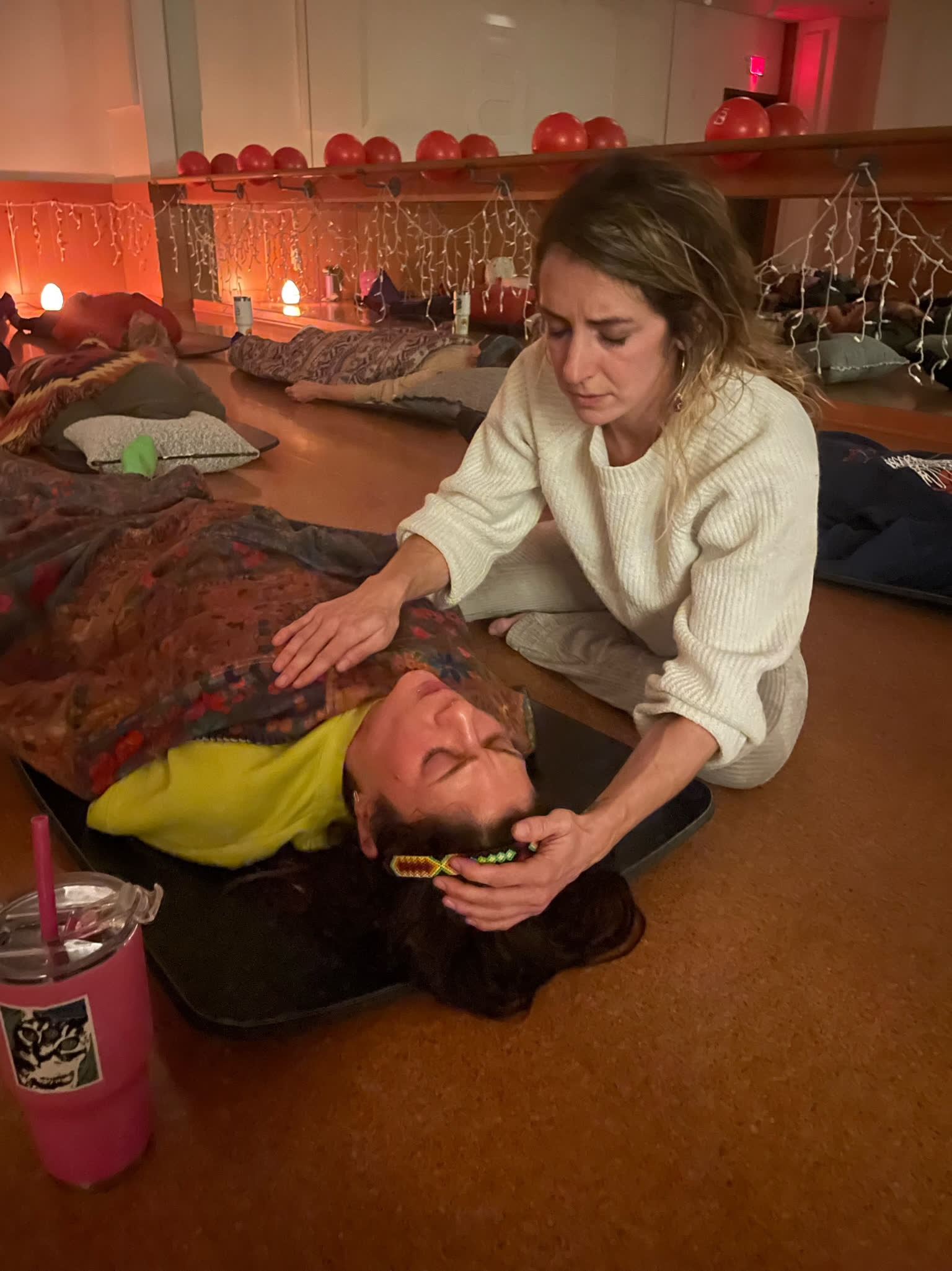
Emotional release is the real goal underneath all of these styles, and here's what surprises people: somatic release in Breathwork usually doesn't look dramatic. Tears sliding down someone's face while they're completely relaxed. Tingling and waves of warmth. Spontaneous deep sighs. A jaw that finally unclenches. Trembling that moves through and settles.
Screaming is one possible form of release. It is not the requirement, and it is not the measure of depth. In a Surrender-based session, the body is given safety and space, and it releases what it's ready to release, at the pace the nervous system can actually integrate. That's the difference between body-based, somatic Breathwork done well and a room where expression is performed because it's expected.
Does Breathwork release trauma? It can move what the body has been holding, and many people experience exactly that. But trauma release is a process, not a single dramatic moment, and it goes better slowly, in a container built for safety.
Is Breathwork Safe? Too Much, Too Fast, and the Working Zone
For most healthy people, yes, Breathwork is safe, and the biggest risk factor isn't the breath itself. It's pace and environment. Here's the question that matters: in that loud, intense room, how many people were overstimulated and felt unsafe?
Being in a deeply vulnerable state while feeling unsafe is the recipe for trauma, not healing. Some people leave cathartic sessions feeling worse than when they arrived, re-traumatized rather than released. And it's not just the screaming. It's pace. Breathers get pushed to hyperventilate past their "working zone," the range where the breath is doing real work while the nervous system still feels resourced.
Is It Dangerous, or Just Intense?
People often search whether somatic or holotropic-style Breathwork is dangerous, and the honest answer is that intensity and danger are not the same thing. Intense sensation inside a well-paced, well-held session is workable. Intensity that outruns your capacity, in a room with no attunement to where you are, is where harm happens. That's why trauma-informed facilitation matters, and why we train facilitators to read pace and capacity, not just push breath. (If you have a heart condition, are pregnant, or have a history of seizures or serious psychiatric conditions, talk to your doctor before any strong Breathwork practice.)
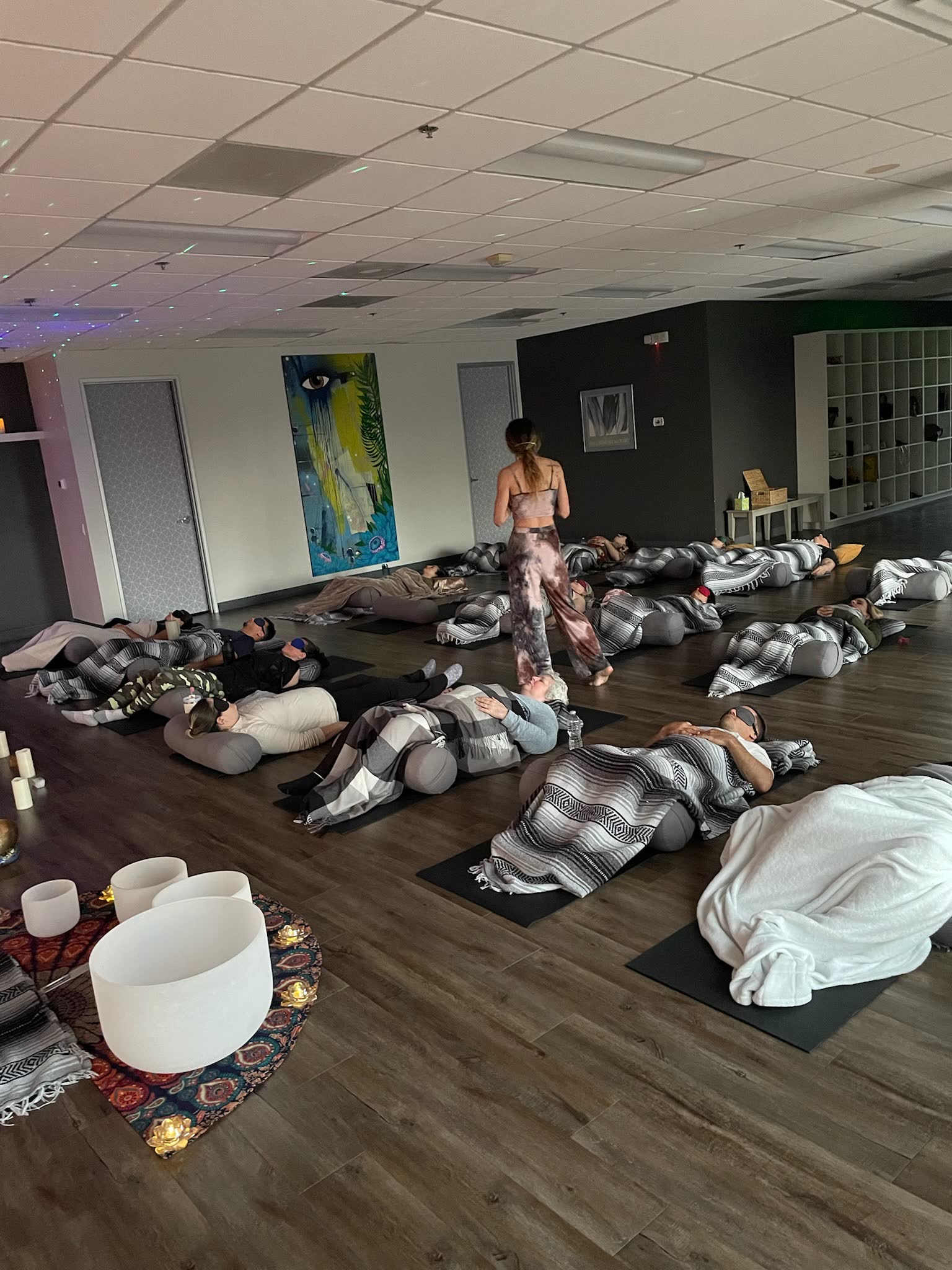
What a Surrender-Based Session Looks Like
In a Liquid Breathwork session, nobody is pushed toward a performance of release. Instead the session is built on three things:
- Sovereignty. You find the balance between the facilitator's guidance and your own inner knowing. You are in charge of your breath the entire time.
- Invitation. There is always an invitation to go deeper if you're ready. Depth is available, never demanded.
- Safety. The container is designed so that vulnerability is met with safety, because safety plus depth is what heals.
People regularly tell us it's the most relaxed they've ever felt, or the most profound experience they've had in any modality, and it happens without a single scream.
How to Choose the Right Style for You
- If you feel drawn to loud, physical release and you have a facilitator you trust to keep the room safe, cathartic or holotropic-style work can be valuable.
- If loud environments overstimulate you, if you have trauma history, or if you're newer to Breathwork, a gentler, Surrender-based path is usually the safer and deeper starting point.
- Either way, ask a prospective facilitator how they handle pacing and what happens if it becomes too much. Their answer tells you everything.
Frequently Asked Questions
Do you need to scream or cry during Breathwork for it to work?
No. Crying, shaking, tingling, and even complete stillness are all normal Breathwork responses. Screaming is one possible form of release, not a requirement or a measure of depth. Surrender-based Breathwork reaches equal or greater depth through relaxation and nervous system safety, without pushing the breather toward a dramatic release.
Is it normal to shake or tremble during Breathwork?
Yes. Shaking or trembling during Breathwork is the nervous system discharging held tension, the same mechanism animals use after stress. It typically moves through and settles on its own and does not require any outward expression to be effective.
Is Breathwork safe if I don't feel a big emotional release?
Yes, and for most healthy people Breathwork itself is safe regardless of how much release shows up. The bigger risk factor is pace and environment, not whether a session looks dramatic. A well-paced, well-held session that produces stillness or mild relaxation is doing real work.
Is intense or somatic Breathwork dangerous?
Intensity and danger are not the same thing. Intense sensation inside a well-paced, well-held session is workable. Intensity that outruns a breather's capacity, in a room with no attunement to where they are, is where harm happens. People with a heart condition, who are pregnant, or who have a history of seizures or serious psychiatric conditions should talk to their doctor before any strong Breathwork practice.
Experience a Surrender-Based Session
No performance required. Join us at one of our Phoenix classes, or breathe from anywhere with the virtual membership.