
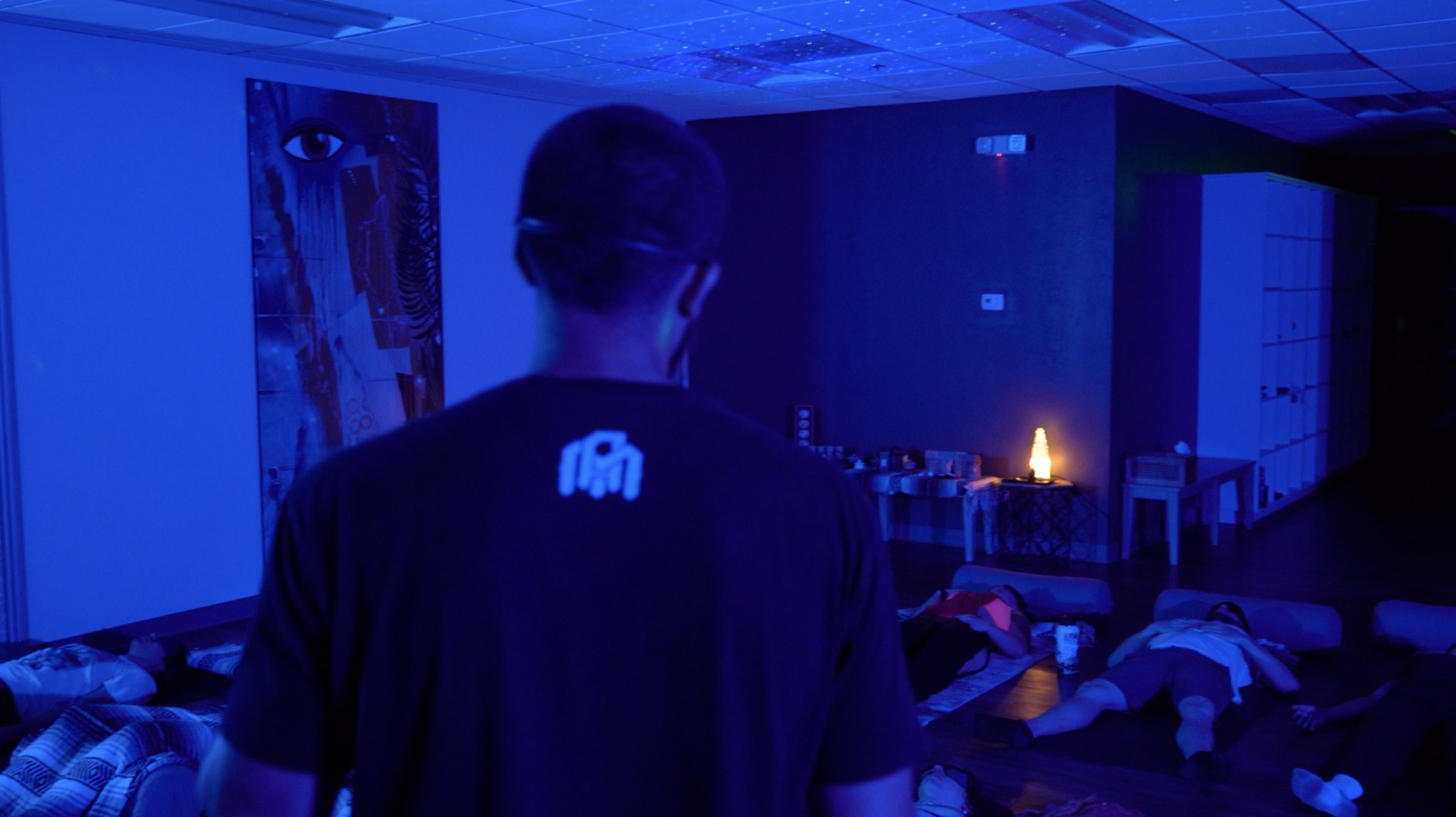
9D Breathwork is a guided practice that uses a multi-layered audio soundtrack, delivered through over-ear headphones, to lead you through a circular connected breathing session at home, with no facilitator.
We have facilitated over 1,000 sessions and trained facilitators across multiple modalities including SOMA Breath®, Somatiq, and Rebirthing Breathwork. Here is what 9D does well and where it hits its limits.
- Over-ear headphones plus an eye mask for sensory immersion
- Popularized in the UK around 2020 to 2022, now widely available online
- Sessions run 45 to 60 minutes, with intention setting beforehand
9D Breathwork® is a registered trademark (U.S. Reg. No. 7,568,781) owned by 9D Breathwork Incorporated. Liquid Breathwork® is an independent training provider and is not affiliated with, endorsed by, sponsored by, or certified by any of them. Their programs are named here for identification and comparison only.
What Plays in 9D Breathwork Headphones
The "9D" refers to nine layers of audio mixed into a single track. They typically include binaural beats (two slightly different frequencies that create a third perceived tone), isochronic tones, and solfeggio frequencies often associated with specific energetic states. 8D spatial audio moves sound in three-dimensional space around the listener.
On top of that sit subliminal affirmations, nature sounds, and voice coaching with real-time breathing instruction, guided visualization, and emotional prompts. Music runs through the whole session and shapes its emotional arc.
The breathing is circular connected breathing: a continuous inhale and exhale with no pause between breaths. It is the same base technique used in Holotropic Breathwork®, Rebirthing Breathwork, and what we practice at Liquid Breathwork. The audio is what sets 9D apart.
How a 9D Session Works
Before the session
A guide, live or pre-recorded, leads a short intention-setting moment. You can bring a question, an intention, or simple openness. Then you lie down, put on over-ear headphones, and cover your eyes with a mask to turn your attention inward.
The build phase
The track opens with music and the guide's voice setting the breathing rhythm. Depending on the track, you breathe through the nose or mouth, keep the connected pattern, and let the soundscape build. Over the first 15 to 20 minutes the music intensifies and the brainwave entrainment layers begin to influence your nervous system.
The peak
Around the midpoint the soundscape reaches its most intense phase, usually its loudest and most emotional. The voice coaching often encourages vocalization, cathartic release, or movement here. Many people feel tingling in the extremities, emotional waves, altered time perception, and strong physical sensations from the shift in blood CO2 levels created by the connected breathing pattern.
Release and integration
The soundscape softens and the voice guides you into release and surrender. The final 10 to 15 minutes are a quiet integration period as the music fades and you rest in stillness. Some tracks close with gentle affirmations.
What 9D Breathwork Does Well
- Extremely accessible. You need headphones, a quiet space, and a device. No class, commute, or booking, which matters for people in remote areas or with tight schedules.
- Strong sensory immersion for beginners. If you are new to Breathwork, the rich audio gives your mind something to hold while your body does the work. It can quiet the analytical mind faster than silence or simple music.
- Low barrier to starting. There is a 7-day free trial, so you can try Breathwork before committing to a live experience.
- Consistency. A pre-recorded session is the same every time, which helps when you are building a solo home practice.
Where 9D Breathwork Falls Short
We used 9D-style headphone setups in our own group sessions early on and chose to stop. Here is why.
Headphones compromise the audio quality of a real room
9D tracks are technically impressive, but headphones deliver sound to your ear canals. A good speaker system in a Breathwork room delivers it to your whole body. You feel the bass in your chest and the movement of air, which even premium over-ear headphones cannot replicate. In somatic Breathwork that matters, because the goal is to feel the music in your body to support nervous system regulation.
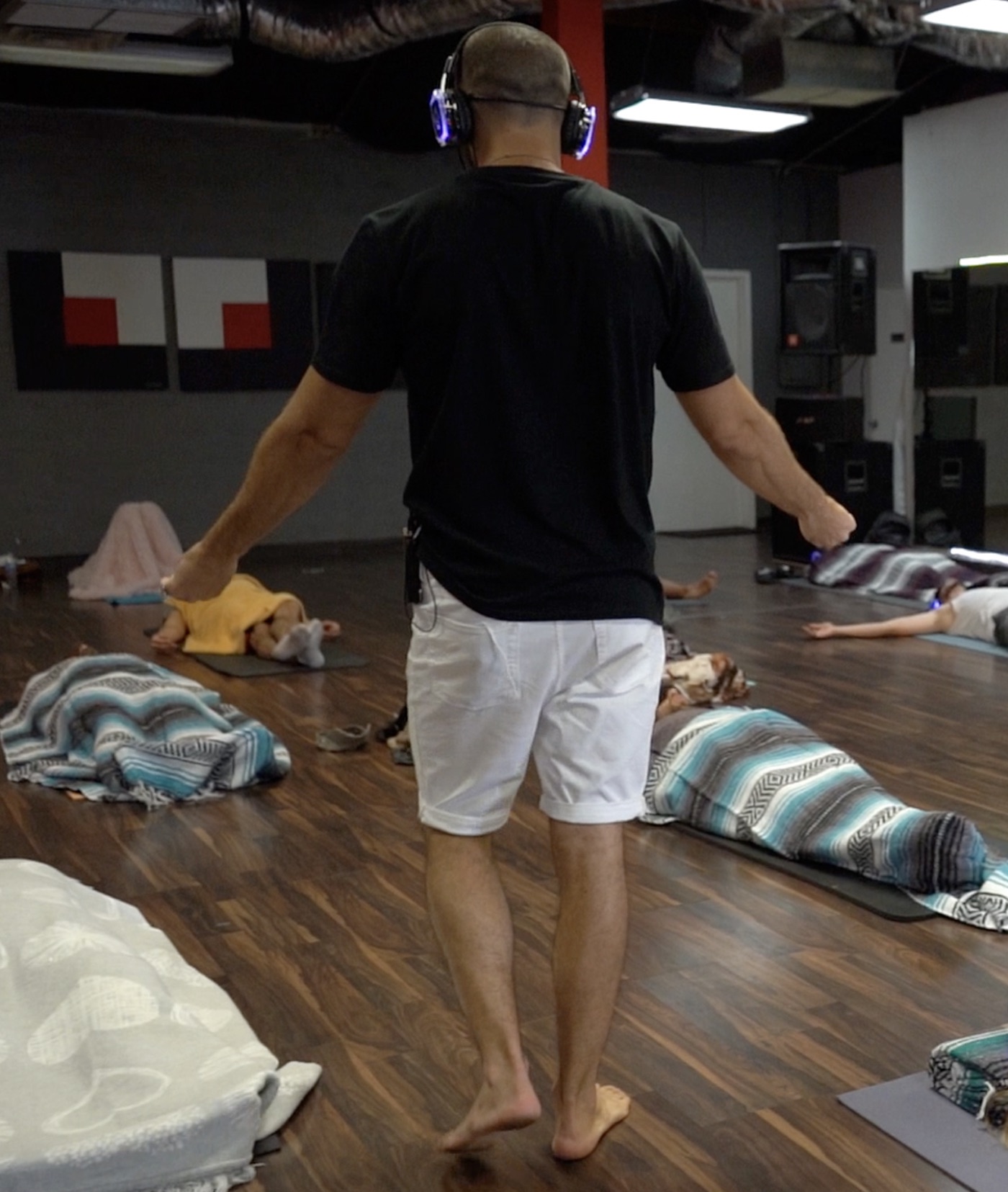
When we ran headphone sessions, groups consistently reported a flatter, more muted physical experience than after we switched to room speakers, even though the 9D tracks were more complex.
The soundscape encourages outward expression over inward surrender
9D tracks build toward a peak where the guide often encourages yelling, screaming, or loud cathartic release. That is not wrong, and for some people it is exactly what they need at that point.
From our perspective, going deep takes a quieter, more receptive nervous system. Outward expression activates the sympathetic nervous system and pushes energy out rather than letting the body complete its natural cycle of emotional regulation. In a group, one person's yelling also pulls everyone else out of their inward focus.
The most profound sessions we have facilitated have been the quiet ones: fifteen people moving through deep releases in near silence, held by the group field.
Headphones isolate you from the shared room field
When a group breathes together in one room without headphones, the nervous systems in the room begin to resonate with each other. You can feel the breathers around you, and the collective rhythm amplifies what is possible for each person.
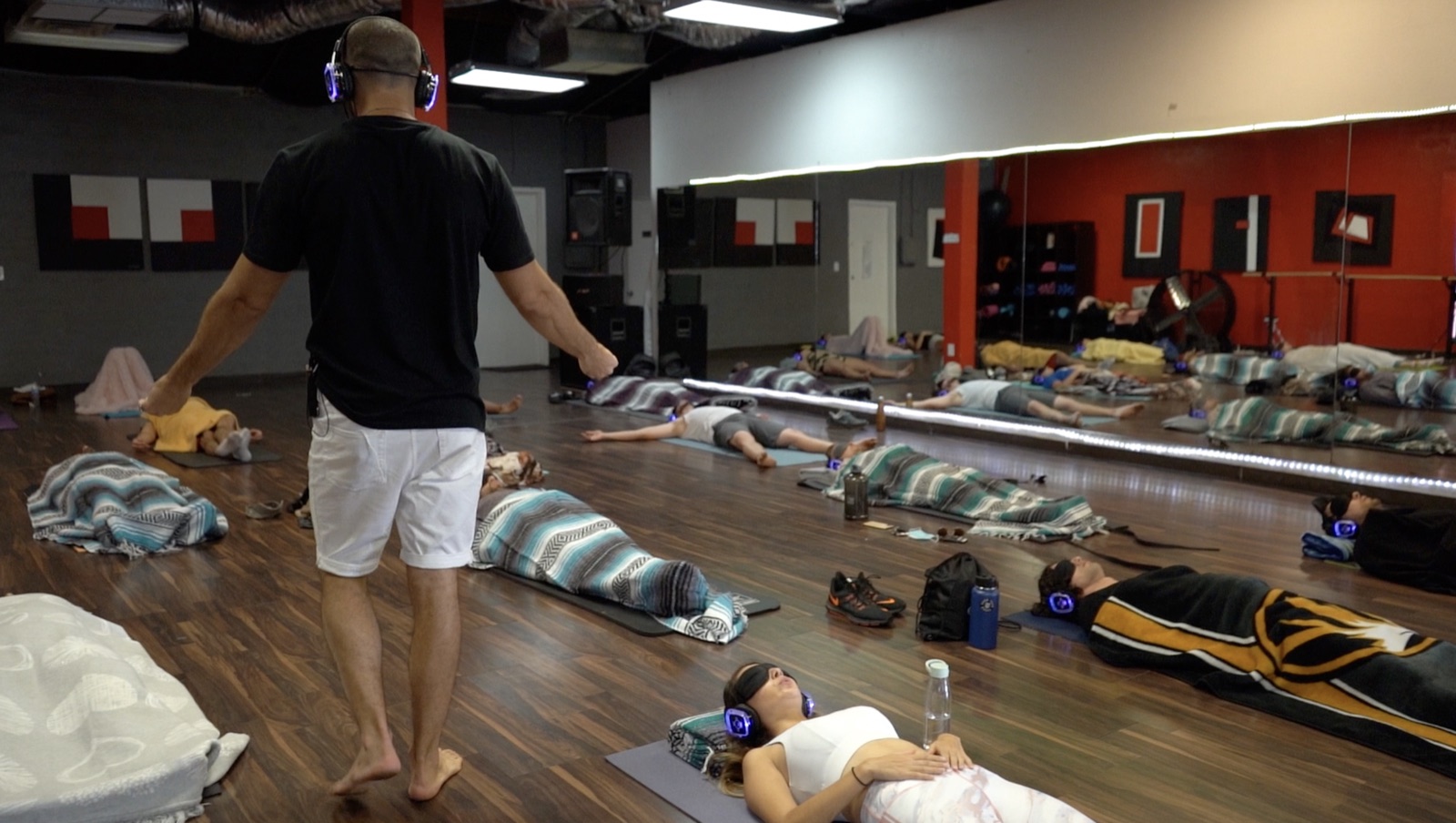
Headphones cut that off: each participant sits in their own audio bubble, even next to someone on the same track. A group session becomes parallel solo sessions in one room.
Pre-recorded audio cannot read the room
A 9D session runs on a fixed timeline. It does not know that three people need two more minutes at the peak, or that today's energy is lighter and the usual buildup is unnecessary. It cannot lower the volume when the room finds an unexpected stillness on its own.
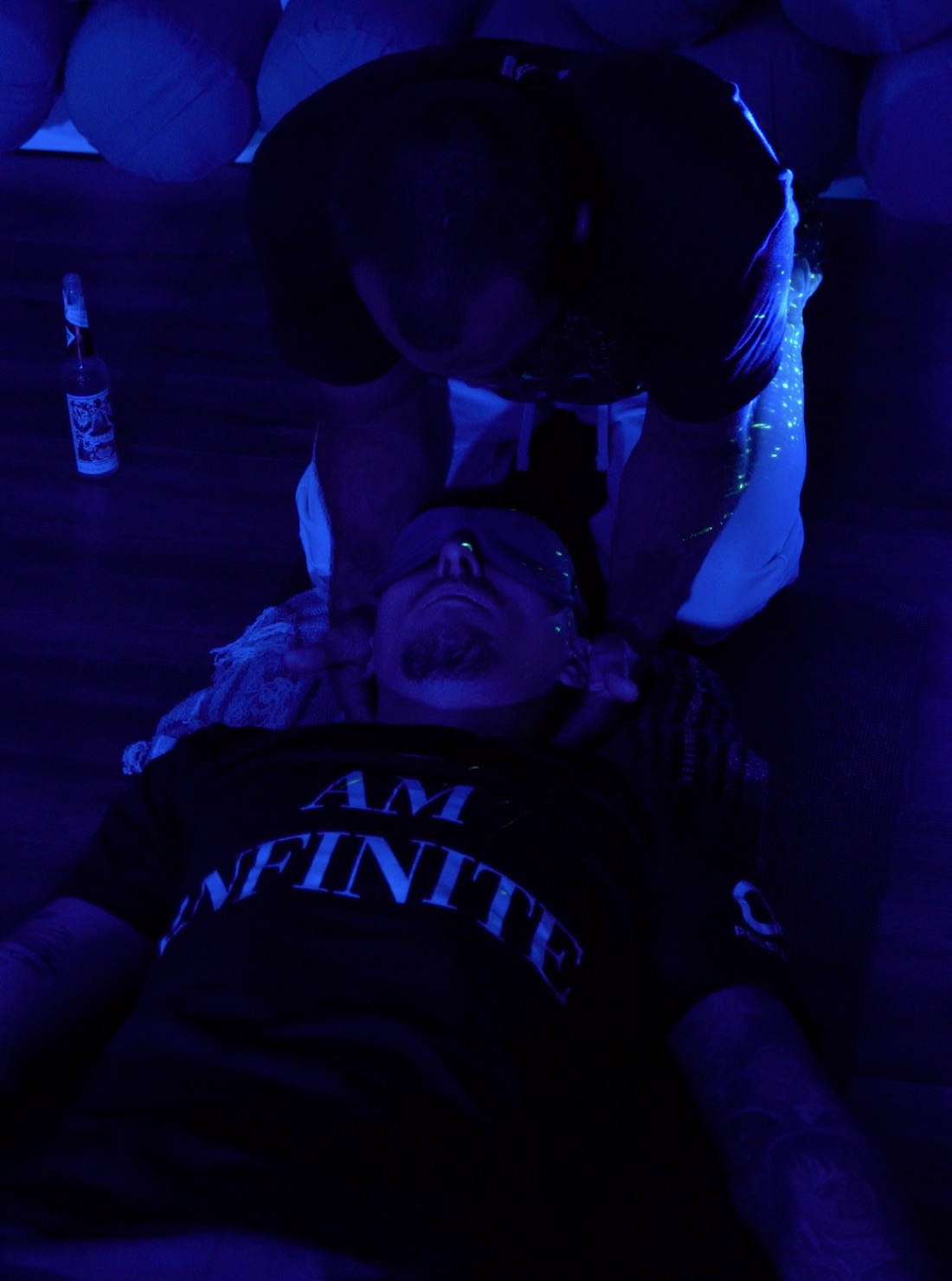
A live facilitator can. That means adjusting pacing and volume, offering a cue at the right moment, or saying nothing and letting the silence hold.
9D Breathwork vs Liquid Breathwork: A Direct Comparison
Both formats serve a purpose. Here are the trade-offs.
| Factor | 9D Breathwork | Liquid Breathwork |
|---|---|---|
| Format | Pre-recorded audio via headphones, solo at home or in a group | Live facilitated sessions in-person (Phoenix, AZ) or streaming online with live facilitator |
| Sound | Multi-layered binaural/spatial audio; highly produced; delivered to ears only | Curated music via room speakers; felt in the body, not just the ears; live DJ-style mixing |
| Facilitation | Pre-rendered script; consistent but fixed; no real-time adjustment | Live facilitator reads the room and adjusts pacing, volume, and cues in real time |
| Group field | Isolated; each person in their own audio bubble | Shared sonic and energetic field from breathing together without headphones |
| Release style | Encourages outward, cathartic expression (vocalization, movement, yelling) | Surrender-based, inward, quiet release at the body's own pace |
| Best for | Beginners, remote users, home practice, people who want high sensory stimulation | People seeking deep inward surrender, group resonance, skilled live facilitation, Phoenix Arizona locals |
| Typical price | No price published on their site. The app is free to download with a 7-day trial; app store listings show subscriptions from $67 a month | Drop-in classes and membership options; see current schedule and pricing |
Who 9D Breathwork Is a Good Fit For
Beyond beginners and people with no facilitator nearby, 9D suits:
- People who specifically want a loud cathartic release. If you need to yell or let out pent-up energy, 9D is built for that.
- People with mobility limitations or health conditions that make in-person sessions difficult.
- A complement to live facilitation. Using 9D tracks as home practice between live sessions is a reasonable approach.
Many of our participants came to us after months or years of 9D and other headphone-based formats, feeling they had hit a wall with pre-recorded audio. You can read verified client experiences from people who moved from home practice to live facilitated work.
A Note for Aspiring Facilitators
If you facilitate and are considering 9D-style headphone sessions, try them in your own groups first. Compare what people report against your non-headphone sessions, and ask whether the cathartic style fits the container you want to hold.
Our guide to becoming a Breathwork facilitator covers training options, facilitation philosophy, and the key decisions in building a practice. If you want training that focuses on facilitation craft over format, see our Liquid Breathwork facilitator training.
Frequently Asked Questions
What does 9D stand for in 9D Breathwork?
The "9D" refers to nine layers of audio in the soundtrack: binaural brain entrainment, isochronic brainwave tones, solfeggio frequencies, 8D spatial audio, Hemi-Sync style brainwave entrainment, bioacoustic sound effects, subliminal affirmations, nature soundscapes, and music composition. It is a marketing term for the layered sound design, not a clinical or scientific classification.
Does 9D Breathwork actually work?
Many people report meaningful experiences, including emotional release, calm, and altered states of awareness. Circular connected breathing combined with brainwave entrainment can produce real physiological shifts. The tracks also use subliminal suggestion aimed at the subconscious mind, and some listeners report more physical energy, often credited to the 432Hz tuning in the soundscapes. Results vary with audio quality, equipment, and the person.
Is 9D Breathwork safe?
For most healthy adults, it is generally safe. The circular breathing pattern can cause light-headedness, tingling in the extremities, or strong emotional responses. People with cardiovascular conditions, epilepsy, a history of seizures, severe trauma or PTSD, or who are pregnant should consult a doctor before trying any Breathwork modality. Because the audio is pre-recorded, no facilitator is there to monitor you or make adjustments if the experience feels too intense.
How is 9D Breathwork different from Wim Hof or Holotropic Breathwork?
Wim Hof uses rapid breathing rounds paired with cold exposure to create an energizing, activating state. Holotropic Breathwork uses sustained hyperventilation to induce non-ordinary states of consciousness. 9D uses conscious connected breathing (similar in pattern to Holotropic) paired with a highly produced, multi-layered audio environment through headphones.
Can you do 9D Breathwork in person?
Yes. Some facilitators run group sessions where everyone wears headphones in the same room and listens to the same pre-recorded track. Because each person is in their own audio bubble, it works more like individual sessions side by side than a live facilitated group.
Experience Real-Room Breathwork in Phoenix
We hold live Breathwork classes in Phoenix every week, with a facilitator in the room and music you can feel in your chest instead of headphones. If you are local, come try one and see what you notice.
Outside Arizona, we offer live-facilitated online sessions too. Leave your details below and we will send the next session times and a free intro guide.