
Why Therapists Need Their Own Breathwork Space
A noon session about a custody fight, then a client describing an assault at four. By evening, some of that comes home with you. Compassion fatigue often shows up in the body first, as shallow breathing or poor sleep. Later you notice you've gone numb toward work you used to love.
Supervision and personal therapy both run on talking. In a Breathwork session you lie on a mat and breathe while someone else runs the room.
What Makes a Therapist-Specific Breathwork Group Different
Everyone in the room (or on the call) is a clinician bound by the same confidentiality ethics you are. You don't have to explain your work, and you can stop tracking who in the room needs you.
We run therapist-only classes from time to time. None are on the calendar right now. Email [email protected] and we will tell you when the next one opens.
How Breathwork Complements Your Therapy Practice
Supervision is for your cases and personal therapy is for your history. Breathwork works on what your body is still holding from the week. Use it alongside both.
Regulate Your Own Nervous System First
Back-to-back sessions can leave you in low-grade sympathetic activation, which makes co-regulating the next client harder. Controlled breathing activates the vagus nerve and shifts you out of fight-or-flight before the next client walks in.
Prevent Countertransference Burnout
Countertransference shows up as a clenched jaw after a hard session, dreams about clients, or snapping at your partner at dinner. Deep, rhythmic breathing gives that tension a physical outlet, so it doesn't sit in your shoulders during tomorrow's first session.
What a Breathwork Session Looks Like
The style is surrender-based, gentler than the cathartic styles you may have read about.
Guided Surrender-Based Breathing
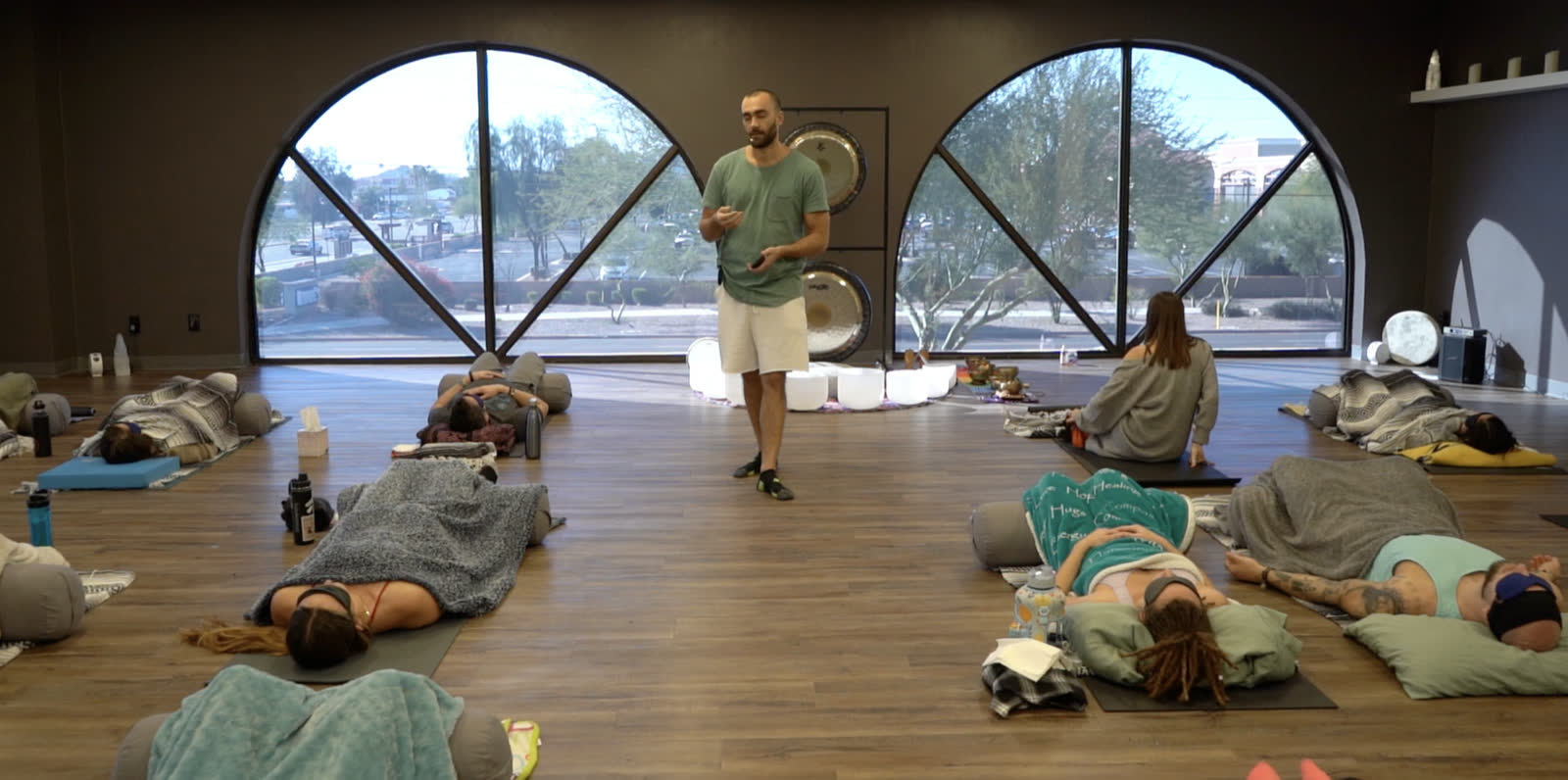
You lie down, close your eyes, and follow a continuous connected breath that deepens over the session. Nobody pushes you toward a breakthrough. For many therapists the hard part is letting someone else lead.
Somatic Release
As the breath deepens you may feel tingling or temperature changes, and tightness in your chest or jaw may let go. Emotion can surface as tears or laughter, and some people just go still.
Group Processing
Afterward there's time to talk through what came up, in clinical terms if you want them, with people who won't need a definition of dissociation. This is peer support, not group therapy.
How Your Breathwork Practice Improves Client Outcomes
People unconsciously scan each other's nervous systems for safety and threat. Polyvagal theory calls this neuroception, and your clients are reading yours. A client with a trauma history may notice your held breath or clipped voice before you do.
A regular Breathwork practice widens your window of tolerance, so you can hear a trauma disclosure and keep your own breath steady.
How to Integrate Breathwork into Your Practice
Using Breath Techniques with Clients
Extended exhale breathing (exhale longer than you inhale, such as in for four, out for six to eight) and box breathing (in, hold, out, hold, four counts each) help ground a client in the middle of a panic attack or a trauma response. Neither needs equipment, and clients can use both on their own between sessions.
Continuing Education and the Certification Path
Your state licensing board decides whether Breathwork training counts toward continuing education, and the rules vary by license type. Check with your board before counting it toward renewal.
The Liquid Breathwork certification program teaches you to facilitate full Breathwork sessions. Therapists use it alongside CBT, EMDR, and somatic experiencing.
The next Phoenix intensives run October 23-25, 2026 ($1,997) and November 6-8, 2026 ($1,997). A Scottsdale intensive follows on February 5-7, 2027 at $1,997 early bird. The next online cohort is slated for mid-March 2027, at $1,497.
Our guide to the best Breathwork certifications compares programs side by side. To try a session first, book from the weekly class schedule. Outside Arizona, the free sound healing finder can point you to a session near you.
Frequently Asked Questions
Why do therapists need their own Breathwork group?
In a mixed class most clinicians stay on duty, watching who is struggling. With only clinicians in the room, you can stop watching and breathe.
How does Breathwork help prevent therapist burnout?
Slow, controlled breathing moves your body into a parasympathetic state, so stress absorbed from clients gets released instead of building into compassion fatigue.
Can therapists use Breathwork techniques with their own clients?
Yes. Extended exhale and box breathing work in session with anxious or dysregulated clients. Leading full sessions takes certification training.
Breathwork for Therapists
Join a regular class now, ask about the next therapist-only class, or train to lead full sessions for your clients.